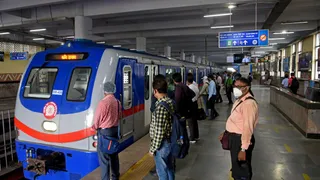
Kolkata Metro Update: Commuters in Kolkata should prepare for a temporary halt of the East-West Metro services for at least four days in mid-March as speed tests are conducted. During this period, two trains will run simultaneously at speeds of 80 km/h to facilitate the operations of the Esplanade-Sealdah section.
According to a Times Of India report, the upcoming signal trials, scheduled to begin on Thursday and conclude on Sunday, will see trains operating at 60 km/h in preparation for the required speed of 80 km/h for the Communication-Based Train Control (CBTC) system. Following these tests, there may be one or two brief traffic disruptions if the safety team identifies any issues during their analysis of the operational trials.
Kolkata Metro: Previous Service Disruptions for CBTC System Implementation
The East-West Metro, part of the Green Line, employs an automated signalling system designed to prevent collisions and enable trains to run at intervals of just 90 seconds. This line has faced interruptions before; it was closed for two Sundays in January and for four days in February due to CBTC trials on the key underground segment between Esplanade and Sealdah stations. Operations are expected to resume on Monday morning (February 24).
Kolkata Metro: Key Sections Closed For Signalling Tests And Safety Upgrades
The East-West corridor consists of two separate sections: Sector V-Sealdah (9.2 km) and Esplanade-Howrah Maidan (4.8 km). Both segments have been closed to allow for signalling tests on the 2.6 km stretch connecting Sealdah and Esplanade, which has remained incomplete due to soil subsidence in the Bowbazar area. In December 2024, the Kolkata Metro Rail Corporation (KMRC) completed track laying in the subsidence-affected west-bound tunnel, five years after the first incident on August 31, 2019.
Unlike previous trials where trains were limited to 25 km/h, the recent tests have shown improvements with speeds reaching 60 km/h. An engineer explained, “The speed gradually increases to meet the CBTC requirement of 80 km/h.” Several safety integration tests are planned for the next traffic block, including syncing platform screen doors and ensuring accurate time displays at stations. The next phase will involve critical integration tests for all 12 stations along the corridor and upgrades to the control centres and train fleet with the new CBTC software.