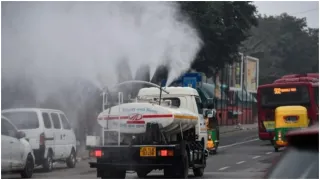
Delhi Chief Minister Rekha Gupta on Tuesday announced the implementation of a 'Winter Action Plan' from November 1 to February 28 to combat the annual menace of air pollution in the national capital.
As part of the plan, the Delhi government, along with other concerned agencies, will strictly enforce the 'No PUC, No Fuel' policy. Vehicle owners would not be able to purchase petrol, diesel, CNG or LPG at fuel stations without a valid Pollution Under Control (PUC) certificate.
Besides, vehicles registered outside Delhi below BS-VI will not be allowed to ply on the national capital roads. Such vehicles will be stopped at their entry into Delhi.
Apart from vehicular contributors, the Delhi government has also announced restrictions on construction activities, demolition and transportation of construction material to control dust pollution.
To make it work, the government control and command centre will monitor the construction sites through AI-enabled cameras.
The Delhi government has also imposed a 50 per cent work-from-home for working professionals in the capital. Electric buses and metro services will be promoted to provide last-mile connectivity in a push to reduce private vehicles.
Announcing the implementation from November 1, CM Gupta said the Delhi government’s Winter Action Plan would remain in force till February 28, with restrictions on construction and demolition activities, AI-based monitoring of construction sites, 50% work from home and staggered office timings to reduce pollution and traffic congestion.
"Delhi is acting early and firmly against winter pollution," she said, adding, "For our Right to Breathe, every action matters. Our Delhi, Our Responsibility."
The Winter Action Plan brings together several government agencies, including the Central Pollution Control Board (CPCB), the Commission for Air Quality Management (CAQM), Delhi Metro Rail Corporation (DMRC), Delhi Police and local authorities.
Delhi's air quality worsens annually with the advent of winter, reaching hazardous levels around Diwali due to firecracker bursting. The geographic position of Delhi makes it vulnerable to a rise in air pollution, but the man-made contributing factors deepen the crisis even more, prompting calls for strict measures year after year.
(With ANI Inputs)