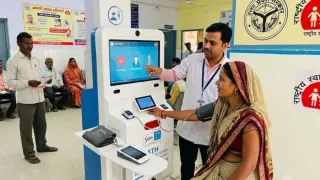
Patients visiting Health ATMs at government hospitals, health centres and public places across Uttar Pradesh may soon be able to get diagnostic tests without paying any charges. The state government is preparing to take over the cost of these tests, which currently requires patients to pay agencies operating the machines.
The Health Department has given in-principle approval to a proposal under which private agencies will conduct all available tests free of cost and receive payments directly from the government for providing the services and maintaining the machines. The move is expected to ease the cost of routine diagnostic tests for patients who rely on these facilities.
From Paid Tests To Free Services: What Will Change?
Health ATMs installed under the Smart City project currently offer several basic health checks, while patients have to pay for certain diagnostic tests at government-approved rates. Some blood tests cost up to Rs 50.
Under the proposed arrangement, patients will no longer have to pay these charges. Instead, the government will reimburse the agency responsible for operating the machines. The agency will also be responsible for ensuring that all available tests are conducted.
The proposal has received in-principle approval, but the final implementation details and rollout timeline are yet to be announced.
Machine Breakdowns May Get Closer Monitoring
Free testing may not be sufficient if machines are not working when required. Machine breakdowns and repair delays have become bottlenecks in the functioning of health ATM.
In order to find a solution to this, the department will establish an Integrated Command and Control Centre in the department for the machines to be monitored remotely. The system will be used to track the condition of the machines and the quality of diagnostic tests conducted.
Why This Matters For Patients
The proposed change could reduce out-of-pocket spending on routine diagnostic tests at these facilities. The Centre's National Health Mission already runs a Free Diagnostics Service Initiative to improve access to essential tests at public health facilities and reduce the amount patients spend on diagnostics.
However, the Uttar Pradesh proposal specifically concerns tests conducted through Health ATMs. Its success will depend not only on removing patient charges but also on keeping the machines operational and ensuring reliable test results.
What Happens Next?
The scheme has been approved in principle, but the new payment system has yet to be implemented. The government is likely to settle the operating and reimbursement model before the scheme is launched.
For patients, the proposed change could mean access to diagnostic tests without paying at the machine. For the government, the challenge will be ensuring that agencies deliver consistent services in return for public funding.