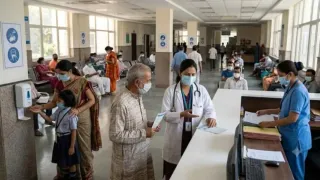
Jagran Correspondent, New Delhi: The swine flu cases are rising in Delhi as the capital recorded 304 fresh cases in the last 48 hours. Out of these, 166 cases were reported in the last 24 hours.
The fresh cases take the total number of swine flu cases in the capital to 2,612, while the total number of Influenza-A cases mounted to over 3,300.
The Indian Council of Medical Research (ICMR) has stated that there is no need to panic as the currently circulating virus is not a new strain and most cases are mild.
However, vigilance is needed at scale to prevent the rise in cases. The pace of infection in Delhi can be gauged from the fact that till August 20, there were 1,777 cases of swine flu, which has now risen to 2,612, a rise of over 835 cases in seven days. Regarding influenza-A, there were 2,392 cases till August 20, including 114 H1N1 strain cases. This number has risen to more than 3,300.
Increased infection before winter
Influenza infections typically become active in winters during the months of November, December, and January. This year, the surge in cases is being seen as early as August.
According to experts, the increased humidity during the rainy season and increased contact between people in crowded, enclosed spaces have increased the spread of the virus.
The experts suggest that school-aged children, the elderly and those living in crowded areas are at higher risk of infection.
Dr Rajiv Bahl, Director General of the ICMR, said that the swine flu currently spreading is not a new strain. This virus is found in approximately 97 to 98 per cent of influenza A cases tested in the country. Over time, the viruses undergo small genetic changes, but no unusual pattern has been found in the infection currently going viral to call it a major outbreak.
In some patients, the swine flu can cause a serious respiratory infection that affects the lungs. Common symptoms of the flu are fever, cough, sore throat, body aches, headache, extreme fatigue, and weakness.
Vaccine a protection
The Swine Flu vaccine can reduce the risk of infection, severe illness, and hospitalisation. As per ICMR, the vaccine is not recommended for everyone. People over 65 and those with weakened immune systems or serious chronic illnesses should get vaccinated only after consulting a doctor.