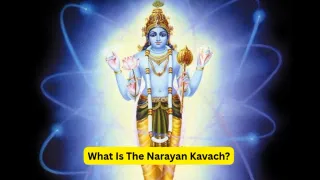
The Narayan Kavach is a sacred 35-verse protective hymn found in Canto 6, Chapter 8 of the Srimad Bhagavata Purana. It was taught by Sage Vishwarupa to King Indra.
This sacred hymn acts as a spiritual shield and invokes Lord Vishnu’s weapons to protect the practitioner from physical, mental, and astral challenges.
What Is The Narayan Kavach?
Narayan Kavach is one of the most revered and powerful protective prayers in Sanatana Dharma. It is dedicated to Lord Vishnu, the preserver of the universe.
The word Kavach means ‘armour’ or ‘shield '. Unlike physical armour made from steel, the Narayan Kavach creates an energetic shield around the practitioner’s body and mind through the power of sacred sound.
If a person wants to deepen their spiritual practice (sadhana), seek mental clarity during difficult times, or build a connection with Lord Vishnu, they can chant this hymn.
Narayan Kavach is one of the most revered and powerful protective prayers in Sanatana Dharma (Image: Facebook/lordvishnu)
The Story Behind The Armour's Origin
Narayan Kavach originates from the Srimad Bhagavata Purana, specifically Skandha 6, Adhyaya 8. According to the Purana, when the Devas (celestials) were losing the battle against the demon king Vritrasura, Lord Indra found a solution.
He approached Sage Vishwarupa (son of Tvashtar), who taught him the secret Narayan Kavach, a prayer that invokes Lord Vishnu's protection over every part of the body and against any type of danger. Armed with Lord Vishnu's protection, Lord Indra defeated Vritrasura.
ALSO READ: Why Is Kartik Maas Considered Sacred To Lord Vishnu? Know Its Religious Significance
How Does the Narayan Kavach Work?
The Narayan Kavach works on three distinct levels:
1. Vibrational: It uses sacred Sanskrit phonetics and Bija sounds like Om and Namo Narayanaya to align human consciousness with divine frequency.
2. Psychological: Regular recitation reminds the devotees that they are reciting the hymn, making them dissolve irrational fears, anxiety, and feelings of vulnerability.
3. Astral (Nyasa): The practitioner symbolically invokes different manifestations of Lord Vishnu on different parts of the body to protect them from negative external energies.
It uses sacred Sanskrit phonetics and Bija sounds like Om and Namo Narayanaya (Image: Pexels)
When Is The Best Time To Recite Narayan Kavach?
Ideally, it should be recited at Brahma Muhurta or in the evening. The best days are Thursdays, Ekadashi, Purnima, or during challenging times or while travelling.
ALSO READ: Why Did Lord Vishnu Take A Loan From Kubera For His Marriage With Goddess Padmavati?
How To Recite The Narayan Kavach?
1. The practitioner should take a morning bath and wear clean clothes, preferably yellow or white.
2. Sit facing East or North on a clean wool/kusha mat.
3. Light a pure ghee diya and incense before an image or idol of Lord Vishnu.
4. Recite the full Narayan Kavach and visualise Lord Vishnu's armour descending on your body.
5. Recite with clear pronunciation, ideally reading the Sanskrit text or listening to an authentic chant while following along.
6. Then perform Aarti and ask for forgiveness for any pronunciation mistakes.
FAQs
1. Can anyone recite the Narayan Kavach?
Yes, with purity of mind and devotion.
2. Is pronunciation important for Narayan Kavach?
Yes, Sanskrit vibrations matter. If struggling with pronunciation, listen attentively to audio to gain maximum benefits.
3. What is the difference between Vishnu Sahasranamam and Narayan Kavach?
Sahasranamam is one thousand names praising Lord Vishnu's attributes, and Kavach is a specific protective invocation for defence and armour.