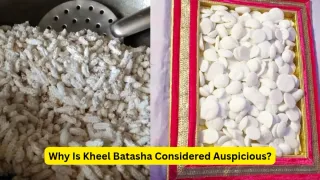
Every Diwali, in between the glow of brass diyas and boxes of dry-fruit sweets, two modest offerings take centre stage during Lakshmi Puja: Kheel (puffed paddy) and Batashe (crystallised sugar drops)
Kheel and Batashe are sacred during Diwali Lakshmi Puja because they represent the first harvest of the winter Kharif crop.
Offering freshly reaped paddy honours Goddess Lakshmi as Dhanya Lakshmi (the granter of agricultural wealth), while the white sugar drops symbolise purity, prosperity, and cooling, balancing energy of Venus (Shukra), the planet associated with luxury and fortune.
Let's understand the reasons why the tradition of offering kheel and batashe plays an important role in Diwali Puja.
What Is Kheel Batashe?
Kheel Batashe is a traditional Indian sweet that has been part of puja and festivities from ancient times. Kheel is made by tossing raw rice in sand or salt, causing it to puff up, while batasha, a coin-shaped confectionery, is prepared by boiling sugar with water until it reaches a thick consistency.
Kheel Batashe is a traditional Indian sweet that has been part of puja and festivities from ancient times (Image: Instagram/foodiepedians)
Why Are Kheel Batashe Offered To Deities During Diwali Puja?
Here are the four main reasons why Kheel Batashe plays a huge role in Diwali rituals:
1. To Celebrate The First Harvest
The tradition of offering kheel is deeply rooted in agrarian practices. Diwali coincides with the Kharif harvest season. Kheel is made from the first batch of harvested rice.
In Sanatan tradition, the first yield of any crop is never consumed by the family. It is first offered to the deity, specifically Goddess Lakshmi, to express gratitude and seek divine blessings.
2. Astrological Reason
In Vedic astrology, luxury, beauty, material and elegance are governed by Venus (Shukra), a planet that is closely associated with Goddess Lakshmi. Offering kheel batashe to the deities during Diwali is believed to please Venus, enhancing financial fortune and personal success.
ALSO READ: Why Is Goddess Kali Worshipped On Diwali Night In Bengal?
3. The Symbolism Of Growth And Purity
A Kheel is made from a single grain of paddy that bursts open with heat to become large, light, and airy. This symbolises the exponential growth of wealth, health, and consciousness under the divine warmth.
Batasha dissolves completely in water or milk without leaving residue. This symbolically reminds devotees that ego and arrogance have no use in devotion and should be washed away to welcome prosperity into a home.
4. Ayurvedic Reason
Diwali marks the beginning of the winter season and end of Autumn. This shift weakens human immunity, and the gut requires light, easily digestible foods.
Consuming Kheel during this time is beneficial as it is light on the stomach, alkaline, and high in fibre. Batasha, on the other hand provides immediate,made with palm or cane jaggery instead of refined sugar, provides energy and minerals.
Thus making it a gut-friendly snack during a week otherwise heavy with rich, oily festive food.
Offering kheel batashe to the deities during Diwali is believed to please Venus (Image: Pexels)
ALSO READ: 5 Vastu Tips To Invite Wealth And Prosperity At Home This Diwali
Though this offering may look small, but offering them during Lakshmi Puja not seek help seek divine blessings but also provide many health benefits.
FAQs
1. Can we use regular puffed rice instead of Kheel for Puja?
No, Kheel is puffed whole paddy with the outer husk roasted off, whereas Murmura is made from parboiled polished rice.
2. What should be done with leftover Kheel-Batasha after Diwali?
It should be distributed as prasad; chaat could be made from it or it can be used to feed animals.