Diwali is a five-day festival that begins on Dhanteras and concludes on Bhai Dooj. This festival is celebrated with great pomp and show to celebrate Lord Rama's return to Ayodhya.
However, the people of Goa celebrate this festival a little differently. Instead of celebrating Lord Ram’s return, they celebrate Lord Krishna victory over the demon Narakasura on Narak Chaturdashi, a day before Diwali.
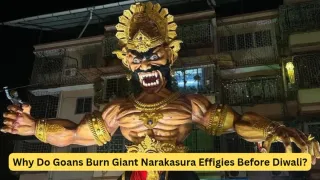
Local youth clubs parade massive, hand-crafted Narakasura dolls made with bamboo, newspapers, hay, coloured paper, and paints. At dawn, around 4:00 AM to 6:00 AM, these dolls are burned to symbolise the victory of good over evil and arrogance.
Let's understand the significance and rituals that are performed on Narakasura Chaturdashi.
The Mythological Significance Of Burning Narakasura Effigies Before Diwali
According to Hindu mythology, Narakasura was a very powerful demon who ruled Pragjyotishpura. To establish his reign and spread his terror, he captured 16,000 women and even stole the celestial earrings of Aditi, the mother of the gods.
To defeat him, the gods asked Lord Krishna and his wife, Satyabhama, to help. They together killed the demon in the early hours before dawn on the 14th day of the dark fortnight of Krishna Paksha of Ashvin and rescued the women.
When Narakasura took his last breath, he asked for a boon that his death would be celebrated, not mourned. That day is celebrated as Naraka Chaturdashi, and in Goa, it’s not merely a ritual but a celebration to mark the victory of good over evil.
According to Hindu mythology, Narakasura was a very powerful demon who ruled Pragjyotishpura (Image: Facebook/AalokWadhwa)
ALSO READ: Why Do People Light A Diya For Yamraj On Dhanteras? The Story May Surprise You
How Goa Celebrates Narak Chaturdashi?
Here’s how Goans celebrate the victory of Lord Krishna on the eve of Diwali:
- Weeks before Diwali, youth clubs are formed that spend countless late nights making effigies of Narakasur.
- On the eve of Diwali, towns like Panaji, Margao, Mapusa, and Ponda close down and the Narakasur competitions are held with massive cash prizes. The streets are filled with Narakasura monsters reaching up to 40 feet high.
- Then a performer dressed as Lord Krishna symbolically kills the effigy. As the monster burns in thunderous smoke and flames, the crowd cheers, celebrating the destruction of evil, ego, and filth.
- Then, after the holy ritual, Goans crush the bitter wild fruit called Kareet (Karit) under their left foot. This ritual symbolises Narkasura's defeat and warding off negativity.
- Everyone returns home for the Abhyanga Snan, a spiritual bath taken using fragrant oils and ubtan.
A performer dressed as Lord Krishna symbolically kills the effigy (Image: Pexels)
ALSO READ: Dhanteras 2026: Date, Shubh Muhurat, 5 Lucky Items To Buy And What Not To Buy On This Festival
This is the reason why Goa burns the effigies of Narakasura on the eve of Diwali.
FAQs
1. When are Narakasura effigies burned in Goa?
They are burned between 4:00 AM and 6:00 AM at dawn on Naraka Chaturdashi (Diwali morning).
2. What fruit is crushed underfoot on Diwali in Goa?
The bitter 'Kareet' fruit is crushed underfoot on Diwali in Goa, symbolising the destruction of evil.