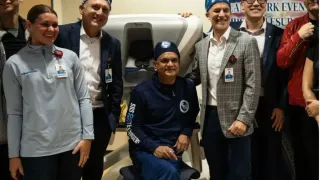
An Indian-American surgeon has achieved a major milestone in robotic surgery by remotely removing the prostate of a cancer patient from a hospital nearly 56 kilometres away, in what officials described as the first reported telerobotic operation between two hospitals in the United States.
Dr Vipul Patel, founder and medical director of the Global Robotics Institute at AdventHealth Celebration in Florida, performed the procedure on October 25 using a robotic surgical system controlled from a separate medical facility, according to a report by The Guardian.
The 66-year-old patient, identified as Mark, was undergoing treatment for prostate cancer at an AdventHealth hospital in Minneola, while Patel operated remotely from Celebration, near Orlando. Surgeon Marcio Moschovas remained with the patient to provide on-site medical support during the operation.
According to hospital officials, the procedure was completed successfully, and the patient was recovering well afterwards. The operation was conducted as part of a clinical research study examining the safety and performance of robotic telesurgery.
How the remote operation worked
Telerobotic surgery allows a surgeon to control robotic instruments from a location separate from the patient. Using a specialised control system, the surgeon's movements are transmitted to robotic arms that carry out the procedure inside the operating room.
The technology could eventually help patients in areas without easy access to highly specialised surgeons receive treatment without travelling long distances.
Patel performed the operation using an investigational surgical system developed by MicroPort MedBot. A qualified surgical team remained beside the patient, ready to provide assistance if required.
The study is being conducted under an Investigational Device Exemption authorised by the US Food and Drug Administration (FDA). This allows the system to be evaluated in clinical research, but does not mean it has received general FDA approval or clearance for routine use.
Previous surgeries paved the way
The Florida operation followed 10 investigational telesurgeries conducted between Orlando in the United States and Luanda, the capital of Angola.
ALSO READ: Indian Man Seeks Funeral Aid For 5-Year-Old Daughter Killed By Mother In New York
It also came months after a surgeon in London remotely operated on a patient in Gibraltar, demonstrating that robotic surgery can be performed across substantial geographical distances.
Patel has performed more than 21,000 robotic prostatectomies during his career. He has said that telesurgery could eventually help reduce geographical barriers to specialised treatment, although further research is needed to establish its safety and effectiveness.
Safety remains a major concern
Despite the breakthrough, experts must still assess the reliability of remote surgical systems before the technology can be widely adopted.
A communication failure, equipment malfunction or network disruption during an operation could create serious complications. Cybersecurity is another concern, as remote systems depend on secure communication links between the surgeon and the operating room.
Robotic prostate surgery also carries conventional risks, including bleeding, infection and potential urinary or sexual complications.
Keeping an experienced surgical team beside the patient is therefore essential, allowing doctors on site to intervene if the remote system fails or an emergency develops.
Could telesurgery transform healthcare?
Supporters believe the technology could eventually improve access to specialist treatment for patients living in rural communities or regions with limited medical infrastructure. Hospitals may also be able to connect patients with experienced surgeons without requiring either party to travel.
However, the latest procedure represents an important research milestone rather than proof that remote robotic surgery is ready for widespread clinical use.
Researchers will need to establish consistent safety, reliable connectivity and favourable patient outcomes before the approach can become a routine option.
For now, Patel's operation has demonstrated the potential of remotely controlled surgical systems while highlighting the need for continued clinical evaluation. The findings from ongoing studies will help determine whether the technology can safely expand access to advanced surgical care.
You may also like to watch