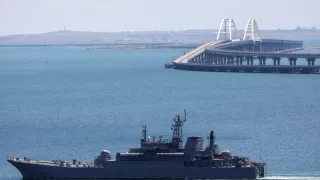
Ukrainian drones struck the Crimea Bridge over the Kerch Strait linking Russia with Crimea during an overnight operation on Monday, prompting a sharp security response from Moscow. Russian officials described it as the “largest overnight drone attack of the war” and claimed the assault also set several industrial sites on fire, the New York Post reported.
Retired US Air Force Lt. Gen. Richard Newton told Fox News Digital that the country’s expanding drone production has allowed it to reach targets deep inside Russian territory that once felt secure. "The sheer scale and effectiveness of these drone attacks are remarkable,” Newton said.
ALSO READ: Trump Hints At Kim Jong Un Meeting During China Visit, Says Ukraine Talks Could Also Be On Agenda
He pointed out that Ukraine can now send large numbers of drones against sites well behind the front lines. Russian officials, however, played down the impact on the bridge itself. According to Reuters, they called the damage minor and said repairs would not take long. Crimean authorities reported that traffic started moving again on one lane about 17 hours after the bridge was closed. Cars were allowed through in alternating directions, while train services continued without interruption.
Russian Deputy Prime Minister Marat Khusnullin said the government had already brought in designers, construction crews and other resources to start the repairs. He added that officials were working with regional authorities on logistical arrangements.
Why Is The Crimea Bridge Important For Both Countries?
The 19-kilometre span across the Kerch Strait is a vital road and rail link between mainland Russia and the Crimean peninsula. Russia seized Crimea from Ukraine in 2014 and opened the bridge in 2018, with Putin himself attending the inauguration ceremony.
ALSO READ: US Mercenary Mathew VanDyke Alleges Torture In Tihar Jail, Teases Shocking Details Soon
For Russia, the bridge serves as a key military supply route. It lets troops, weapons, ammunition, fuel and other equipment move more easily to forces operating in southern and eastern Ukraine. It also keeps essential goods flowing into Crimea, reducing the peninsula’s reliance on sea transport and longer land routes.
Ukraine sees the bridge as a strategic target precisely because of that role. Hitting it can disrupt Russian supply lines and force Moscow’s forces to fall back on slower, more exposed alternatives. The structure also carries heavy political weight.
For the Kremlin, it stands as a physical symbol of Russia’s claim over Crimea. For Kyiv, every strike on the bridge challenges that control and underlines the weaknesses in Russia’s military logistics.