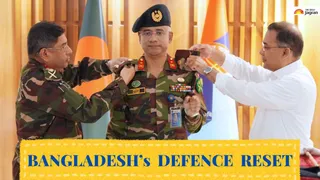
The newly formed Bangladesh government had a major reshuffle at the top level in the Bangladesh Army on Sunday. The Tarique Rahman-led BNP government has appointed a new Chief of General Staff (CGS), local media reported. The changes, issued by Army Headquarters, came days after Prime Minister Rahman's new government assumed power on February 17, Dhaka Tribune reported. The reshuffled was viewed as an attempt to oust his predecessor, Muhammad Yunus' favourites.
Bangladesh Army reshuffle
The reshuffle affects key strategic commands as well as the country's premier military intelligence agency. Lieutenant General M Mainur Rahman has been appointed as the CGS while he was previously serving as the chief or General Officer Commanding (GOC) of Army Training and Doctrine Command (ARTDOC), Prothom Alo reported, quoting sources in the defence ministry.
As per the reshuffle, the principal staff officer (PSO), Lieutenant General S M Kamrul Hasan, was replaced by just-promoted Lieutenant General Mir Mushfiqur Rahman.
Hasan has been attached to the foreign ministry to be appointed as an ambassador abroad.
Major General Kaiser Rashid Chowdhury has been appointed director general of the Directorate General of Forces Intelligence (DGFI), the report said.
Currently serving as a brigadier general at Army Headquarters, he will assume the post upon his promotion to major general.
Indian advisor returns to Bangladesh
Defence adviser at the Bangladesh High Commission in India, Brigadier General Md Hafizur Rahman, was called back to take charge as the GOC of an infantry division with the elevated rank and status of major general.
ALSO READ: India-Bangladesh Relations Under Tariq Rahman; 4 Key Indicators That Will Shape Ties With New Delhi
Bangladesh Nationalist Party (BNP) bagged a two-thirds majority in the crucial February 12 elections. Rahman, 60, took oath on February 17, ending the 18-month Muhummad Yunus' rule.
Why does Rahman’s move matter for India?
India and Bangladesh share more than 4,000 km of border, which is sensitive due to issues like migration, minority protection, insurgency in India's Northeast, and cross-border militancy. The reshuffle is viewed as consolidating BNP control over the military, potentially sidelining officers seen as aligned with prior regimes Yunus interim or Hasina-era holdovers. Some analyses frame it as a "purge" of perceived pro-Jamaat elements, which could reduce Islamist influence but risks internal instability if it alienates factions.
(With inputs from agency)
You may also like to watch