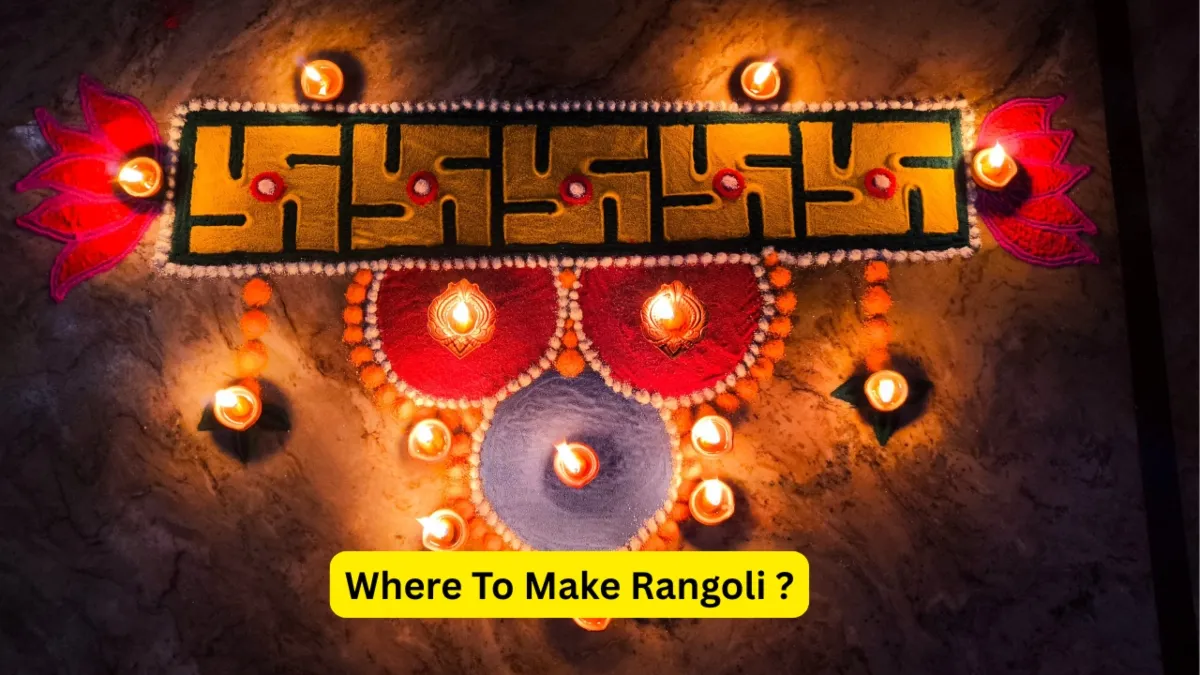
Rangoli making is an essential part of Diwali. According to Vastu Shastra, drawing rangoli in the house, especially at the entrance, brings happiness, positive energy and also invokes Goddess Lakshmi blessings.
However, if it is not placed correctly, it can bring negative energy into the house.
Let's understand where one should make rangoli and which colours should be used to attract prosperity.
Which Places Rangoli Should Be Drawn On Diwali?
According to Vastu, the best place to draw rangoli is the entrance or the courtyard, as these places are where energy (prana) enters the home.
On Diwali night, it is believed that Goddess Lakshmi enters clean and brightly lit homes. Rangoli at the threshold is an invitation to welcome her.
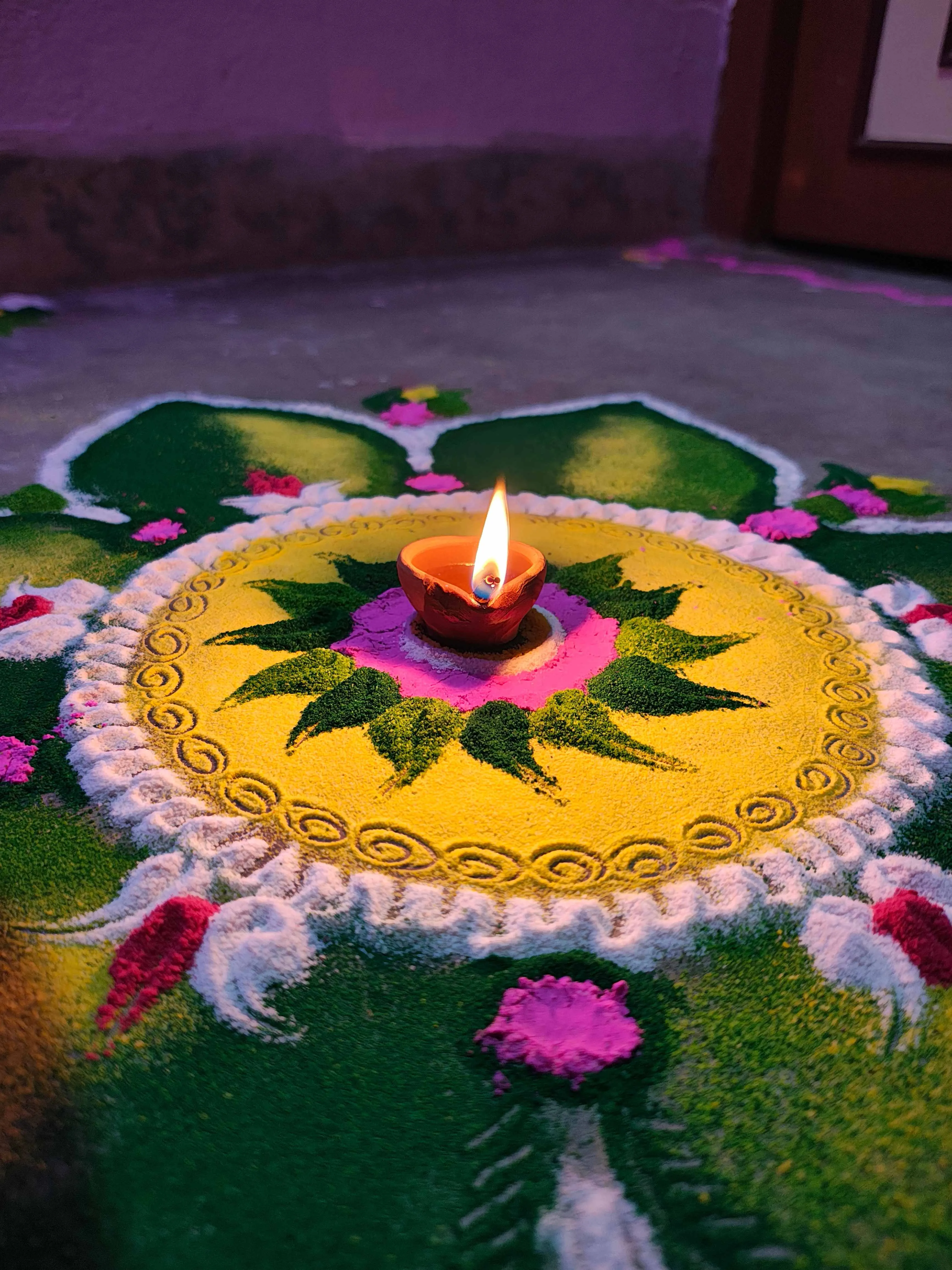
According to Vastu, the best place to draw rangoli is the entrance (Image: Pexels)
Which Rangoli Colours Should Be Used For Each Entrance Direction?
According to Vastu, aligning the colour with each entrance direction brings maximum spiritual benefits.
Direction | Element | Diwali Colour | What It Attracts |
North | Water | Shades of Green and Blue | New Career Opportunities, Financial Growth, Business Success |
North-East | Water | Yellow, Saffron, Gold | Clarity, Spiritual Growth, Wisdom, Prosperity |
East | Air/Fire | Green, Orange, Yellow | Social Connections, Health, and Family Bonds |
South-East | Fire | Orange, Red, Pink, Silver | Cash Flow, Passion, and Vitality |
South | Fire | Red, Orange, Pink | Fame, Recognition, and Social Reputation |
South-West | Earth | Yellow, Peach, Earthy Tones | Stability in Relationships, Family Harmony |
West | Space | White, Silver, Gold, Grey | Profits, Gains from Investments, and Fulfilment of Desires |
North-West | Air | White, Silver, Grey | Support from Banks, Friends, and Colleagues |
ALSO READ: Why Do People Draw Rangoli At Their Doorstep? Know The Traditional Significance Behind This Practice
Which Rangoli Shapes And Designs Are Auspicious For Diwali?
Symmetrical designs with closed, continuous borders are considered auspicious as they represent wholeness and stability. Here are some shapes and symbols that you can draw on Diwali and the best direction for them to be placed:
Design | Significance | Best Placement |
Lotus | Represents the sacred seat of Goddess Lakshmi | Main entrance or the Puja room |
Lakshmi Charan Paduka | Represents the physical entry of Goddess Lakshmi into the house | Leading into the house from the entrance |
Mandalas And Concentric Circles | Represent the infinite universe and focus positive energy in one spot | Courtyards, centre of the living room, or right in front of the altar |
Diyas & Lamp | Represent the victory of light over darkness | Outer borders of the main Rangoli design or framing doorways |
Peacock | Associated with Lord Mayureshwar and Goddess Saraswati | Verandas, balconies, or main entryways where wide colour displays fit best |
Sacred Symbols (Swastika & Om) | Swastika: Represents the four Vedas and the four directions Om: The primal sound of the universe | Integrated into the centre of a Mandala or placed at the corners of the main Rangoli |
ALSO READ: 9 Items You Should Never Gift According To Vastu Shastra
Making Rangoli on Diwali is more than decorative design. It is geometric patterns that carry energy when drawn based on Vastu principles.
FAQs
1. Can we draw a Swastika on the floor?
Yes, but never step on it; place it off-centre or elevated.
2. Which direction should the Diwali Rangoli face?
Rangoli doesn't need to face a specific direction. Instead, it is placed right outside the main door to welcome Goddess Lakshmi.
3. What colour is most auspicious for Diwali Rangoli?
Yellow and red are considered most auspicious for Diwali Rangoli.