

The Puja room holds a special place in all Hindu households. It's a place where spiritual energy flows, where one pauses, reflects, and connects with the divine. If this puja room is set up according to the principles of Vastu Shastra, it creates a sense of balance, positivity and calmness in the home.
Align your puja space with the positive flow of energy by knowing the correct direction, mandir placements and other details.
Ideal Vastu Direction For Your Puja Room
Direction plays an important role in Vastu and energy flow. The ideal direction for your puja room according to Vastu is the Northeast (Ishan Kon), as it is associated with clarity, peace and spiritual energy.
If Northeast isn't available, you can set up your puja room in the East or North, as these directions are associated with positive beginnings, prosperity and peace.
Pro Tip: Never set up your mandir in the South, under a staircase, inside a master bedroom, or sharing a wall with a bathroom or toilet, as it is believed to bring negative energy.
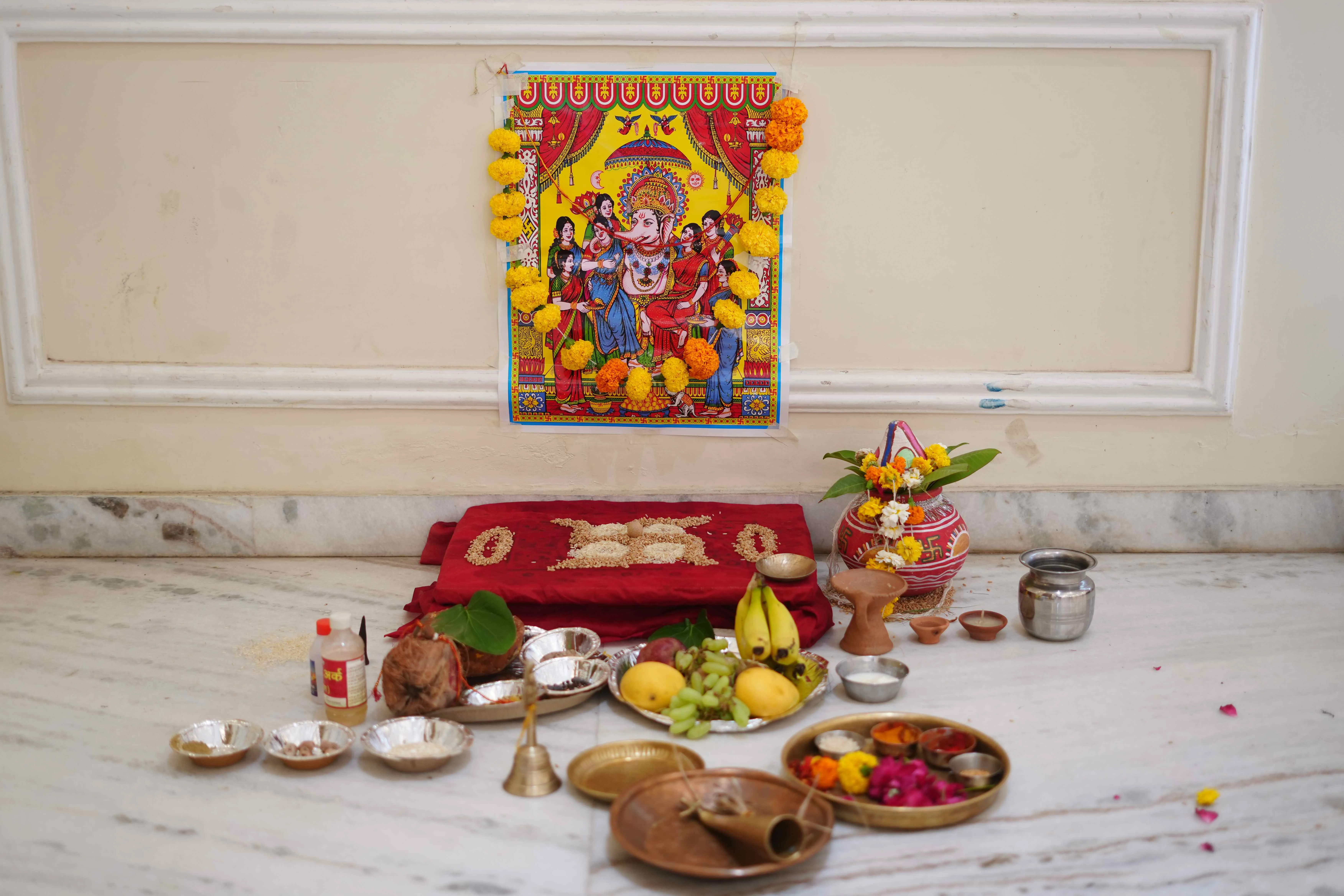
The ideal direction for your puja room according to Vastu is the Northeast (Image: Pexels)
Mandir Placement And Idol Height Rules
Mandir placement: When placing a mandir, it should be 1.5 to 2 feet above floor level, and never placed directly on the ground.
Idol height: Small home temples should ideally be between 3 to 6 inches, and worshippers should look straight/upward at the deity, never downward.
Wall spacing: Keep a minimum 1-inch gap between idols or the mandir backplate and the wall to allow energy flow.
Facing direction during prayer: An individual should always face East while praying, as it boosts concentration. If East is not possible, North direction is also preferred as it attracts prosperity.
Idol Orientation: Idols should face West or East.
Essential Items To Keep In Your Mandir
According to Vastu, these items should ideally be kept in your mandir:
Item | Description & Significance |
Diya (Oil Lamp) | Represents the light of knowledge and should be lit daily. |
Bell | Used to purify the space and invite divine presence. |
Kalash (Sacred Pot) | A symbol of abundance, usually filled with water and topped with a coconut. |
Incense Sticks & Camphor | Create a serene atmosphere and remove negative energies. |
Sacred Texts | Bhagavad Gita or Ramayana. |
Critical Vastu Don'ts: What To Remove Immediately
Khandit Murti Rule: Never keep broken or cracked idols or faded photos.
Ancestor Photos (Pitr): Do not keep photographs of deceased family members inside the mandir (place them on a separate South wall).
Leather Items: Belts, wallets, or shoes must never enter the sacred space.
Clutter And Multiple Idols: Avoid keeping multiple idols of the same deity or overcrowding the space.
ALSO READ: How To Set Up A Puja Thali At Home (Step-By-Step Guide)
Ideal Colours, Lighting, And Flooring
Walls: Soft, serene tones (White, saffron light yellow, sky blue) that promote tranquillity.
Lighting: Warm yellow lights; avoid harsh neon or dim flickering LEDs.
Doors: Ideally, a two-shutter wooden door or carved design to enclose the space when not in use.
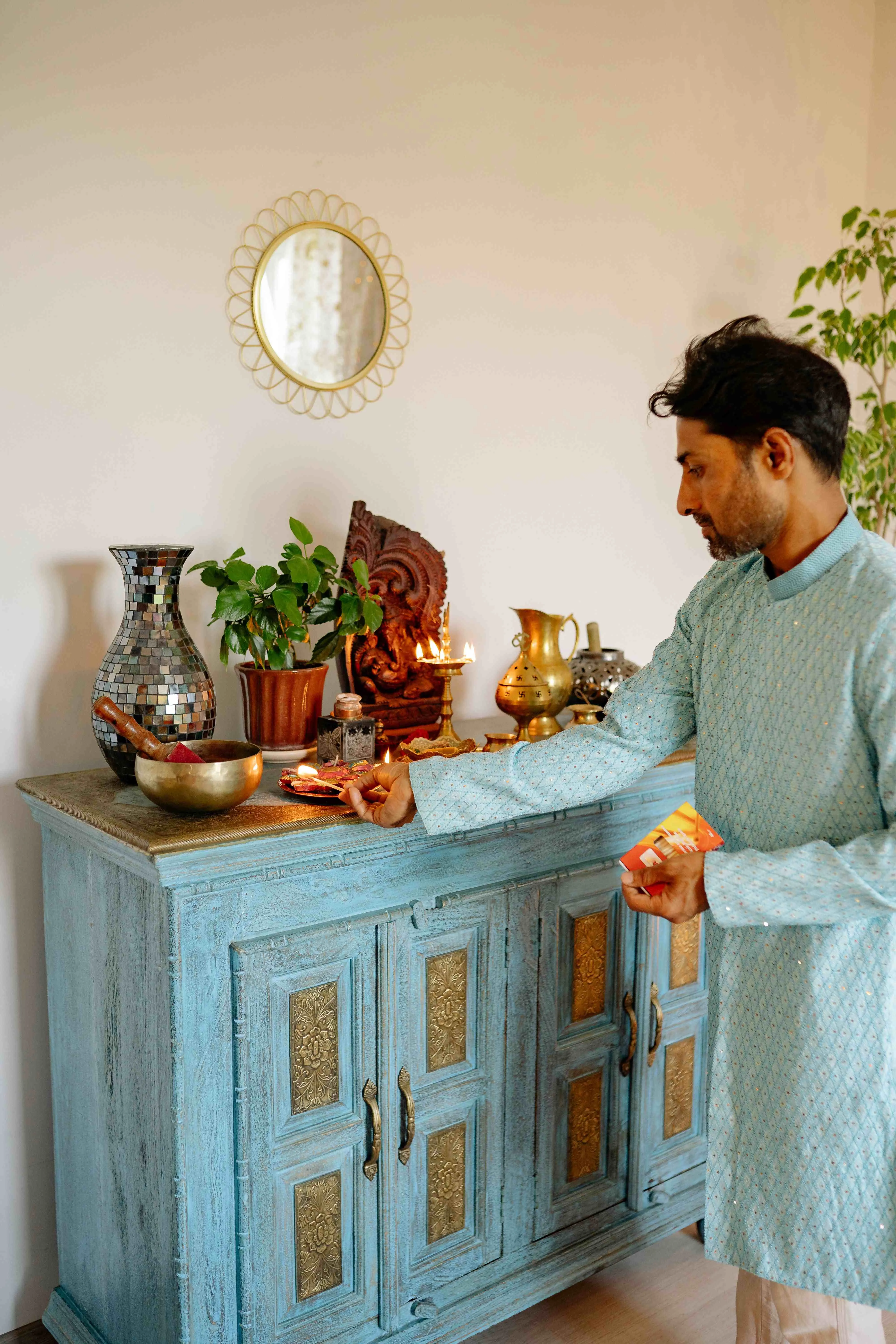
Walls of the mandir should be in soft, serene tones (Image: Pexels)
ALSO READ: Why Is Panchamrit Offered During Puja? The Spiritual Meaning Of The 5 Ingredients
Setting your puja room by following the principles of Vastu brings positivity, spiritual growth, protection against negative energies and better focus for meditation and prayer.
FAQs
1. Can we keep a temple in the bedroom?
No, it should never be placed in the bedroom because the energies of rest and intimacy conflict with the purity and sanctity of a place of worship.
2. Which direction should a diya face?
A diya (oil lamp) should ideally face east for health and knowledge, or north for wealth and prosperity