

During worship of gods and goddesses, many Hindus set up a puja thali, which carries essential items with their own spiritual significance. The puja thali is prepared with devotion and care, enhancing the spirituality of any religious occasion.
Whether it’s a daily ritual or a special celebration, a well-prepared thali plays a vital role in Hindu traditions.
Let's understand in detail how to set up a puja thali at home.
What Is The Significance Of A Puja Thali?
A Puja Thali represents the five elements of nature (Panch Mahabhuta): Earth (Prithvi), Water (Jal), Fire (Agni), Air (Vayu), and Ether (Akash). Setting the thali correctly isn't just about aesthetics; it’s a way to align spiritual energy and create a focused environment for daily worship or festival rituals.
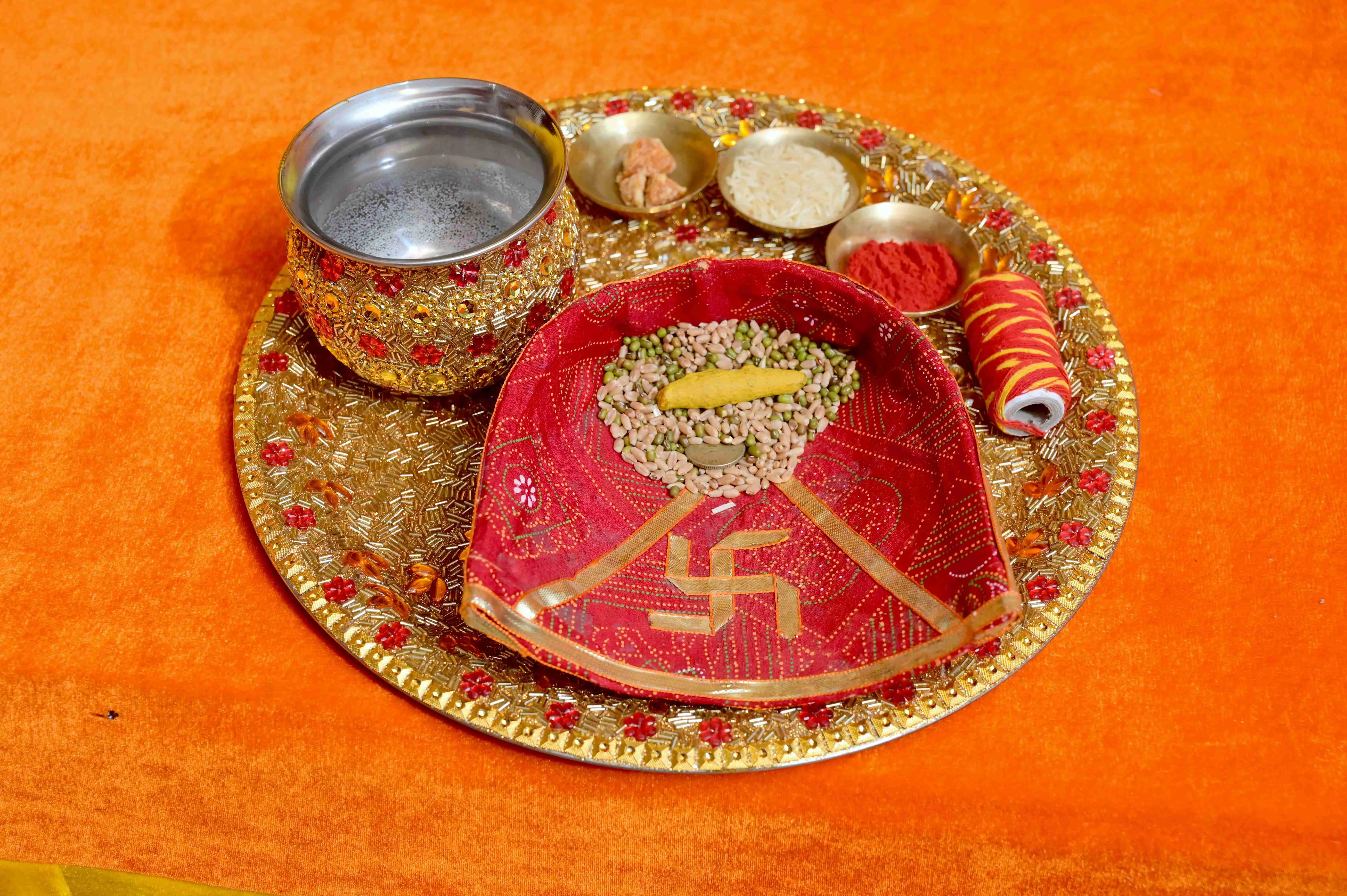
A Puja Thali represents the five elements of nature (Image: Pexels)
Essential Puja Thali Items With Ideal Placement
Before arranging your thali, gather these core items.
Note: These items can vary depending on family traditions, so there is no correct list.
Item | Purpose | Ideal Placement |
Thali Plate (Brass, Silver, or Copper) | Base container / Grounding | — |
Roli & Haldi (Vermilion & Turmeric) | Auspiciousness / Tilak | Centre |
Akshat (Unbroken raw rice grains) | Completeness & Abundance | Centre (next to Roli) |
Diya (Ghee or Oil Lamp) | Fire (Agni) Element | Right side of Deity |
Agarbatti / Dhoop (Incense Sticks) | Air (Vayu) Element | Left side |
Small Kalash / Lota (Water container) | Water (Jal) Element | Front-Left |
Fresh Flowers & Leaves (Marigold / Tulsi / Bel) | Earth (Prithvi) / Devotion | Front-Centre |
Prasad / Bhog (Sweets, Fruits, or Panchamrit) | Purity & Gratitude | Front |
Ghanti (Small Brass Bell) | Sound vibration (Akash) | Left side |
5 Steps To Set Up Your Puja Thali At Home
Here are some steps that you can follow to set up your thali correctly:
Step 1: Clean And Prepare The Base
Select a clean plate; traditionally, it should be made of brass, copper, silver, or bronze. Avoid steel or plastic if following Vastu guidelines.
Clean the plate, then place a small red or yellow cotton/silk cloth over the base. After this, draw a small Swastik in the centre using a paste of roli and water.
Step 2: Position The Sacred Centre (Roli And Akshat)
Place two small bowls (katori) or make direct divisions in the centre of the thali: the left bowl should contain kumkum/roli mixed with a few drops of water or ghee, and the right bowl should contain unbroken raw rice (akshat).
Tip: Never use broken rice grains for worship.
ALSO READ: Lotus In Hinduism: Meaning, Symbolism And Divine Connection
Step 3: Align Fire And Light (Diya And Dhoop Placement)
According to Vastu and ritual traditions, an individual should always place the diya (ghee lamp) on the right side of the thali because it aligns with the deity’s left.
On the other hand, place the incense stick holder (agarbatti) or dhoop on the left side.
Step 4: Add The Water And Sound Elements
Position a small copper or brass Kalash (water vessel) on the front-left corner. Add a drop of ganga jal if available. Place the bell (ghanti) next to the incense on the left.
Step 5: Arrange Flowers, Prasad, And Offering Items
Scatter fresh, washed flowers and leaves (such as tulsi for Lord Vishnu or bel patra for Lord Shiva) along the inner rim or front space to make the offering easy.
Place a small plate of prasad (fruits, dry fruits, or fresh sweets) at the front of the thali closest to the deity.
Ideal Vastu Directions For Puja Setup To Maximize Positive Energy Flow
Facing Direction: Sit facing East (preferred) or North while offering prayers.
Thali Direction: Position the thali facing the East.
Sanctum Spot: Keep your mandir elevated off the floor in the North-East (Ishan Kone) corner of your home.
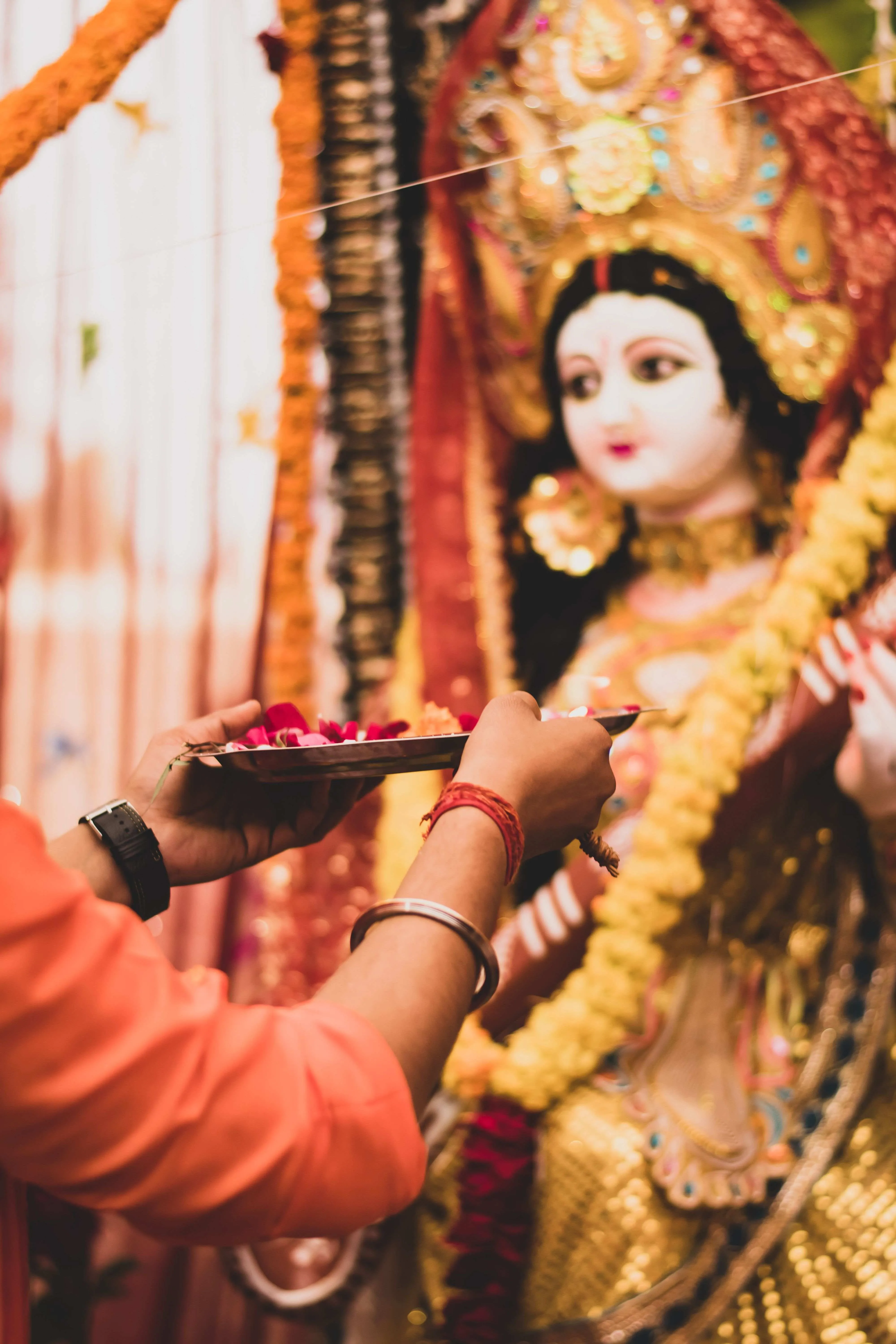
While performing puja, position the thali facing the East (Image: Pexels)
Daily Puja s Festival Puja Thali Setup
For daily puja rituals, keep the items in the puja thali minimal. Ideally, it should include roli, akshat, a small diya, a single flower, a water pot, and simple prasad (mishri or raisins).
On festive occasions like Diwali, Karwa Chauth, and Navratri, add specialised items like a Panchamrit bowl, coconut with chunri, shringaar items, and additional diyas.
ALSO READ: Why Do Hindus Fast On Ekadashi? Know Its Deep Connection With Lord Vishnu
So, this is how you can set up your thali for daily worship.
FAQs
1. Which side should the diya be placed on a puja thali?
The diya (lamp) should always be placed on the right side of the worshipper (or the deity's left). If using a mustard oil diya for specific remedies, it is traditionally kept on the left.
2. Can we use a stainless steel plate for a puja thali?
While stainless steel is commonly used for convenience in modern homes, traditional Vedic practices recommend *brass, copper, or silver, as these metals are considered energetic conductors of positive vibrations.