

Located in the town of Guruvayur, Thrissur district, Kerala, the Guruvayur Sree Krishna Temple, also known as Bhuloka Vaikuntham (the holy abode of Lord Vishnu on Earth) or the Dwarka of the South, is more than a pilgrimage site. This temple is a powerhouse of ancient traditions, deep devotion, and living history.
Guruvayur Temple is dedicated to Guruvayurappan, a beloved form of Lord Vishnu worshipped as baby Krishna even though the deity is four-armed, Vishnu. Whether you are planning a visit or exploring India’s temple architecture, here are seven lesser-known, compelling facts about Guruvayur.
7 Interesting Lesser-Known Facts About Kerala’s Guruvayur Temple
1. The Idol Isn't Carved From Ordinary Stone
The temple's main deity is a four-armed standing posture of Lord Vishnu holding the conch, discus, mace, and lotus. This idol is crafted from Pathalanjana Sila, a rare, sacred stone with medicinal and magnetic properties.
According to Gurupavanapura Mahatmya in the Narada Purana, the central icon of the Guruvayur Temple was created by Lord Vishnu in Vaikuntha. The idol was then entrusted to Brahma, who gifted it to King Sutapas and his consort Prishni, then to Kashyapa and Aditi, and finally to Vasudeva and Devaki in the Dvapara Yuga, the parents of Lord Krishna.
Later, the idol was worshipped by Lord Krishna himself. At the time of his departure to Vaikuntam (Heaven), Lord Krishna then entrusted the idol to Udhdhava, who took the help of Vayu, the Wind God, and Guru, the preceptor of the Devas, and got the idol installed in a suitable place for the benefit of mankind.
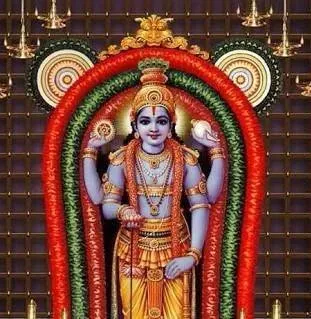
The central icon of the Guruvayur Temple was created by Lord Vishnu in Vaikuntha (Image: Facebook/GuruvayoorTemple)
2. The Udayasthamana Pooja Has A Multi-Decade Waitlist
The Udayasthamana pooja performed at Guruvayur Temple holds special significance, and devotees literally have to wait decades. Slots regularly stay booked 20 to 30 years in advance, with bookings often passed down through generations.
It is believed that performing this pooja attracts divine blessings of Lord Guruvayurappan for prosperity, happiness, and spiritual enlightenment. For many, performing or sponsoring the Udhayasthamana Pooja is a once-in-a-lifetime opportunity.
3. It Houses One Of The World's Largest Elephant Sanctuaries
Just 3 km from the main shrine sits Punnathur Kotta (Anakkotta), a sprawling 10-acre palace ground turned elephant sanctuary. It houses over 40 to 50 elephants dedicated to the service of the Lord.
Rituals like 'Gajapooja' (elephant worship) and 'Anayoottu' (feeding of elephants) are done here, emphasising the integral role of religious traditions.
ALSO READ: Jwala Ji Temple: Know The Religious Belief And Scientific Explanation Behind Sacred Eternal Flames
4. A High-Speed Wedding Capital
Many devotees perform their weddings at Guruvayur temple because they believe that his grace can bring love, happiness, and prosperity. Starting a new life, before the deity gives families a deep sense of peace and faith.
That is why if you visit the outer courtyard (Nadapanthal) on an auspicious muhurtham day, you will witness a cultural phenomenon.
Couples take their vows on the raised Kalyana Mandapam in ceremonies that last just a couple of minutes each, prioritising the deity’s blessing over elaborate, prolonged social rituals.
5. The Living Tradition Of Thulabharam
One of the most unique offerings at Guruvayur is the Thulabharam, where devotees offer items equivalent to their body weight to Lord
Guruvayurappan. The offerings range from traditional bananas (Kadali plantains), jaggery, and coconut water to silver, sugar, and even medicinal herbs, depending on the devotee’s wishes and means.
The act of Thulabharam symbolises the devotee’s complete surrender and gratitude towards the deity, seeking blessings for health, prosperity, or the fulfilment of specific wishes.
It also symbolically represents one’s life and karma, seeking the divine’s blessings for a harmonious and prosperous life.
6. The Non-Negotiable Dress Code
At Guruvayur, devotees need to follow the dress code. According to temple rules, men must wear a clean mundu (dhoti) around the waist and remain bare-chested. Shirts and vests are strictly prohibited. Women must wear traditional saris, set-mundu, or salwar kameez.
Furthermore, mobile phones, smartwatches, and cameras are completely banned inside the temple premises.
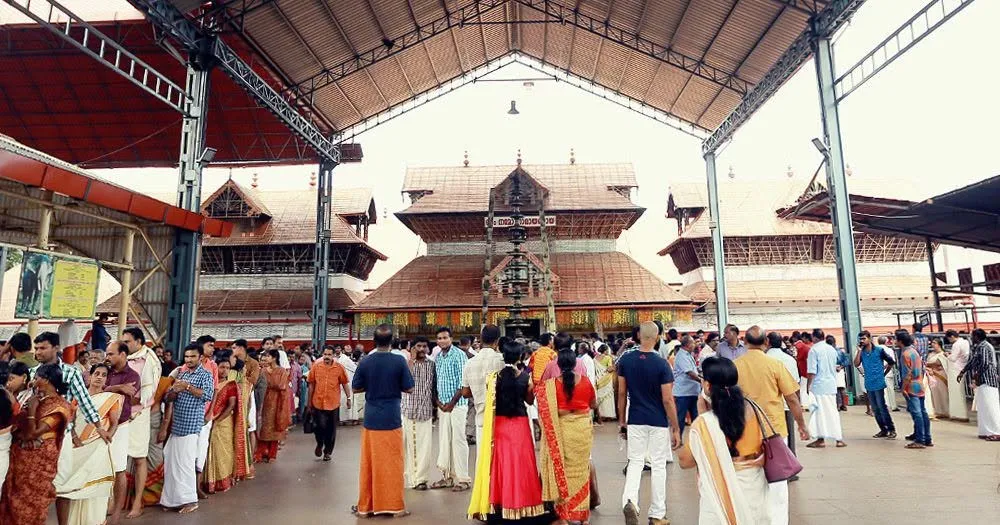
Mobile phones and cameras are completely banned inside the temple premises (Image: Facebook/GuruvayoorTemple)
7. The Miracle Healing Of Melpathur And The Birth of Narayaneeyam
The temple has witnessed many miracles; one such incident happened in the 16th century. Melpathur was a Sanskrit poet and a devotee of Lord Guruvayurappan. He was crippled by severe rheumatism.
He sat inside Guruvayur and composed the Narayaneeyam, a 1,034-verse condensation of the Bhagavata Purana. According to legends, on the 100th day of his recitation, the Lord cured his paralysis and manifested before him.
So, these were some interesting facts related to the Guruvayur temple.
FAQs
1.What is the dress code for Guruvayur?
Guruvayur Temple enforces a strict traditional dress code. For men, a white dhoti or mundu; for women, a saree with blouse (Kerala Kasavu preferred) or Churidar / Salwar Kameez with dupatta.
2.Can non-Hindus enter the temple?
Non-Hindus are strictly not permitted inside the temple.