
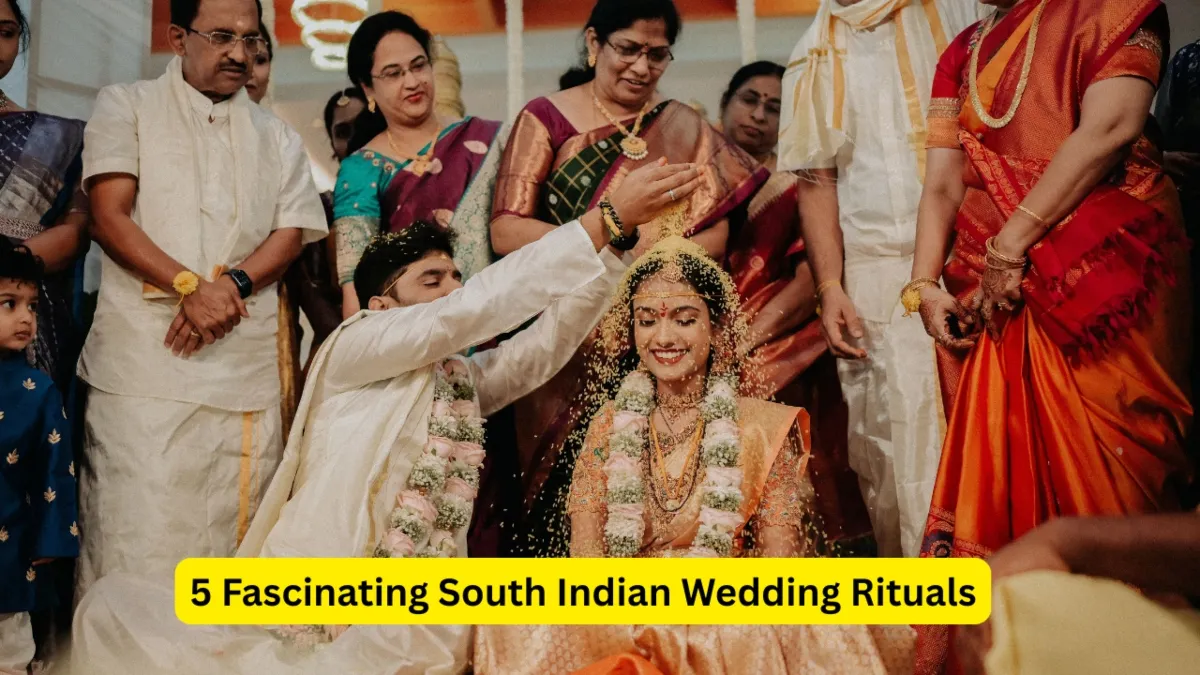
India is a land of diverse cultures and traditions, each carrying its own spiritual significance. And when it comes to weddings, every region follows a unique set of rituals. While North Indian weddings are often more focused on grand celebrations, South Indian weddings place greater emphasis on following age-old customs and traditions. Some of these rituals may seem surprising to you at first, but each one holds a deep spiritual meaning.
Let's explore five fascinating South Indian wedding rituals and understand the significance behind them.
1. Kashi Yatra
One of the most interesting rituals in Tamil weddings is the Kashi Yatra. Kashi is known as the divine abode of Lord Shiva. It is believed that those who travel to Kashi seek moksha, or salvation.
In this ritual, the groom pretends to renounce worldly pleasures and leave for Kashi, carrying an umbrella, a walking stick, and sacred texts to become a saint. However, the bride's father stops him. He reminds the groom that the duty of a householder (Grihastha) is just as important as that of a saint and persuades him to return and fulfil his responsibilities by getting married.
This ritual symbolises that even the most learned and educated person must find a balance between spirituality and family life.
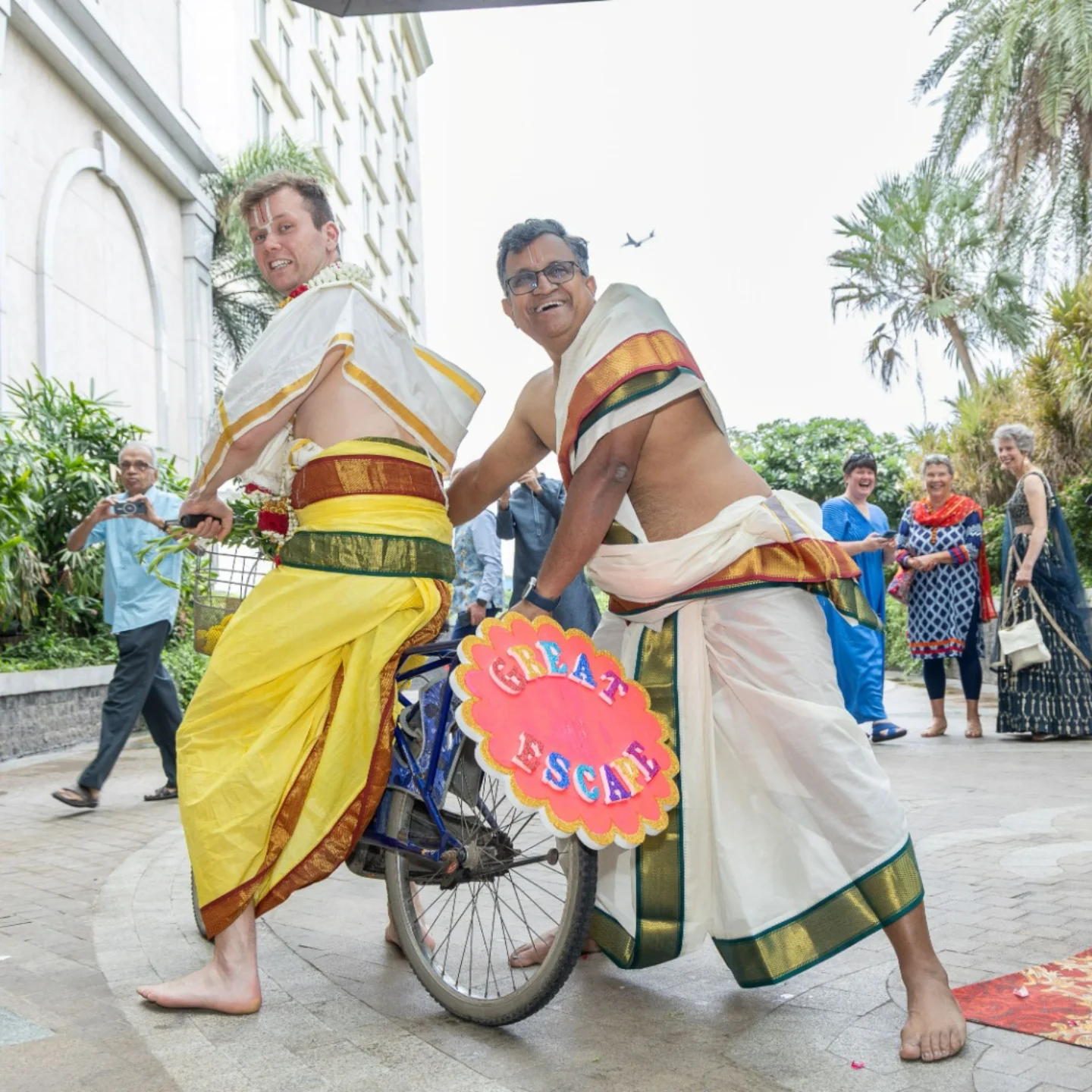
In the Kashi Yatra ritual, the groom pretends to renounce worldly pleasures and leave for Kashi (Image: Facebook/harithamweddingsweddingplanner&caterers)
2. Oonjal Ceremony
The Oonjal ceremony is one of the most beautiful moments in a South Indian wedding. In this ritual, the bride and groom sit together on a beautifully decorated swing while the elders gently sway them and shower them with blessings.
Recommended For You
This ritual symbolises the beginning of a strong and steady married life. Every back-and-forth movement of the swing represents that the couple will experience both ups and downs in life and should face them together with understanding and harmony. Surrounded by family, love, and laughter, this ritual becomes a beautiful celebration of togetherness. With every blessing, the couple's new journey becomes even more meaningful.
3. Jeelakarra-Bellam
Another beautiful tradition followed in Telugu weddings is Jeelakarra-Bellam, which literally translates to ‘cumin and jaggery.’
In this ritual, the bride and groom place a paste made of cumin and jaggery on each other's heads during the auspicious muhurat. This ritual symbolises the unbreakable bond between the couple. Cumin and jaggery have distinct tastes, representing the different experiences and emotions that life brings.
It reminds the bride and groom that life may throw many challenges their way, but by standing together and supporting each other, they can overcome difficult times and cherish the happy moments.
4. Talambralu
Talambralu is another widely practised ritual in Telugu weddings, in which the bride and groom shower each other with rice mixed with turmeric, saffron, flowers, or sometimes pearls.
This ritual is believed to carry divine blessings from the ancestors and deities. Rice symbolises abundance, prosperity, and fertility, while turmeric is associated with good health and auspiciousness in Hindu traditions. By showering these sacred offerings on each other, the couple symbolically surrenders their marriage to the divine, seeking protection from negativity and praying for peace, prosperity, happiness, and a long-married life.
ALSO READ: Why Do Hindus Worship Cows? Know Spiritual Significance Of Gau Mata In Sanatan Dharma
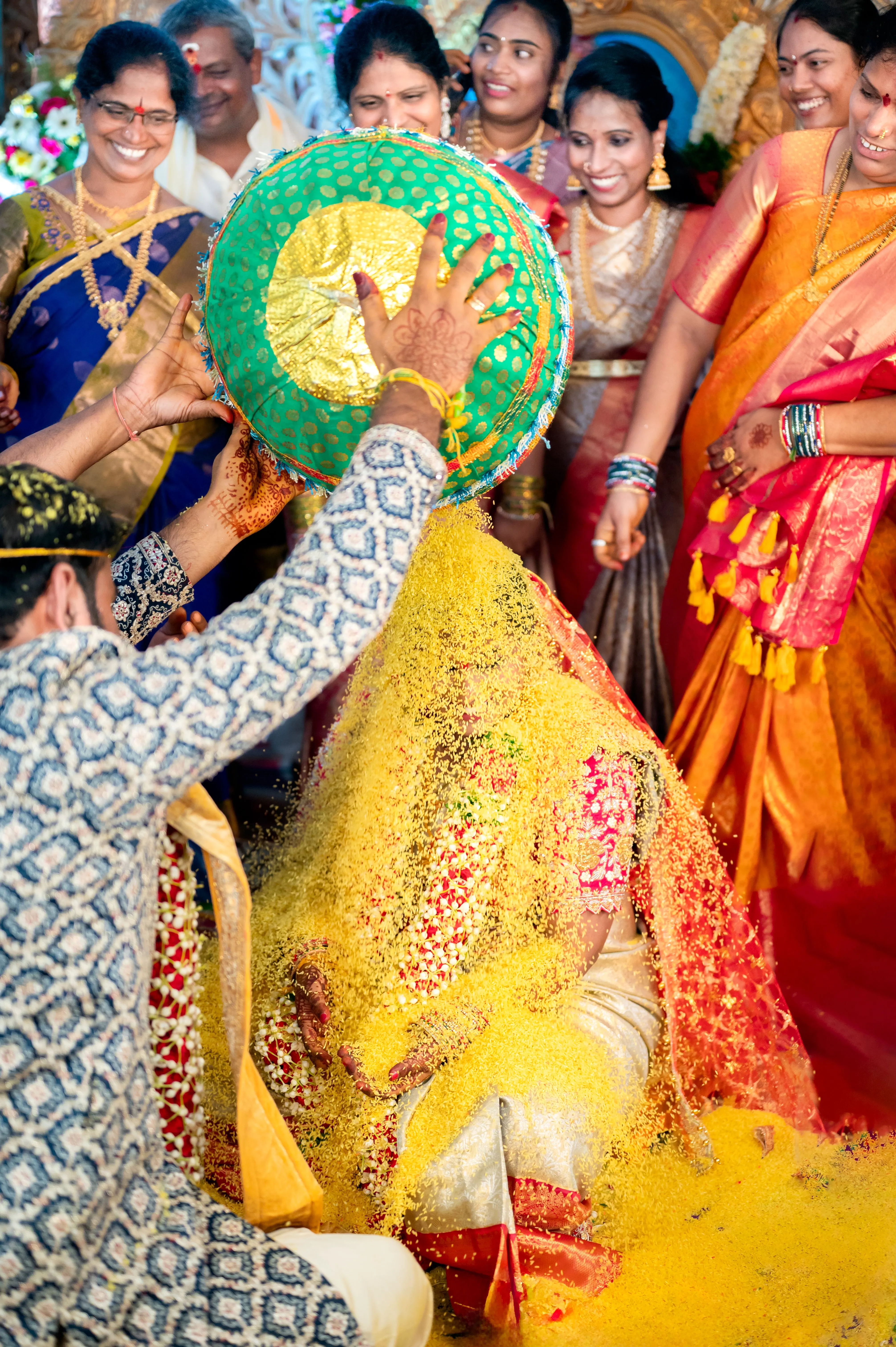
The bride and groom shower each other with rice mixed with turmeric, saffron, and flowers (Image: Pexels)
5. Tying the Mangalsutra In Three Knots
In South Indian weddings, the ritual of tying the Mangalsutra (Thali) in three knots holds great significance. According to traditional beliefs, the first knot symbolises the sacred bond between the bride and groom, the second represents the union of both families, and the third signifies their responsibility towards society and the community.
This ritual beautifully marks the beginning of a lifelong bond of love, trust, family values, and shared responsibilities.
ALSO READ: Why Do Hindus Offer First Roti To A Cow? Reason Might Surprise You
Although these South Indian wedding rituals may seem different from those followed in other parts of India, each one carries a deep cultural and spiritual meaning. From the symbolic Kashi Yatra to the joyful Talambralu ceremony, these traditions beautifully celebrate love, commitment, family, and togetherness.