
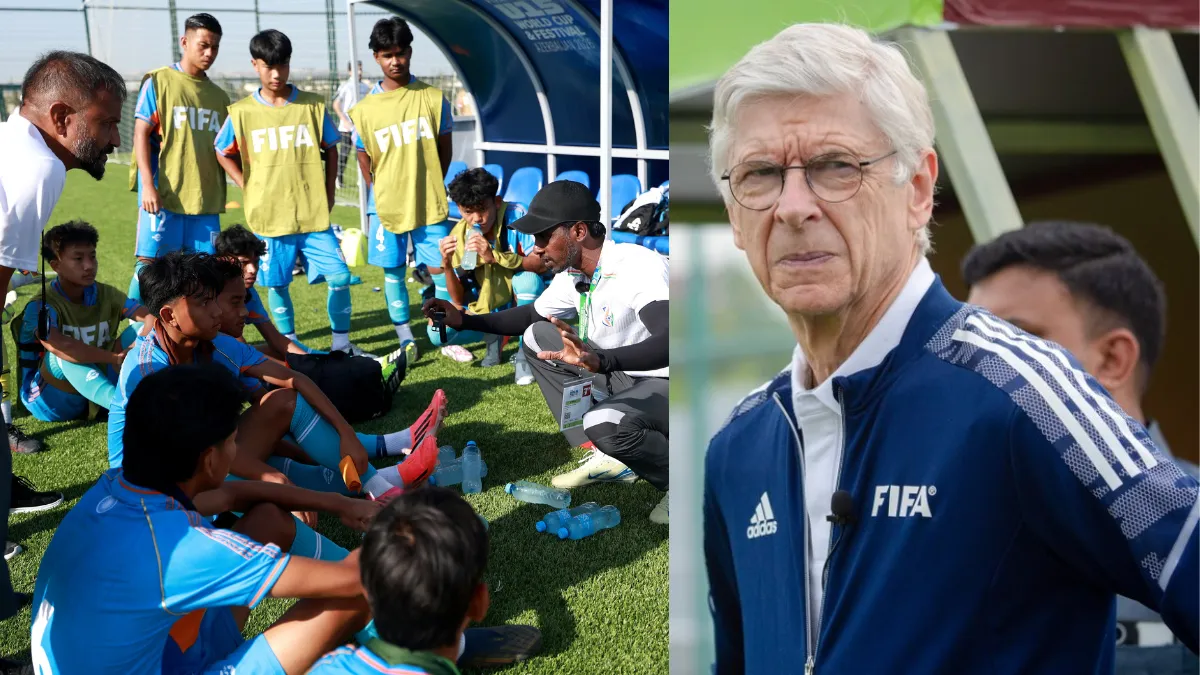
- The Blue Colts finished third in Group K with 10 points from five matches.
- India's opening matches offered encouraging signs and entertained the Indian football fans.
- The biggest test for Blue Colts came against Senegal.
India’s campaign at the inaugural FIFA U-15 World Cup & Festival 2026 has offered a glimpse of the country's emerging football talent. It highlighted both the promise of its young players and the areas that require improvement.
The Blue Colts finished third in Group K with 10 points from five matches, recording three wins, one draw and one defeat. While victories against Cameroon and Bahrain demonstrated their potential, a dramatic collapse against Grenada and a heavy defeat to Senegal exposed the challenges India must overcome to compete consistently against international opposition.
However, the tournament in Baku, Azerbaijan, was about more than results for India. FIFA designed the competition to provide young footballers with international exposure, competitive experience and opportunities to learn from different footballing cultures.
Winning start for the #BlueColts in Baku! 🤩🇮🇳 #LAOIND #IndianFootball https://t.co/oAsTI69bf5
— Indian Football (@IndianFootball) October 24, 2026
FIFA chief of global football development Arsene Wenger also underlined the importance of such experiences in shaping the next generation.
India’s FIFA U-15 World Cup & Festival 2026 Results
India, coached by Bibiano Fernandes, were drawn in Group K alongside Laos, Cameroon, Grenada, Bahrain and Senegal.
Opponent | Result |
Laos | India won 4-2 |
Cameroon | India won 2-1 |
Grenada | India drew 3-3 |
Bahrain | India won 4-3 |
Senegal | India lost 1-6 |
India's 10 points were enough for third place in the group, behind Cameroon and Senegal. The team subsequently moved into Tier C, competing in the tournament's lower-position bracket.
Promising Performances And Lessons From Setbacks
India's opening matches offered encouraging signs and entertained the Indian football fans accross the world. The 2-1 victory over Cameroon was particularly noteworthy, with goalkeeper Jenit Ningthoujam making important saves, including stopping a penalty, as India secured a valuable win.
Recommended For You
However, the draw against Grenada exposed a weakness in game management. India had built a resounding 3-0 lead but conceded three goals in just six minutes, allowing their opponents to rescue a point.
The collapse highlighted the importance of maintaining concentration and defensive organisation even when a match appears to be under control.
India responded positively against Bahrain. After their opponents drew level, R Lalremruatfela and Nibas Meetei Wahengbam scored in the 38th and 39th minutes to secure a 4-3 victory. The result demonstrated the team's resilience, although India will need to combine that fighting spirit with greater consistency.
The biggest test for Blue Colts came against Senegal. India suffered a 1-6 defeat, with Abdoulaye Diallo scoring four goals. Ronandev Aheibam pulled one back in the 33rd minute, but India struggled to contain Senegal's attacking threat.
The defeat underlined the difference in decision-making, defensive recovery and composure against stronger opposition. For Fernandes and his players, the challenge is to turn such difficult experiences into practical lessons.
Arsene Wenger Reacts: Why The Tournament Matters
The former Arsenal manager's assessment of the inaugural tournament provides a broader perspective on India's campaign.
Arsene Wenger, FIFA Chief of Global Football Development, on the FIFA U-15 World Cup & Festival ⚽🌍📈 🗣️ "You want an opportunity to develop. When you say, "Give every talent a chance", it's about opportunity. Here (at the FIFA U-15 World Cup & Festival) they can come, play and discover that they have the needed quality to exist at the top level." Editorial assets available on the FIFA Media Hub ➡️https://t.co/X3bJnyyqbY #U15WC
— FIFA Media (@fifamedia) October 28, 2026
Speaking to FIFA on October 28, Arsene Wenger highlighted the value of bringing young players from different countries and backgrounds together. He stressed that the experiences footballers gain away from the pitch can be almost as important as the matches themselves.
Road Ahead: What India Must Improve
India's next steps must focus on game management, defensive organisation and quicker decision-making under pressure. Regular exposure to big international opponents will also be essential if players are to adapt to higher levels of football.
ALSO READ: FC Barcelona Fined €602 By Spanish FA Over Julian Alvarez Transfer Saga: What Happened?
The responsibility extends beyond the coaching staff. The All India Football Federation and domestic academies must ensure that lessons from the youth World Cup into youth training, competitive opportunities and long-term player development. India showed resilience again in the second phase, coming from two goals down to beat Trinidad and Tobago 3-2 on October 28.
Cameroon tested them. The #BlueColts delivered. 👊🏻 Relive the action from Baku. 🇮🇳🇨🇲 🎥: Viva Football Magazine #INDCMR #IndianFootball https://t.co/n9iEtwFsLK
— Indian Football (@IndianFootball) October 25, 2026
Victor Lalawmpuia scored twice before Lalremruatfela completed the comeback in the 29th minute. India were scheduled to face Afghanistan on October 29 in a quarter-final for positions 81st to 88th.
India continues to play more matches against stronger oppositions in the ongoing World Cup. Bibiano's side will look to make a strong finish and use these learnings for the big job ahead.