
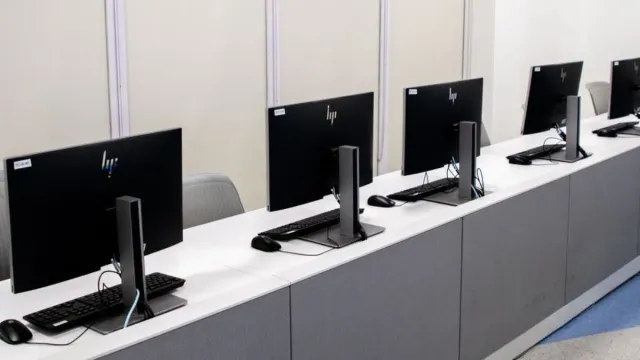
The PC market in India has seen growth in the second quarter of 2026, and shipments have risen 12.1 per cent to 3.9 million units year-on-year, says IDC in its report. Although there is a trend in this growth, commercial buying is leading the stats here, and consumer sales are lagging behind this time. The reason? Well, it's something that is plaguing the whole industry right now: rising component prices, because of which a lot of forward purchases have been made by businesses in advance.
Let's take a deeper look at the insights into what is driving this growth in a specific sector.
Commercial Buyers Lead The Growth
2.2 million PCs have been shipped into India's commercial market in Q2 2026, and this has seen an uptick of 16.6 per cent compared to the same period last year. Meanwhile, on the other side consumer segment has seen only a 6.6 per cent increase, according to IDC.
The reason behind this trend is attributed to the fact that PCs are currently facing a massive price surge, with RAM and SSD prices going sky-high; other ancillary components are also facing a price hike, making them expensive all across the board. So the strategy that businesses have applied is that they bought them earlier to lock in the prices before the price hike actually hits. SMBs are also applying the same strategy here, with shipments looking at a growth of 21 per cent this quarter.
Recommended For You
The public sector is not on the back foot here either, joined by the education sector as well, both of which have seen massive growth in purchases with 17.6 per cent and 24.8 per cent, respectively. Another interesting fact is how retailers and distributors are amping up their stocks; this is a reaction to the fear of PCs becoming more expensive in the future, as well as a demand surge during the festival season that is going to hit soon.
Thus, the growth that we are witnessing is not necessarily because of more purchases but also because of businesses and supply partners storing more PCs in anticipation of future price increases.
HP here has taken the top spot with 29.4 per cent market share, with Lenovo taking second place. ASUS has done extremely well, with a massive jump in its growth percentage, with 120.1% growth, although the market share is not that big. Acer has seen a good quarter, with the government and education sector leading in its order inventory.
Consumer PC Demand Lagging Behind
The consumer demand for PCs has seen a rise of 6.6 per cent year-on-year, with shipments reaching 1.7 million in Q2. This falls short compared with commercial PC purchases, which stand at 16.6 per cent, more than twice consumer shipments. Premium PCs have held their ground, with premium notebooks with above the $1000 price mark tapping a growth of 78.7 per cent. AI PC shipments showcase similar sentiments, as most premium notebooks now come with AI suites installed in them, growing at 109.9 per cent.
The numbers were mixed for the big PC brands. Lenovo came out ahead with 12.4 per cent growth, while HP’s consumer shipments were down 3.5 per cent. Acer also saw a decline of 7.6 per cent, and ASUS was almost unchanged, slipping just 0.8 per cent. Dell was the biggest outlier, with shipments jumping 337.1 per cent. However, IDC says that figure was boosted by the company’s unusually weak performance in the same period last year.
Although it seems that people are still buying PCs, they are being cautious because the price uptick is not easy for all to bear with ease. Some users can be expected to get a better model instead of the one they were initially going to buy to future-proof their PCs as well.
What's The Future Roadmap?
The market is expected to see more price hikes, and this trend will continue at its pace as the demand for memory and storage is growing as more and more AI is employed in our daily lives. With higher prices, buyers are expected to stay modest and cautious with their purchases. IDC is of the view that commercial buying can hit a peak and plateau as the targets of early purchases are hit. IDC also feels that 2027 could remain a challenging year as elevated costs may persist.
ALSO READ: Mivi One 5G India Launch Confirmed With Snapdragon Silicon: Microsite Reveals Colour And Design
The cost is ultimately borne by the end consumer, and if the situation does not normalise, this could remain the case even in 2028 till 2030. So the best is to stick to the PC that you still have if it's a mid range as it can still last for the next two or three years to come. For now, it seems like prices will not go down anytime soon, and if AI companies keep pace with their consumption, the situation can get worse. Repairs and refurbished parts and PCs might start looking better now. So for now, the most important thing is to keep what you have in the best condition.