
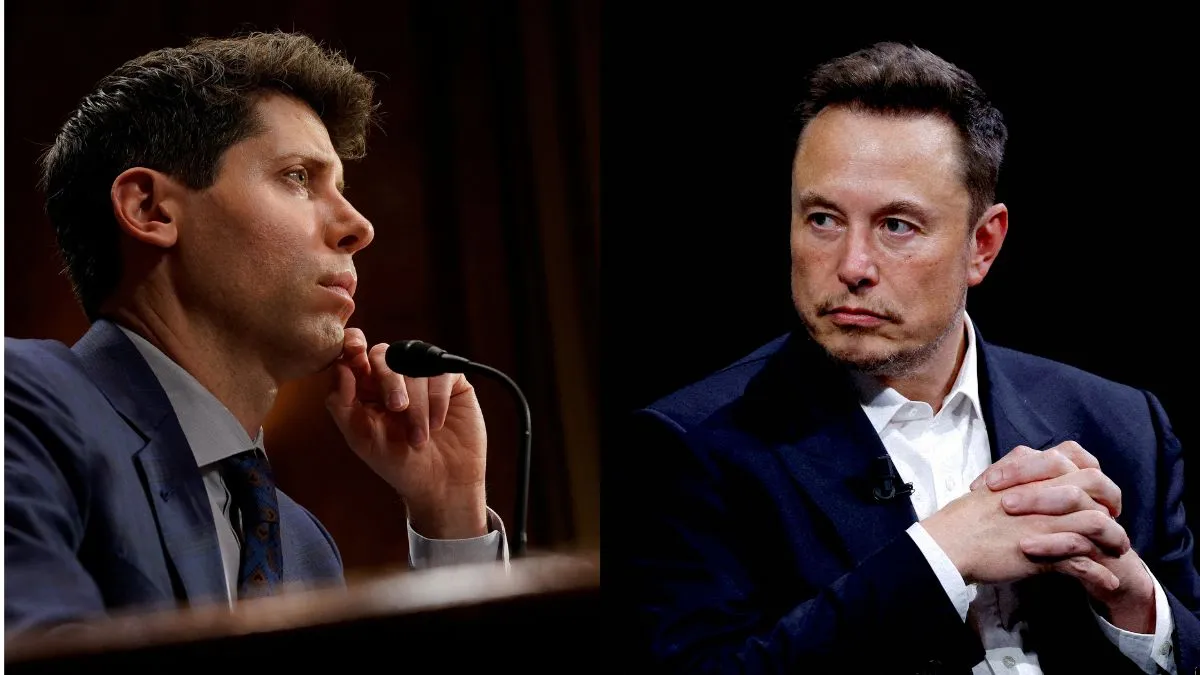
The fight between Elon Musk and Sam Altman is no longer just about corporate structure or business strategy. It has turned into something far more personal and serious.
Both men helped launch OpenAI with the idea that artificial intelligence should benefit humanity. But years later, they are now on opposite sides of a heated legal battle. Musk believes OpenAI abandoned its original nonprofit mission and shifted toward chasing profits. Altman and OpenAI, on the other hand, maintain that their structure supports innovation at scale.
ALSO READ: Vivo X300 Ultra Set For Global Debut At MWC 2026 As Company’s Most Advanced Camera Phone Yet
Now, a newly released legal deposition has added fuel to the fire.
In video testimony recorded in September and made public this week ahead of a possible jury trial next month, Musk made a sharp accusation. He claimed that OpenAI’s chatbot, ChatGPT, has been linked to user suicides. He contrasted that with his own AI system, Grok, saying, “Nobody has committed suicide because of Grok, but apparently they have because of ChatGPT.”
The comment refers to ongoing lawsuits against OpenAI. In those cases, plaintiffs argue that emotionally intense or manipulative conversations with ChatGPT worsened mental health conditions. Some complaints reportedly connect the chatbot’s interactions to tragic outcomes, including suicide. OpenAI has not admitted wrongdoing, and the cases are still unfolding in court.
Recommended For You
The deposition is part of Musk’s broader lawsuit against OpenAI. At the center of the dispute is the company’s transition from a nonprofit research lab to a capped for-profit structure. Musk argues that this shift violated OpenAI’s founding principles. According to him, the organisation was created to ensure AI development would remain safe and not be controlled by a single powerful commercial entity.
He has repeatedly warned that commercial pressures revenue targets, scale, and partnerships, can push companies to move faster than safety standards should allow. In his view, AI development requires extreme caution, not a race for dominance.
That concern is not new. In March 2023, Musk signed a widely discussed open letter calling for a pause on developing AI systems more powerful than GPT-4. The letter, backed by more than 1,100 signatories including researchers and technologists, warned that AI labs were locked in an “out-of-control race.” When asked in the deposition why he signed it, Musk responded simply that it “seemed like a good idea,” adding that his priority has always been AI safety.
But while Musk has positioned himself as a champion of responsible AI, his own platform has faced scrutiny.
Grok, developed by his AI company xAI and integrated into X, was recently at the center of controversy after users generated and shared non-consensual nude images. Some reports indicated that minors may have been involved. The episode triggered investigations by the California Attorney General’s office and drew regulatory attention in the European Union. In some regions, restrictions and blocks followed.
So this is not a one-sided story
The rivalry itself dates back to OpenAI’s early days. Musk has said he helped start the organisation because he feared Google would dominate AI development without sufficient safety guardrails. He has described conversations with Google co-founder Larry Page as “alarming,” suggesting Page did not appear to treat AI safety as a primary concern. In Musk’s telling, OpenAI was meant to act as a counterbalance.
Musk left OpenAI’s board in February 2018, citing a conflict of interest with Tesla’s AI work. Reports at the time also pointed to disagreements over direction and control.
ALSO READ: Xiaomi QLED TV X Pro 75 Goes On Sale In India With Big Screen Focus: Check Specs, Features And Price
Today, what began as a philosophical disagreement has become a courtroom battle. And with both sides making serious claims about safety, responsibility, and intent, the outcome could shape not just their rivalry, but the broader conversation around how powerful AI systems should be built and governed.