
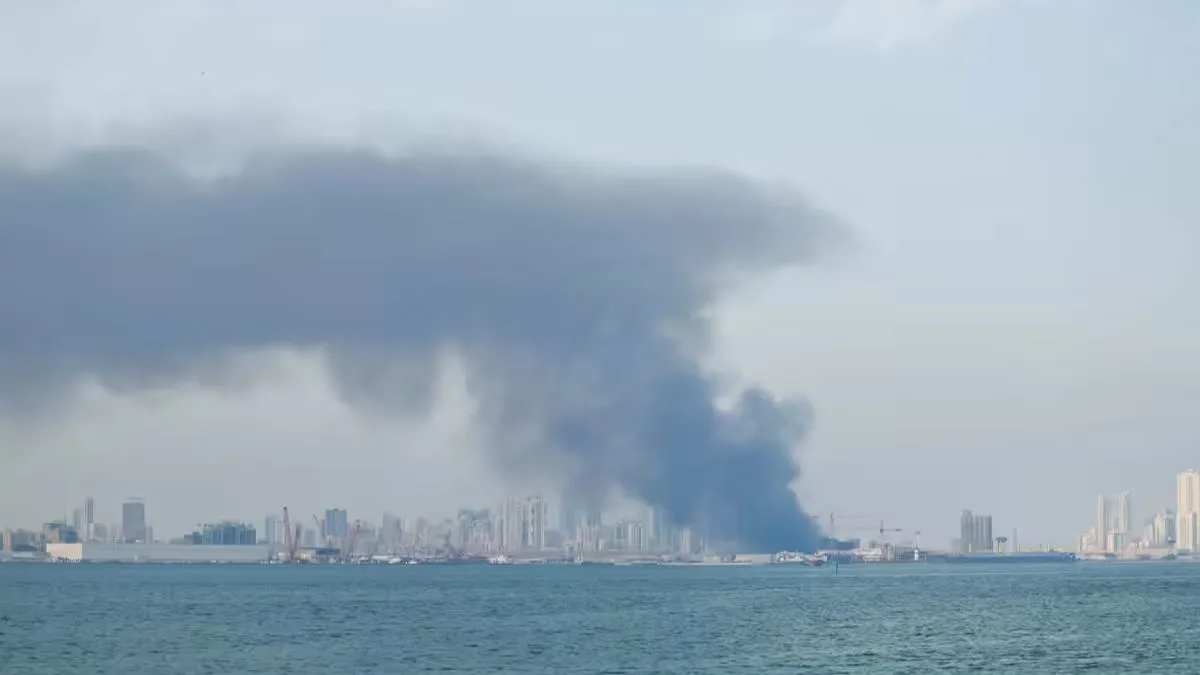
A drone attack triggered a fire near a nuclear power station in Abu Dhabi, United Arab Emirates, on Sunday. Authorities said no injuries were reported and radiation levels remained unaffected. The incident occurred at the Barakah nuclear power plant in Abu Dhabi’s remote western desert region near the Saudi border.
In a statement posted by the Abu Dhabi Media Office, authorities did not specify where the drone originated from. However, the UAE has recently accused Iran of carrying out attacks targeting the country’s energy and economic infrastructure.
The UAE’s nuclear regulator said the fire did not affect the plant’s safety systems. “All units are operating as normal,” it said in a post on X.
Authorities in Abu Dhabi responded to a fire incident that broke out in an electrical generator outside the inner perimeter of the Barakah Nuclear Power Plant in the Al Dhafra Region, caused by a drone strike. No injuries were reported, and there was no impact on radiological…
— مكتب أبوظبي الإعلامي (@ADMediaOffice) May 17, 2026
Why Barakah Matters To The UAE
The Barakah nuclear power plant is one of the UAE’s most strategically important projects. Built with South Korean support at a cost of nearly 20 billion dollars, the facility began operations in 2020 and today supplies around 25 per cent of the country’s electricity needs.
It is also the only operational nuclear power plant on the Arabian Peninsula and the first commercial nuclear facility in the Arab world making it a symbol of the UAE’s push to diversify its energy sources beyond oil.
Situated about 200 kilometres west of Abu Dhabi near the Saudi and Qatari borders, Barakah has long been seen as a high-value strategic site. Sunday’s drone strike was the first reported attack on the four-reactor facility during the ongoing US-Iran tensions.
Recommended For You
ALSO READ: WATCH: PM Modi Welcomed With Gripen Fighter Jet Escort Before Sweden Landing
The UAE had signed a strict agreement with the US regarding the plant, known as the “123 agreement”, under which it agreed to forgo domestic uranium enrichment and the reprocessing of spent fuel to address concerns over nuclear proliferation. The uranium used at the facility is imported.
The UAE has faced several missile and drone attacks amid the Israel-US-Iran conflict. Authorities have said multiple incidents originated from Iran and targeted energy facilities and maritime infrastructure.
You May Also Like To Watch
The Middle East conflict started following the killing of 86-year-old Iran's Supreme Leader, Ayatollah Ali Khamenei, in joint military strikes by the US and Israel, after which Iran, in its retaliation, targeted Israeli and US assets in several Gulf countries and Israel, causing disruption in the waterway and affecting international energy markets and global economic stability since February 28.
Iran still has a chokehold on the Strait of Hormuz, a vital waterway where a fifth of the world's oil and natural gas passes through before the war, disrupting global energy supplies.
Meanwhile, a ceasefire was also agreed upon on April 8, with mediation from Pakistan. However, follow-up talks did not lead to a final peace deal. The ceasefire was extended, but no permanent agreement was reached.