
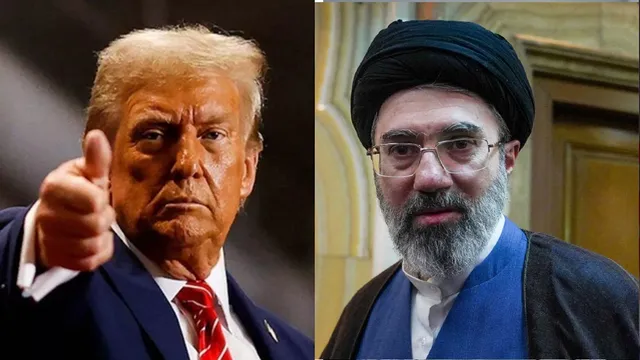
- US reportedly asked Iran to hand over 400 kg enriched uranium and limit nuclear operations to one facility.
- Washington also refused compensation and reportedly rejected releasing Iran’s frozen assets.
- Iran demanded sanctions relief, release of frozen funds, and recognition over the Strait of Hormuz.
Iran-US Negotiations: The Middle East conflict continues as fresh Israeli strikes hit southern Lebanon, regional tensions disrupted global oil flows on Saturday, and diplomatic efforts struggled to sustain fragile ceasefires. Amid the escalating situation, the United States has reportedly placed five major conditions before Iran during the ongoing negotiations.
Here Are The 5 Conditions In Ongoing Iran Talks Led By The United States
- According to a report by Iran’s Fars News Agency, Washington has refused to pay any compensation to Iran for losses caused by earlier sanctions and policy decisions.
- Secondly, the US has reportedly demanded that Iran hand over 400 kilograms of enriched uranium to America as part of the negotiations.
- The third condition mentioned in the report states that only one set of Iran’s nuclear facilities should remain operational. The US is also said to have rejected the release of even 25 per cent of Iran’s frozen overseas assets.
- Fourth, the US has reportedly linked the end of conflicts on various fronts to the continuation and completion of the negotiations.
- Lastly, the report stated that the threat of American and Israeli aggression would remain in place even if Iran agrees to these conditions, according to Ynetnews.
ALSO READ: What Is ‘Operation Sledgehammer'? Trump Issues Fresh Threat Against Iran
'United States Offering No Tangible Concessions': Iran
Iranian media on Sunday claimed that the US failed to offer any concrete concessions in response to Tehran’s proposal aimed at ending the war. “The United States, offering no tangible concessions, wants to obtain concessions that it failed to obtain during the war, which will lead to an impasse in the negotiations,” Mehr News Agency said.
Recommended For You
Iranian media also reported that Tehran has laid down five “confidence-building” preconditions for any future talks. These include an end to conflicts on all fronts, particularly in Lebanon, the lifting of sanctions on Iran, and the release of frozen Iranian funds.
Iran has also demanded compensation for war-related damages and recognition of its sovereignty over the Strait of Hormuz, a crucial global oil shipping route.
Meanwhile, US President Donald Trump recently rejected Iran’s 14-point peace proposal. In response, Iranian Parliament Speaker Mohammad Bagher Qalibaf warned that if the US does not accept Iran’s proposal, American taxpayers could end up paying a heavy price, according to The Hill.
The Middle East conflict started following the killing of 86-year-old Iran's Supreme Leader, Ayatollah Ali Khamenei, in joint military strikes by the US and Israel, after which Iran, in its retaliation, targeted Israeli and US assets in several Gulf countries and Israel, causing disruption in the waterway and affecting international energy markets and global economic stability since February 28.
Iran still has a chokehold on the Strait of Hormuz, a vital waterway where a fifth of the world's oil and natural gas passes through before the war, disrupting global energy supplies.
You May Also Like To Watch:
Meanwhile, a ceasefire was also agreed upon on April 8, with mediation from Pakistan. However, follow-up talks did not lead to a final peace deal. The ceasefire was extended, but no permanent agreement was reached.