
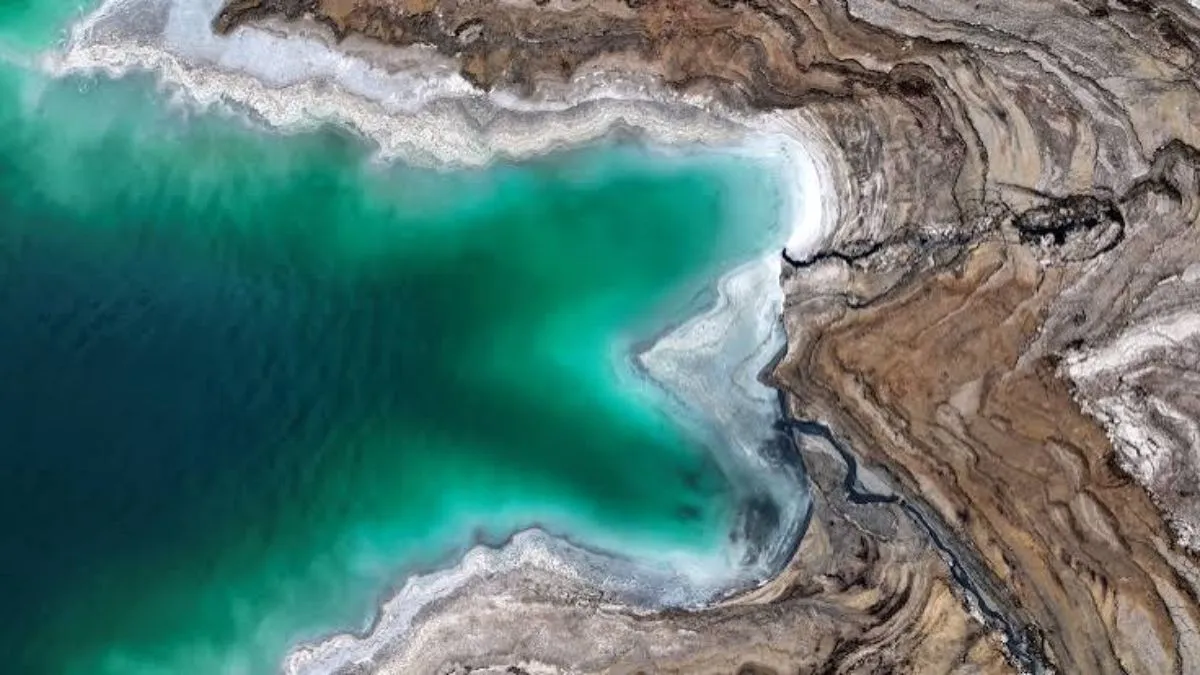
- Dead Sea shrinks four feet annually, exposing shoreline.
- Water diversion, climate change, industry cause decline.
- Falling water level creates dangerous sinkholes and salt.
The Dead Sea, one of the saltiest bodies of water in the world, is shrinking by around four feet (1.2 metres) a year. As its water level falls, stretches of its shoreline are being exposed, leaving behind white salt deposits and creating dangerous sinkholes.
Located between Israel, Jordan and the Palestinian territories, the Dead Sea is not actually a sea but a landlocked saltwater lake. It lies around 430 metres (1,410 feet) below sea level, making it the lowest exposed land area on Earth. Its water is so salty that people can float on the surface with little effort.
However, the lake is facing a growing environmental crisis. Less freshwater is reaching it, the region’s hot and dry climate encourages evaporation, and industrial activities are adding to the pressure. Here are five facts that explain why the Dead Sea is shrinking and how its landscape is changing.
Recommended For You
1. The Dead Sea Is A Lake, Not A Sea
Despite its name, the Dead Sea is a lake with no outlet to another sea or ocean. Its main water source is the Jordan River, which flows into it from the north.
Because water cannot flow out naturally, most of the water lost from the lake escapes through evaporation. When the amount of water entering the lake is much lower than the amount lost, its level falls. This is what has been happening to the Dead Sea for decades.
2. Its Water Level Is Falling By Around Four Feet A Year
The Dead Sea’s water level has dropped sharply over the past several decades. According to the US Geological Survey, the decline reached around 1.2 metres, or nearly four feet, a year in figures reported in 2018.
One major reason is that much less water now reaches the lake from the Jordan River. Water is diverted upstream for farming, drinking supplies and other uses. With less freshwater flowing in to replace what is lost through evaporation, the lake continues to shrink.
3. Climate Change Is Adding To The Problem
The Dead Sea is located in an arid, hot climate where evaporation occurs at a fast rate. An increase in temperature results in an increase in the amount of water that evaporates. Variations in rainfall and drought can deplete the lake of its inflows.
It is not just global warming that has caused this. The human exploitation of river water and the diversion of natural water flows have significantly contributed to its downfall, while industrial activity heavily impacts the balance of the water in the lake.
4. The Retreating Water Is Leaving Salt Behind
The Dead Sea is about 10 times saltier than regular seawater. When water evaporates, the minerals in it do not. Instead, the water being evaporated becomes saturated with salt, and some of this salt precipitates out of solution and forms crystals that settle to the bottom of the lake.
With the receding coastline comes the exposure of more of these deposits, white strips of salt that stretch out across the land. It's not that the lake is becoming more and more salty; it's that the water is disappearing.
5. Thousands Of Sinkholes Are Forming Around The Shore
The falling water level is also linked to the formation of thousands of sinkholes along the Dead Sea’s coastline.
Here is how they form: as the lake retreats, underground freshwater can reach layers of salt that were previously surrounded by the lake’s salty water. The freshwater dissolves the salt, leaving empty spaces beneath the ground. When the soil above these cavities can no longer support its own weight, it collapses, forming a sinkhole.
These holes can appear suddenly and damage roads, land and tourist facilities, making some areas unsafe.
Can The Dead Sea Be Saved?
There are many factors behind the death of the sea, from less water entering due to less runoff to the depletion of minerals and a changing climate. Solving the crisis would include improved management of water and regional cooperation over the water bodies that fill the lake.
Restoring the shrink is a tough task, but knowing what is causing it is a significant first step. For now, the retreats in the shoreline, the creeping salt deposits, and sinkholes are tangible proof of how altered water consumption and natural surroundings are reshaping a natural wonder.
You May Also Like To Watch: