
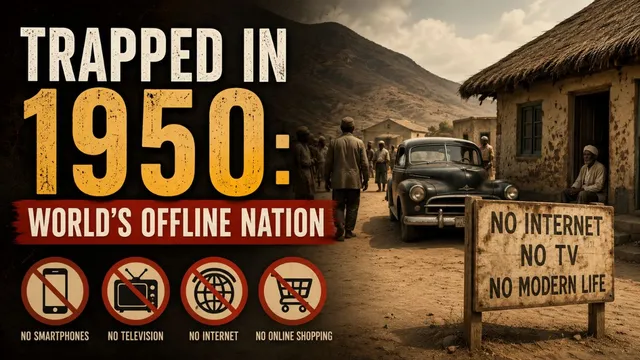
- Eritrea is world's most digitally isolated nation, no mobile internet.
- State-owned telecom ensures strict control over all communications.
- Limited internet access impacts economy, education, global information.
Often, North Korea is described as one of the most isolated countries in the world, where the ruling regime exercises strict control over nearly every aspect of daily life. Yet even under Supreme Leader Kim Jong-un, internet access is not completely absent, though it is heavily restricted.
There is, however, another country that remains even more digitally isolated. Parts of it seem frozen in time, evoking memories of the 1950s, an era before smartphones, widespread television, online shopping and the internet became part of everyday life.
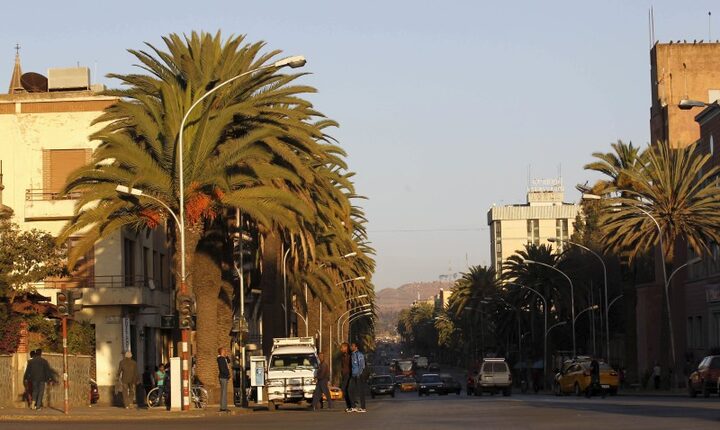
(A general view shows palm trees along the main street of Eritrea's capital Asmara, February 20, 2016 | CREDIT: REUTERS)
No smartphones, no internet
In an era where smartphones and high-speed internet have become an essential part of daily life, the East African nation of Eritrea stands out for a very different reason. It remains one of the few countries in the world where mobile internet is virtually unavailable, and access to television, independent media and digital communication is tightly restricted.
ALSO READ: How North Korea Still Functions Despite Being Cut Off From The World | 7 Key Facts
Eritrea, located on the Red Sea and bordering Ethiopia, Sudan and Djibouti, has long maintained strict control over its telecommunications sector. The country's only telecom operator is state-owned, giving the government complete authority over internet and mobile services.
Only low-speed internet cafes
While limited fixed-line internet is available in some government offices, businesses and internet cafés, ordinary citizens have little or no access to mobile data services.
Internet penetration in Eritrea is among the lowest globally. Most residents rely on basic mobile phones for voice calls and text messages, while broadband connections are rare and often slow. The limited digital infrastructure has also affected online education, e-commerce, digital banking and access to global information.
Recommended For You
No private media
The government's restrictive approach to communications is closely linked to its broader media policy. Eritrea has no privately owned news organisations, and independent journalism has been effectively absent for years. International watchdogs have repeatedly ranked the country among the world's most restrictive environments for press freedom and internet access.
Why is Eritrea so isolated?
Analysts say several factors have contributed to Eritrea's digital isolation. Years of international sanctions, economic challenges, limited foreign investment and government policies prioritising state control over rapid technological expansion have slowed the development of modern telecommunications infrastructure.
The lack of widespread internet connectivity has significant economic implications. Businesses face difficulties reaching international markets, entrepreneurs have limited opportunities in the digital economy, and young people have fewer avenues for online learning and innovation. At the same time, many Eritreans living abroad rely on traditional phone services to stay in touch with relatives back home.