
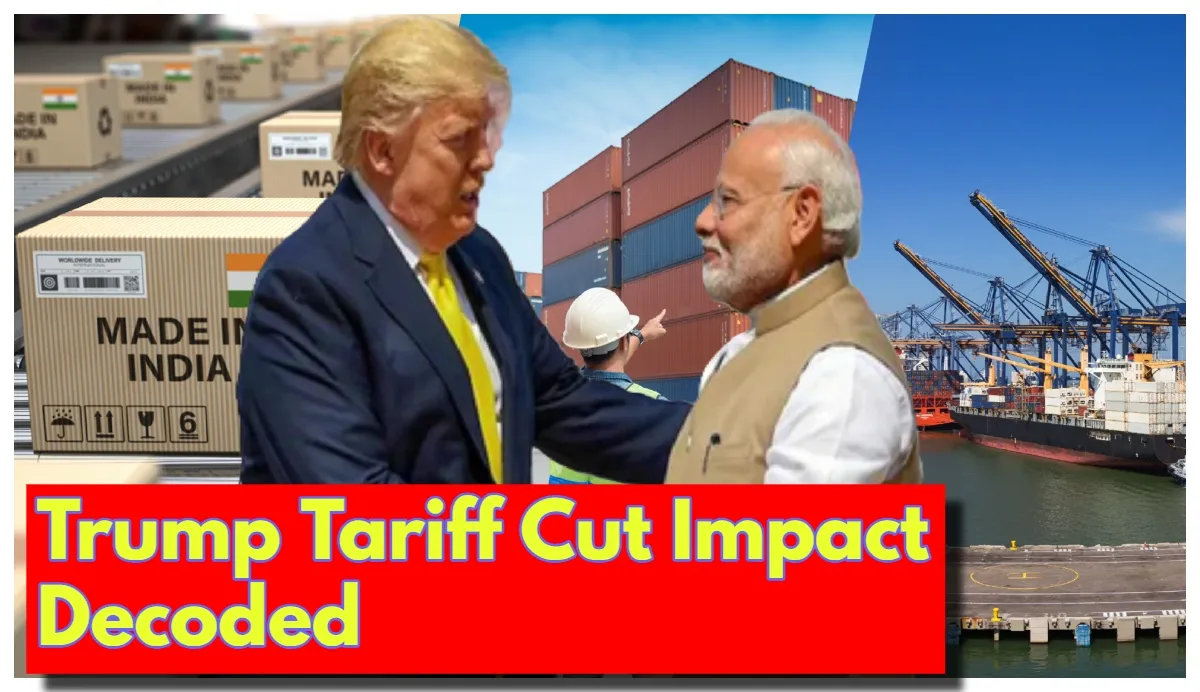
India-US Trade Deal Agreement: India and the US finally announced the much-awaited India-US trade agreement on Monday night, the breakthrough followed by a crucial telephonic conversation between American President Donald Trump and Prime Minister Narendra Modi. Following the announcement of the US-India trade deal, in which Trump reduced tariffs on India to 18 per cent from the current 25 per cent, trade experts called it a landmark pact that will give a big boost to Indian exports.
The significant trade deal between the two economic powers drew strong endorsement from Indian-American business leaders and mixed but largely constructive reactions from policy veterans, with supporters calling it a breakthrough.
Wonderful to speak with my dear friend President Trump today. Delighted that Made in India products will now have a reduced tariff of 18%. Big thanks to President Trump on behalf of the 1.4 billion people of India for this wonderful announcement.
— Narendra Modi (@narendramodi) February 2, 2026
When two large economies and the…
Following Trump's announcement on social media, PM Modi, on X, said it was wonderful to speak with his "dear friend President Trump" and expressed delight that "Made in India products will now have a reduced tariff of 18%".
Which Sectors To Get Benefits?
The announcement is important as several labour-intensive sectors like textiles, apparel, leather and marine were facing challenges to export goods to the US as they face 50 per cent tariffs. According to Commerce and Industry Minister Piyush Goyal, the India-US trade agreement will open up huge opportunities for domestic farmers, MSMEs, entrepreneurs, and skilled workers and promote Make in India initiative. This agreement unlocks unprecedented opportunities for farmers, MSMEs, entrepreneurs, and skilled workers to Make in India for the world, Design in India for the world, and Innovate in India for the world, he added.
Trump Tariff Impact On India's Export
According to the government data, India's merchandise exports to the US declined 1.83 per cent to USD 6.88 billion in December 2025 due to high tariffs imposed by America, according to Commerce Ministry data. Exports also contracted in September and October last year. However, it rose 22.61 per cent in November. Imports grew 7.57 per cent to USD 4.03 billion in December 2025.
Recommended For You
ALSO READ: US President Donald Trump And PM Modi Hold Conversation, Says Ambassador Sergio Gor
During the April-December period of this fiscal year, the country's exports to the US increased 9.75 per cent to USD 65.87 billion, while imports rose 12.85 per cent to USD 39.43 billion. The US has imposed a sweeping 50 per cent tariff on Indian goods entering American markets from August 27.
Experts Decode US-India Trade
- Venture capitalist and Republican fundraiser Asha Jadeja Motwani said the deal was widely anticipated within Trump administration circles and described the outcome as a major success.
- South Asia analyst Michael Kugelman on Monday (local time) said that the agreement marks the "biggest victory" in bilateral relations between the two countries in nearly a year. Kugelman said the agreement had been a long time coming, recalling that nearly a year had passed since US President Donald Trump hosted Prime Minister Narendra Modi at the White House and both leaders committed to pursuing a trade deal, adding that the relationship had faced multiple tensions in the months that followed.
- Commerce Secretary Rajesh Agrawal termed the it a "landmark trade deal", saying it will unlock shared prosperity, innovation and growth for two natural democratic partners.
- Think tank GTRI said clarity is required on which products are covered under the deal and the applicable timelines.
- Aqeel Panaruna, Chairman, Florence Shoe Company and Director, Grand Atlantia Panapakkam SEZ PvT Ltd, said it Will strengthen India's global leadership.
- Federation of Indian Export Organisations ( FIEO) president SC Ralhan said that it would be a game-changer for the competitiveness of Indian exports vis-a-vis other Asian suppliers. "It is expected to lead to an immediate and substantial release of orders that were earlier put on hold, particularly in labour-intensive sectors such as apparel, textiles, leather and footwear, where global buyers typically lock in summer season sourcing by December," Ralhan said.
(With agencies inputs)