
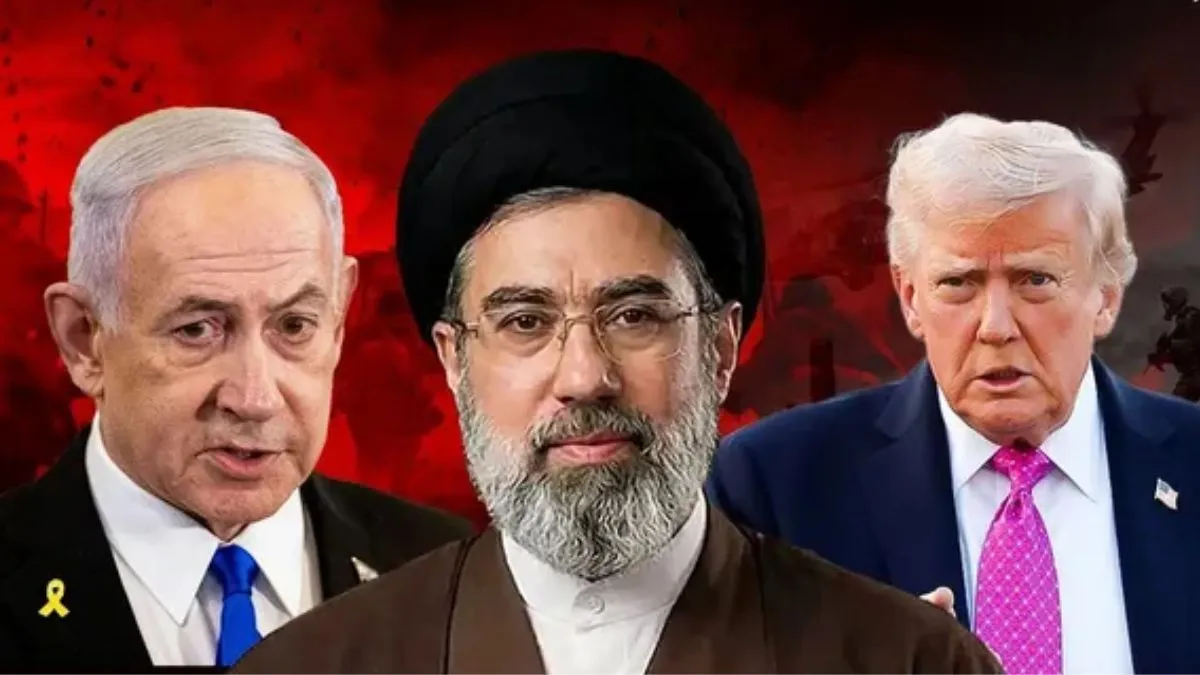
Amid escalating military tensions with the United States and Israel, a new bill has been introduced in the Iranian Parliament proposing the country's withdrawal from the Nuclear Non-Proliferation Treaty (NPT). This move has ignited a fierce political and strategic debate within Tehran.
Iranian lawmaker Malek Shariati stated that the proposal outlines significant shifts in national nuclear policy. These include exiting the NPT, repealing laws that govern Iran's commitments under previous nuclear deals and advocating for a new international framework to develop peaceful nuclear technology alongside allied nations.
The bill comes at a volatile time, the Iranian Parliament has not officially convened since the commencement of joint strikes by US and Israeli forces, leaving the timeline for formal debate or passage uncertain.
Understanding The "Nuclear Triad"
A Nuclear Triad is a three-pronged military force structure that allows a country to deploy nuclear weapons via land, sea and air. Specifically, it involves:
ALSO READ: 'No Kings' Protests: Why Are Americans Taking To Streets Against Donald Trump Again | Explained
- Land-based missiles (ICBMs)
- Submarine-launched missiles
- Strategic bombers (Aerial strikes)
The primary objective of this triad is "second-strike capability." It ensures that even if a nation is hit by a devastating first strike, it retains at least one functional avenue to launch a retaliatory nuclear attack. India is among the few nations that have successfully established and strengthened its nuclear triad in recent years.
Recommended For You
Purpose Of The NPT
The global nuclear race began after the US bombed Hiroshima and Nagasaki during WWII, followed by the USSR, UK, France and eventually China in the 1960s. To prevent a total global arms race, the Non-Proliferation Treaty (NPT) was proposed.
Established in 1968 and enforced by 1970, the NPT has three core goals:
- Preventing the spread of nuclear weapons.
- Promoting total nuclear disarmament.
- Encouraging the peaceful use of nuclear energy.
The treaty recognises only five nations as "nuclear-weapon states" (USA, Russia, China, UK and France) while granting other signatories the right to access nuclear technology for peaceful purposes.
India's Stance: Why It Stayed Away
India has consistently refused to sign the NPT, labeling it discriminatory. New Delhi argues that the treaty creates a "nuclear apartheid" by allowing five specific countries to keep their arsenals while banning others from developing them.
ALSO READ: Pakistan's ISI Smuggling Fake Notes Into India, BSF Recovers Rs 2.5 Lakh Counterfeit Currency
After conducting nuclear tests in 1974 and 1998, India declared itself a nuclear power but maintains a "No First Use" policy. Despite not being an NPT signatory, India has garnered international cooperation due to its record as a responsible nuclear state.
NPT Vs TPNW: Key Differences
While both aim for a nuclear-free world, their frameworks differ:
NPT (Non-Proliferation Treaty): Opened in 1968 and extended indefinitely in 1995, it includes 191 member states. It focuses on regulation and gradual disarmament.
TPNW (Treaty on the Prohibition of Nuclear Weapons): Adopted by the UN in 2017 and enforced on January 22, 2021, this treaty seeks a total ban on nuclear weapons. It was developed with significant input from international organizations and civil society.
Other relevant frameworks include the Comprehensive Nuclear-Test-Ban Treaty (CTBT) and the Strategic Arms Limitation Talks (SALT).
Criticisms And Loopholes Of NPT
The NPT is often criticized for several inherent weaknesses:
The Exit Clause: Under Article X, a member can withdraw if "extraordinary events" jeopardise its supreme interests, provided they give three months' notice to the UN Security Council.
Slow Disarmament: While the P5 are supposed to reduce their arsenals, critics argue the process is stagnant.
The "Peaceful Use" Mask: There is a concern that nations can use "peaceful energy programs" as a front to acquire technology that is later pivoted toward weaponisation, an accusation frequently leveled against Iran.