
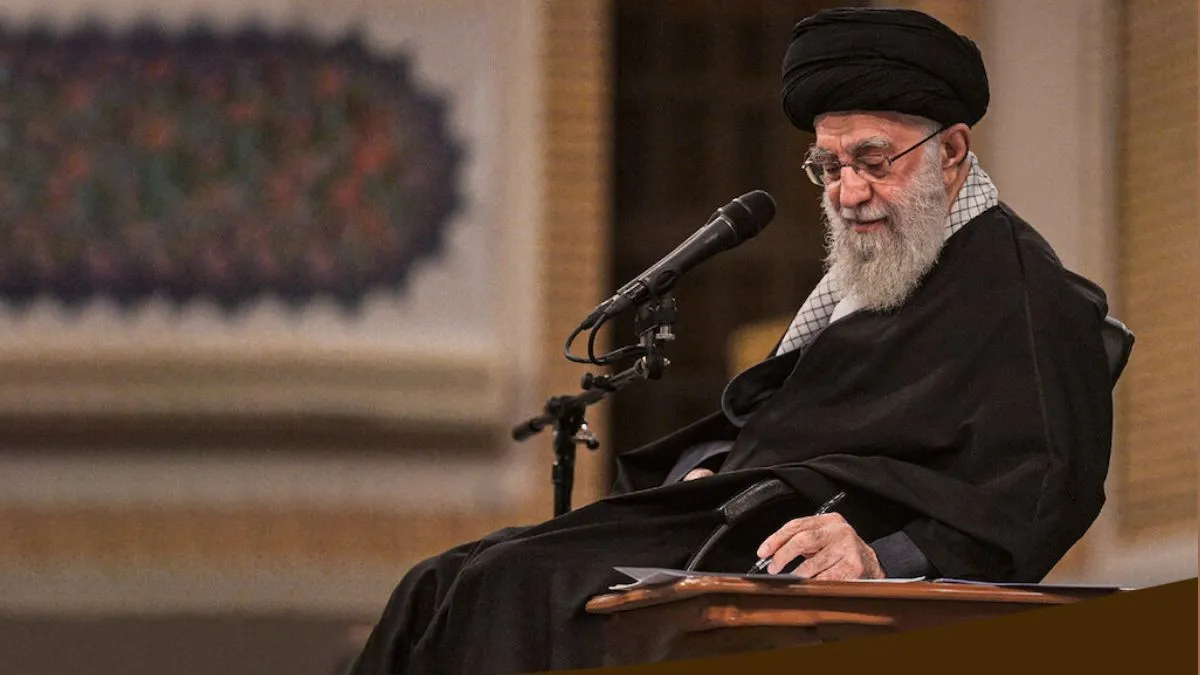
Ayatollah Ali Khamenei India Remarks: Iran's Supreme Leader Ayatollah Ali Khamenei recently sparked a controversy, particularly in India, with remarks claiming that Muslims in India are "suffering." The Indian government strongly rejected his comments, calling them "misinformed and unacceptable." Despite this backlash, Khamenei remains a figure of substantial moral and political authority among Muslims worldwide. As Iran's Supreme Leader since 1989, Khamenei holds the highest religious and political position in the country, making him the ultimate decision-maker on major policies.
Khamenei is considered a marja, or religious guide, to millions of Shia Muslims, extending his influence far beyond Iran’s borders. His leadership has enabled Iran to become a key player in regional geopolitics, supporting movements and governments across the Middle East, from Hezbollah in Lebanon to the Assad regime in Syria. Here are five crucial aspects to understand about Ayatollah Ali Khamenei's power and his wide-reaching influence in the Muslim world.
1. Most Powerful Authority In Iran
Ayatollah Ali Khamenei is not just a religious figure but the ultimate political leader of Iran. As Supreme Leader, Ali Khamenei holds the highest position in the country, commanding both the state and the military. His authority allows him to issue decrees, shape Iran's foreign policy, and decide on economic, environmental and national planning matters. His power transcends the presidency and parliament, making him the final arbiter of Iranian policy.
Recommended For You
2. Key Figure In Islamic Iranian Revolution
Ayatollah Ali Khamenei was a close confidant of Ayatollah Ruhollah Khomeini, the leader of the 1979 Iranian Revolution, which overthrew the monarchy in Iran. He played an instrumental role in shaping the Islamic Republic’s early political landscape. An advocate of velāyat-e faqīh (governance by the religious jurist), he was a founding member of the Islamic Republican Party (IRP). His loyalty and support for Ayatollah Ruhollah Khomeini were pivotal in his eventual rise to power.
3. Becoming Supreme Leader
Ayatollah Ali Khamenei became the Supreme Leader of Iran in 1989, succeeding Ayatollah Ali Khomeini after his death. Though not initially qualified as a marja (highest level of Shia cleric), the Assembly of Experts amended the constitution to enable his rise to this position. His selection was not without controversy, facing opposition from several grand ayatollahs. However, since assuming the role, he has remained Iran’s supreme authority for decades, making significant decisions that shape the nation's direction.
4. Global Influence In Muslim World
Ayatollah Ali Khamenei’s reach extends far beyond Iran. As a Marja, he is recognised as one of the most influential Shia clerics globally. His influence is particularly strong among Shia Muslim communities in countries like Lebanon, Iraq, Yemen and Bahrain, where Shia populations look to him for guidance. In India, which has a significant Shia Muslim population, many pay their Islamic taxes, known as Khums, based on Khamenei’s directions.
5. Remarks On Global Issues
Ayatollah Ali Khamenei is known for his outspoken stance on global Muslim issues. A steadfast supporter of the Palestinian resistance, he has consistently urged Muslims to unite beyond sectarian divisions. Khamenei has also been a prominent critic of U.S. dominance and advocates for a multipolar world order. Despite facing criticism from the Western world for many of his views, he continues to hold substantial moral and political influence among Muslims across the globe.