
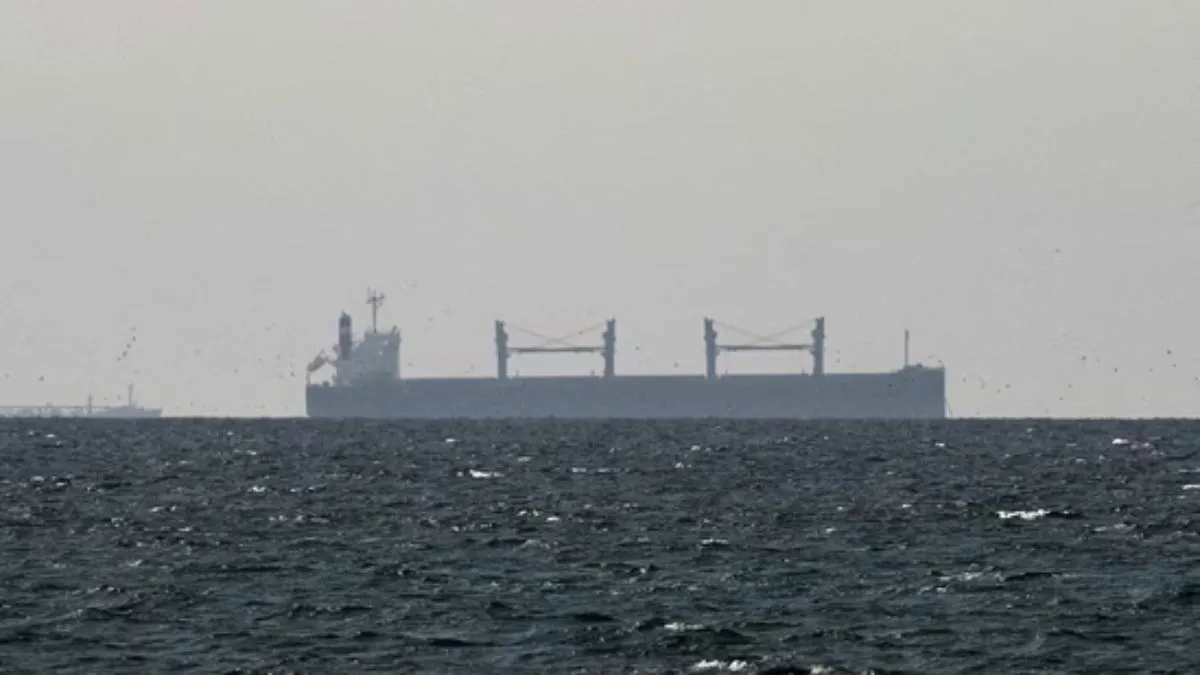
- Iran and Oman agree on Strait of Hormuz water and revenue sharing.
- Strait reopening conditional on US accepting Iran-Oman agreement terms.
- US accused of obstructing negotiations for vital global energy route.
In a major breakthrough, Iran and Oman have reached an agreement on their share of the Strait of Hormuz and its revenues. However, Iran has warned that the Strait will remain closed unless the United States accepts the terms agreed upon by Tehran and Muscat, according to Iran's Revolutionary Guards on Wednesday.
Both nations have held negotiations for several weeks over the management of maritime traffic through the Strait which is a critical global energy route that handles around one-fifth of the world's oil and liquefied natural gas shipments before the war began in February.
“During negotiations with Oman, some agreements were made regarding the share of each country in the waters of the Strait and the share of Iran and Oman in its revenues," Islamic Revolutionary Guard Corps spokesman Hossein said, adding that the United States was “obstructing work" to finalise a deal.
Recommended For You
According to Iranian state media, "The Strait of Hormuz belongs to Iran and the country of Oman... We have been in negotiations with Oman for about a month, and we have reached results that are acceptable to both sides," said Mohebbi.
The escalation of the Middle East war has brought most shipping through the Strait to a halt, contributing to higher global energy prices as Tehran and Washington seek to assert control over the vital waterway and impose separate blockades.
The latest development follows statements by Iran and Oman on Tuesday that the two countries had discussed a “joint temporary navigational corridor" through the Strait and agreed to clear the route of mines. Omani Foreign Minister Badr Albusaidi said he was hopeful that details of a temporary corridor and arrangements to restore safe navigation could be announced soon.
Moreover, the IRGC has also accused the United States of attempting to obstruct negotiations between Iran and Oman, saying that US interference had delayed the agreement.
“If the United States stops obstructing and returns to the agreement, we can open the Strait of Hormuz within the framework of the agreement reached… If the United States does not accept our conditions, the Strait of Hormuz will not be opened under any circumstances," Mohebbi said.
The Middle East conflict started following the killing of 86-year-old Iran's Supreme Leader, Ayatollah Ali Khamenei, in joint military strikes by the US and Israel, after which Iran, in its retaliation, targeted Israeli and US assets in several Gulf countries and Israel, causing disruption in the waterway and affecting international energy markets and global economic stability since February 28.