
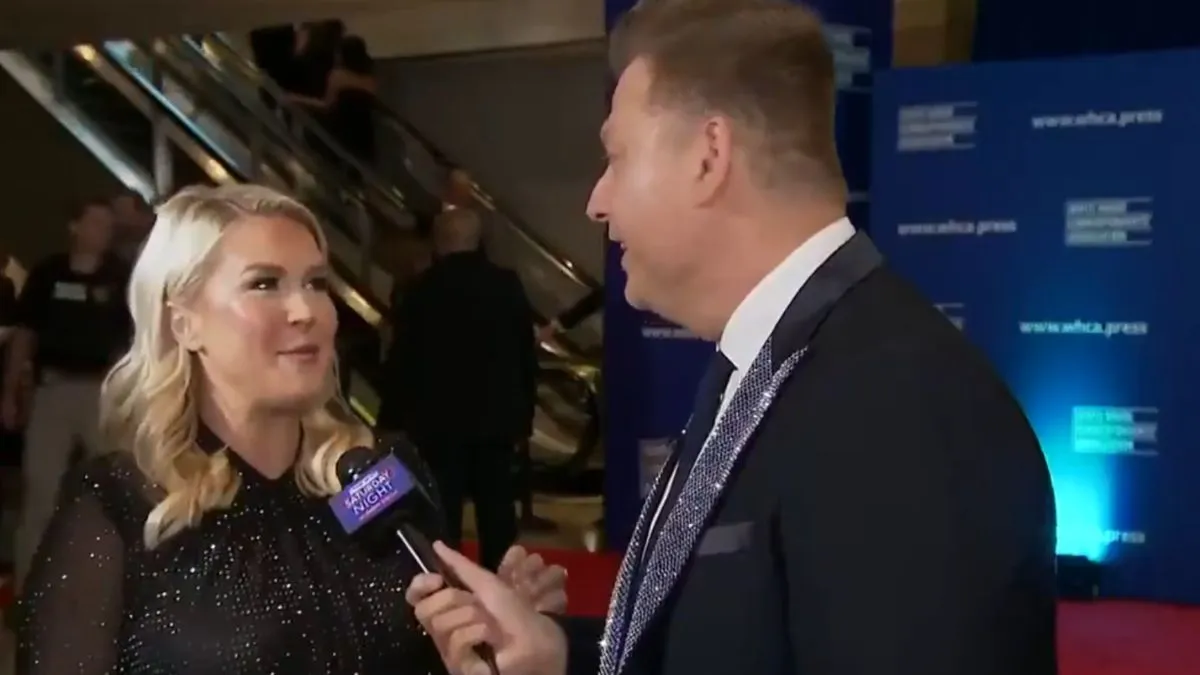
A chilling "coincidence" has put White House Press Secretary Karoline Leavitt under the spotlight after a shooting disrupted the White House Correspondents' Dinner in Washington. US President Donald Trump and first lady Melania Trump were rushed out of the White House Correspondents' Association dinner by Secret Service agents on Saturday night after a man opened fire on security personnel nearby. The man fired a shotgun at a Secret Service agent at a checkpoint in the Washington Hilton hotel before being tackled and arrested.
🇺🇸Press Secretary Leavitt: Classic Trump will be on display tonight at the White House Correspondents’ Dinner
— Mario Nawfal (@MarioNawfal) April 25, 2026
“I will tell you this, tonight’s speech will be classic Donald J. Trump. It will be funny, it will be entertaining.
There will be some shots fired in the room, so… https://t.co/ajdbVMBAEm pic.twitter.com/OIgIwpB0YV
Hours before the incident, Leavitt, speaking to the media ahead of the high-profile dinner, remarked that "there will be some shots fired tonight in the room," referring to what was expected to be a sharp, politically charged speech by Trump.
What happened at the event?
The annual gala at the Washington Hilton descended into chaos when a gunman opened fire near the venue, triggering panic among thousands of attendees. Top officials, including Trump, were swiftly evacuated as Secret Service agents neutralised the threat. At least one officer was injured but survived due to protective gear.
Witnesses described scenes of confusion, with guests diving under tables as shots rang out.
Karoline's viral comment
In the aftermath, Leavitt's earlier remark went viral across social media. Critics and commentators pointed out the eerie timing, with some questioning whether the statement hinted at prior knowledge. However, context suggests otherwise.
The phrase "shots fired" is commonly used in political and media circles, especially during the Correspondents' Dinner, to describe verbal jabs, satire, or "roasting" during speeches.
Coincidence, not prediction
There is no evidence that Leavitt had any foreknowledge of the attack. Her comment appears to have been figurative, referencing the tone of Trump’s expected address rather than a literal incident.
Still, the overlap between rhetoric and reality has fueled online speculation and criticism, highlighting how sensitive language can take on unintended meaning during crises.
(With inputs from agency)