
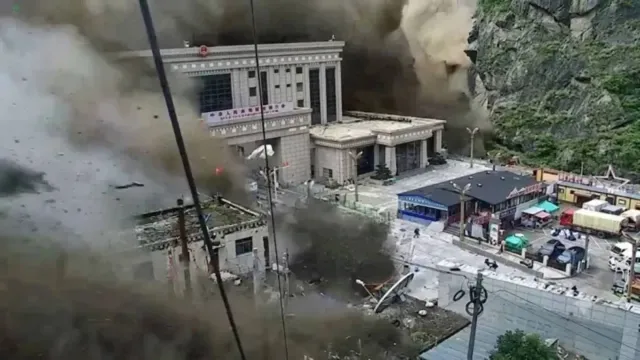
- Flash flood in central Nepal killed over 100.
- Disaster caused by ice and rock blockage bursting.
- Nepal vulnerable to GLOFs due to warming Himalayas.
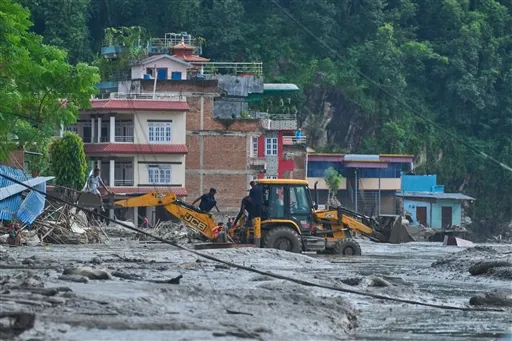
Nepal Floods Latest Updates: A massive flash flood from Tibet swept through central Nepal on Wednesday killing at least 100 people and leaving over 750 people missing, including 133 Indian nationals. The disaster destroyed several towns and villages, swept away critical bridges and severely damaged around a dozen of hydropower projects.
Visuals from the affected areas shows a sudden and powerful torrent of water, ice, snow and rocks flowing down the mountain terrain near the Nepal-Tibet border. The debris flow is of similar scale and speed to an avalanche and has caused extensive destruction.
-1787764295796_v.webp)
What makes the disaster particularly alarming is that it is the second major flooding event to strike the same river basin in just 14 months.
Rasuwa district has been among the worst-affected areas. The latest disaster has also revived memories of a similar tragedy in the region last year, when a glacial lake in Tibet overflowed amid rising temperatures, killing nine people and destroying several critical structures, including a bridge connecting India and Nepal.
Recommended For You
-1787764337903.webp)
Why Is Nepal So Vulnerable to Floods?
The most important factor is Nepal's geography which makes it especially vulnerable to sudden and destructive floods. Much of the country is steep Himalayan terrain, with rivers rushing down narrow valleys. A flood moving downstream at a high speed can be caused by heavy rainfall, melting ice, landslides or sudden releases of water upstream.
Scientists claim that the Himalayan region is warming faster than many other parts of the world due to human-driven climate change.
ALSO READ: Heavy Rains In Tibet, Glacier Burst Or Avalanche? What Triggered Devastating Flash Floods In Nepal
According to researchers at the International Centre for Integrated Mountain Development (ICIMOD), the rate of ice loss across the Hindu Kush Himalaya region has doubled since 2000. The rapid loss of ice is contributing to the growth of glacial lakes and increasing the risk of extreme events, including glacial lake outburst floods.
What Triggered Nepal Floods in 2026?
According to climate experts at ICIMOD, the latest disaster was linked to the sudden movement of ice and rocks from a glacier.
Disaster-risk expert Shashwat Sanyal said that shifting ice blocked the flow of the Lhende River, a tributary of the Bhote Koshi. As water accumulated behind the blockage, pressure continued to build. When the obstruction eventually gave way, a huge volume of water was released downstream in a sudden and violent surge.
-1787764380964.webp)
This led to a powerful flood which swept through downstream areas with enormous force, destroying homes, roads, bridges and other infrastructure.
How Does Glacial Lake Burst?
As a glacier melts, the water can collect in low-lying areas between mountains or behind natural dams of rocks, soil and glacial debris to create a glacial lake.
Due to global warming, glaciers are melting at an accelerated rate, causing some glacial lakes to expand. The natural dams surrounding these lakes are often composed of loose soil, rocks and unstable glacial debris, making them vulnerable to collapse.
As the water level rises, pressure on the natural dam increases. Heavy rainfall, avalanches or earthquakes can further destabilise the dam and trigger its collapse.
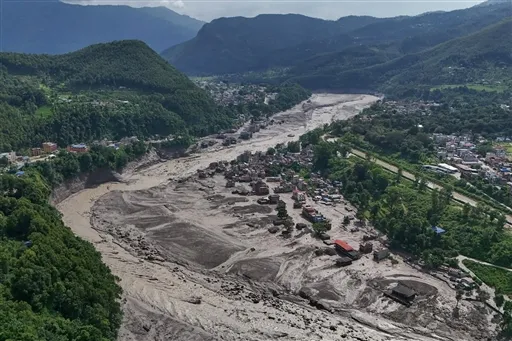
When the natural dam suddenly breaks, a massive volume of water can rush rapidly into downstream valleys. This phenomenon is known as a Glacial Lake Outburst Flood (GLOF).
You May Also Like To Watch
GLOFs can occur with little warning and, within minutes, can devastate downstream communities, destroying villages, roads, bridges and homes and causing significant loss of life.