
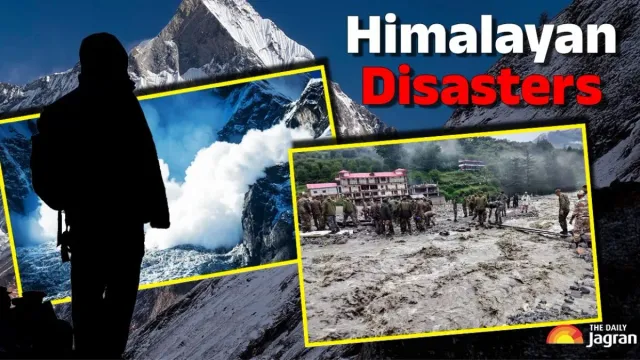
- Nepal floods in Gorkha highlight growing Himalayan disaster risks.
- Melting glaciers, black carbon intensify climate change threats.
- India faces significant flood and disaster risks from Himalayas.
Fresh floods in Nepal's Gorkha district due to a sudden rise in the water level of the Budhi Gandaki River have renewed concerns about the growing threat of disasters across the Himalayas. The latest event, which comes after August floods that killed over 1,400 highlights how rising temperatures, melting glaciers and heavy rainfall are making the mountain region increasingly vulnerable. This is also concerning for India as it shares the Himalayan landscape.
Melting Glaciers Pose Big Risk
The Nepal incident has once again raised alarm over the risks from dangerous glacial lakes in the Himalayan region which is further influenced by climate change. According to the Prosperous and Resilient Himalayas, a report by Systemiq with the Integrated Mountain Initiative, Himalayan glaciers are losing mass 65 per cent faster than they were a decade ago.
Amid the devastation caused by floods in Nepal, local residents stepped forward to rescue stranded animals and bring them to safety. Their efforts highlighted the compassion and courage of communities facing natural disasters, offering a ray of hope as flood-affected areas continue to grapple with the aftermath. #NepalFloods #AnimalRescue #Nepal #Floods #Humanity #RescueOperation #ViralVideo
— The Daily Jagran (@TheDailyJagran) October 12, 2026
One of the major reasons behind this is black carbon emission. Black carbon is a form of soot released by sources such as brick kilns and other industries. It contributes to melting of glaciers by darkening the surface after it settles on ice or snow and making it absorb more heat. The report estimates that black carbon from South Asia contributes to about one-third of the Himalayan glacier melting.
As glaciers shrink, glacial lakes form in the mountains which are held by weak natural barriers made of ice, rocks and debris. If these barriers break, huge volumes of water can rush into valleys within minutes, causing glacial lake outburst floods (GLOFs). Similarly, melting permafrost and unstable mountain slopes increase the risk of landslides and avalanches in Himalayan region.
How Vulnerable Is India?
Considering India’s landscape, a significant part of which lies in the Himalayan region, it faces significant risks of disasters. India’s major rivers, including the Ganga, Indus and Brahmaputra also depend on Himalayan snow and ice, raising the possibility of flooding of ice melts. According to reports, there are 189 high-risk glacial lakes in India, 56 of which have been identified as very high risk.
The risk grows further as India also lies in a major earthquake prone region and the country deals with heavy monsoon rainfall. Moreover, the impact can extend beyond the mountains to densely populated states such as Bihar and Uttar Pradesh. India has already witnessed the destructive power of such Himalayan disasters in the past.
Past Disasters
In June 2013, floods and landslides devastated Uttarakhand, particularly the Kedarnath region, killing thousands. Similarly, in February 2021, a rock-and-ice avalanche in Chamoli killed more than 200 people and damaged hydropower projects. In October 2023, a glacial lake outburst flood in Sikkim also caused widespread destruction, washing away bridges, and damaging the Teesta III dam.
All these events show that Himalayan disasters can take several forms, including flash floods, GLOFs, avalanches, and earthquake-triggered landslides. In such a scenario, it becomes important to have better disaster preparedness. Special focus should be on developing early-warning systems, regular monitoring of glacial lakes, climate action, and safer construction to protect vulnerable communities across the Himalayas.
You May Also Like To Watch: