
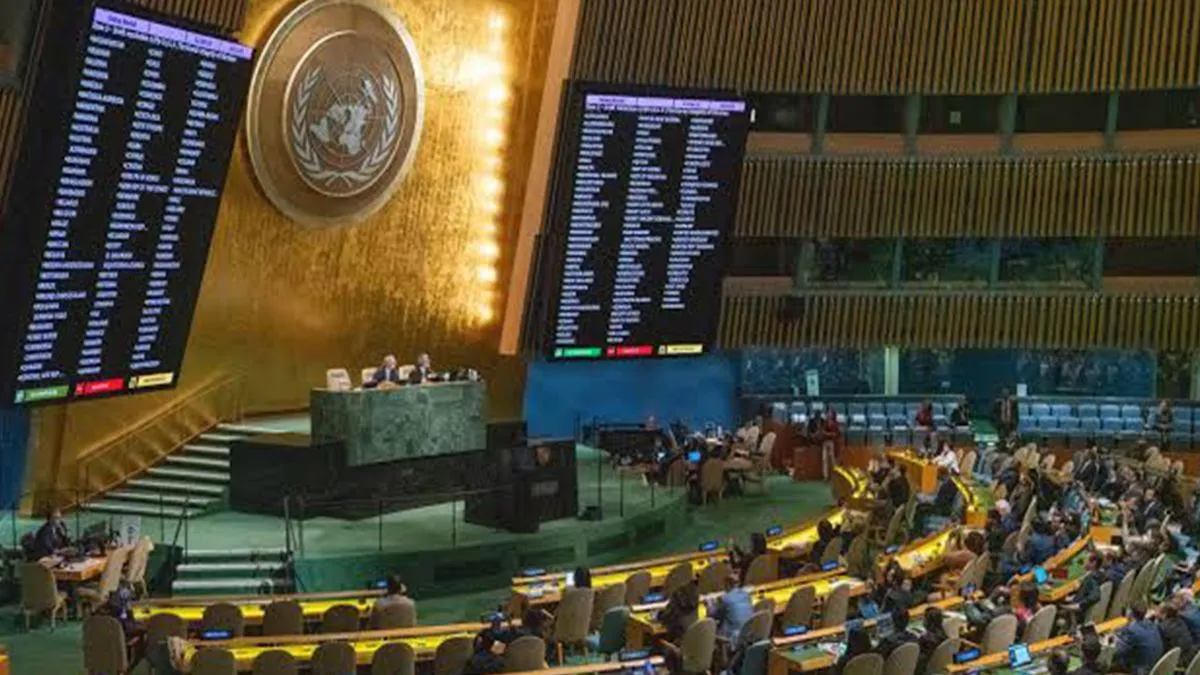
- India voted for UN resolution against US Cuba embargo.
- UN General Assembly passed resolution with 130 votes.
- India called for opposing laws affecting other nations' sovereignty.
India on Wednesday voted in favour of a United Nations General Assembly resolution calling for an end to the longstanding US economic embargo against Cuba. The resolution received 130 votes in favour, 17 against and 25 abstentions. India reiterated its opposition to laws that affect the sovereignty of other countries and supported the UN's call for nations to withdraw measures that harm other states and their people.
India Opposes Laws That Affect Other Countries
Addressing the UNGA before the vote, Soumya Nair, a counsellor at India's Permanent Mission to the UN, said India supports the global body's call against laws that have effects beyond a country's borders and negatively affect other nations. She emphasised that New Delhi supports the appeal urging all countries to reject “laws and regulations with extraterritorial effects that adversely affect the sovereignty of other states and the progress and prosperity of their peoples.”
Today nearly triple the number of nations voted no, abstained, or just chose not to vote—turning their back on Havana’s sham resolution at the UN. More work to do, but the world is starting to push back on Cuban regime propaganda as their corruption and oppression is exposed. Cuba Libre!
— Ambassador Mike Waltz (@USAmbUN) October 28, 2026
“India reiterates the Assembly's call to all states to refrain from promulgating and applying, and to repeal and invalidate such laws and measures in conformity with their obligations under the Charter of the United Nations and International Law,” Nair said.
ALSO READ: India Seeks Veto For All In UNSC In Overhaul Push, Warns Abuse For 'Narrow Political Gains'
Recommended For You
UN Votes Against US Embargo
The UN General Assembly passed the resolution with 130 countries voting in favour of ending the US embargo on Cuba. The vote was preceded by a heated exchange between US Ambassador to the UN Michael Waltz and Cuban Ambassador Ernesto Soberon. Tensions had erupted on Tuesday when Cuban Foreign Minister Bruno Rodriguez Parrilla approached the dais while Waltz was speaking.
Facing the blockade, Cuba responds with dignity, resistance, and sovereignty. #CubaIsNotAThreat, the blockade is. https://t.co/nAMzpixYL2
— Cuban Embassy in US (@EmbaCubaUS) October 27, 2026
The dispute continued on Wednesday when the US expelled Richard Tur de la Concepcion, First Secretary of the Cuban mission, over allegations that he had physically engaged with an American diplomat.
What Is US Embargo On Cuba?
The US embargo on Cuba is a set of economic, trade and financial restrictions that limit business and commercial activities between the US and Cuba. It also includes measures that can affect foreign companies doing business with Cuba. The restrictions began in 1960, following the Cuban Revolution led by Fidel Castro and the nationalisation of properties owned by US companies.
In response to these developments, the US introduced trade restrictions against Cuba, with former President John F Kennedy formally establishing a full trade embargo in February 1962. Over the years, the embargo has been supported by several US laws, including the Trading with the Enemy Act of 1917, the Foreign Assistance Act of 1961, the Cuban Democracy Act of 1992 and the Helms-Burton Act of 1996.
The economic pressure on Cuba has significantly increased under President Donald Trump as well. The US administration has imposed additional restrictions and measures affecting fuel and energy supplies which in turn have contributed to serious power outages in Cuba.
ALSO READ: 'Greater Representation Of Developing Regions': Russia Backs India's Permanent UNSC Seat Bid At UNGA
You May Also Like To Watch: