
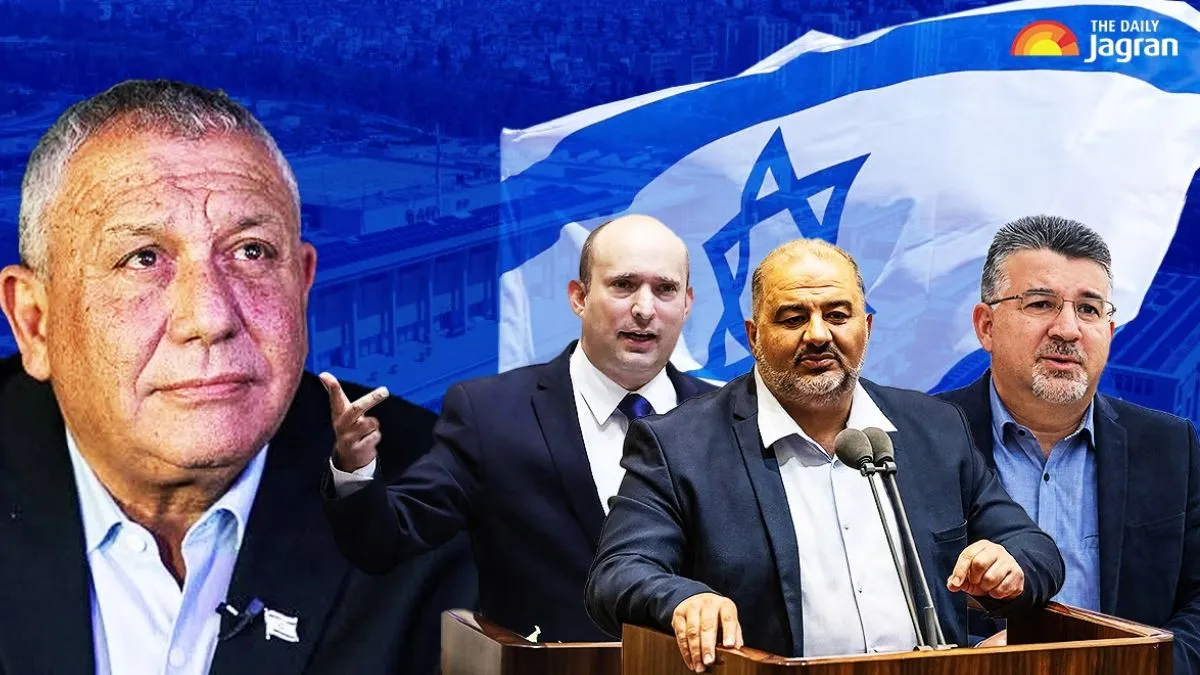
- Arab parties gain 19 Knesset seats, emerging as potential kingmakers.
- Mainstream opposition leaders reluctant to form coalition with them.
- Ideological differences, national security concerns among reasons blocking cooperation.
Israel Election Results: The latest Israeli parliamentary elections have significantly strengthened Arab political parties, who for decades have remained on the margins of the country's political system. The Joint List and Ra'am have together won 19 seats in the 120-member Knesset. With neither the right-wing bloc led by Prime Minister Benjamin Netanyahu nor the opposition bloc led by Gadi Eisenkot having a clear majority, Arab parties have emerged as potential kingmakers. However, despite their increased parliamentary strength, the mainstream opposition leaders remain hesitant to form a coalition with them.
Arab Parties Rise To Kingmakers
Arab parties have historically struggled to become part of Israel's governing establishment. While they have contested elections and even secured representation in the Knesset, they have generally remained outside the executive government. Their influence was just supporting or opposing the government through parliamentary votes. One of the earliest examples of their political influence was in 1992. Back then, the Arab lawmakers had supported Yitzhak Rabin's government from outside and had not formally joined.
The formation of the Joint List in 2015 was another important moment in Arab political history as four parties, including Hadash, Balad, Ra'am and Ta'al with different ideological backgrounds came together and the alliance won 13 seats in the election of that year. It became the third-largest faction in the Knesset at that time. However, the alliance broke by 2022.
Recommended For You
A historic breakthrough came in June 2021, when Ra'am, led by Mansour Abbas became the first independent Arab party to formally join an Israeli governing coalition. The party supported the government led by Naftali Bennett and Yair Lapid. This marked a major shift in Arab political participation, however, the coalition collapsed after 18 months.
Why Are Opposition Leaders Hesitant To Form Coalition With Them?
Despite their significant presence in Israeli politics, mainstream opposition leaders hesitate to cooperate with Arab parties for government formation. One of the main reasons is their disagreement over Israel's national identity. Several Arab political factions oppose defining Israel exclusively as a Jewish state and advocate that it is a state of all its citizens. They also oppose the Israeli occupation of Palestinian territories and several other military policies.
All these things create serious ideological differences for Zionist opposition leaders, many of whom insist that any future governing coalition must consist of parties that recognise Israel as a Jewish and democratic state.This further makes their cooperation with Arab parties difficult, even when their parliamentary support could help remove Netanyahu from power. Another area where they differ is on national security matters.
Since the Hamas attack, security concerns have become central to Israeli politics, with leaders facing pressure from voters who question whether Arab parties can be trusted on such integral matters. Avigdor Liberman, leader of Yisrael Beytenu, has consistently rejected the possibility of forming a government with Arab parties. Following the results, he reiterated his position, saying “What we said before the elections is even more true after the elections. We will not sit with Bibi or with Tibi.” Tibi refers to Ahmad Tibi, an Arab politician associated with the Joint List. He has also repeatedly maintained that he favours a coalition made up exclusively of Zionist parties.
Bennett's Reversal
Naftali Bennett also appears hesitant to repeat the political arrangement that brought Ra'am into his government in 2021. He has consistently insisted that governments should include only Zionist parties and exclude Arab factions. His position has significantly changed after the October 7, 2023, Hamas attack. Bennett has even argued that there is no public mandate for including Arab parties in a future government.
Eisenkot's Condition On Coalition
Gadi Eisenkot, leader of Yashar, second largest party in the latest election, has also expressed reservations about cooperation with Arab parties. He has maintained that potential coalition partners must recognise Israel as a Jewish and democratic state and accept clear security commitments. According to local media outlets, Eisenkot’s conditions include recognising Hamas as a terrorist organisation and supporting the dismantling of its military and governing capabilities.
An Exception In The Opposition
Meanwhile, Yair Golan, leader of The Democrats has emerged as one of the few prominent opposition figures openly advocating cooperation with Arab parties. He has urged leaders to move beyond their political reservations and work with Arab parties to remove Netanyahu from power.
יוצא מפגישה טובה עם חברי, יאיר לפיד. אני נחוש לעשות כל מאמץ, להפוך כל אבן ולפעול עם כל שותפינו כדי להציל את ישראל. נמשיך לעבוד בתיאום. לא נוותר על ההזדמנות לשינוי. נעשה ונצליח 🇮🇱 https://t.co/jQLZgv69Iz
— Yair Golan - יאיר גולן (@YairGolan1) October 29, 2026
You May Also Like To Watch: