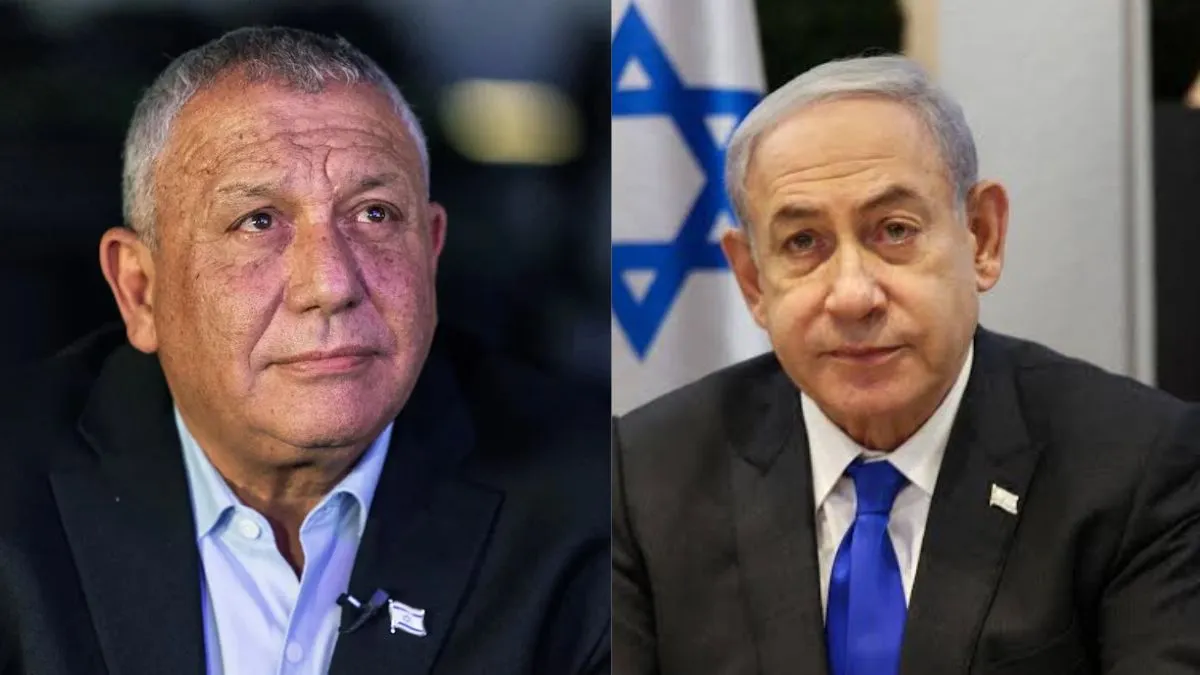
- Gadi Eisenkot has invited Likud for Israel government coalition talks.
- The party aims for national unity government despite Netanyahu's opposition.
- Political deadlock pushes Eisenkot to seek broad parliamentary support.
Israel Government Formation: Israel'S political situation has entered a crucial phase as former military chief Gadi Eisenkot, who has been tasked with forming the country's next government, has invited Prime Minister Benjamin Netanyahu's Likud party for coalition talks. The move could open the door to a possible national unity government, even as opposition leaders remain divided over how to form a majority.
Bennett Affirms Support For National Unity Govt
B'Yachad leader Naftali Bennett on Saturday reaffirmed his support for a national unity government led by Eisenkot and involving Likud. His statement came after a lengthy meeting with Netanyahu on Wednesday. This had earlier raised questions about whether Bennett was considering breaking away from Eisenkot’s political bloc. Bennett made it clear that he wants Netanyahu removed from the prime minister’s position and does not intend to join his political bloc.
"I am committed to establishing, together with our partners, a government of national repair led by Gadi Eisenkot," Bennett said. "I am also committed to ensuring that Netanyahu will not be the next prime minister," he added, insisting that B'Yachad "will not join him."
Recommended For You
Gadi Eisenkot Takes Initiative
Eisenkot has taken a major step by inviting Likud representatives for coalition negotiations. His decision comes as political parties struggle to secure enough parliamentary support following last month's election. With neither of the two main political blocs securing a clear majority, Eisenkot is under pressure to find additional partners and explore different political arrangements that could allow a new government to take shape.
Eisenkot's invitation to Likud is particularly significant as he has repeatedly opposed Netanyahu remaining prime minister. Despite this position, he appears willing to explore cooperation with Likud as a political party, provided that an agreement can be reached on forming a government under different leadership. His approach suggests that he wants to examine every possible option rather than limit negotiations to the parties already supporting his bloc.
A broader government involving Likud could potentially provide the parliamentary numbers needed to overcome the current deadlock. On Saturday night, Eisenkot instructed his party's negotiating team to invite Likud representatives for a marathon series of discussions.
Yashar described the decision as part of a "genuine and sincere effort to establish the broadest possible government," as quoted by AFP. It added that the team would pursue bold initiatives to secure the breakthrough needed to form a government.
What happens next?
Coalition talks between Eisenkot's Yashar party and Likud are scheduled to begin on Sunday. The discussions will focus on the possibility of forming a national unity government under Eisenkot's leadership. If the talks fail, Eisenkot may explore other options, including negotiations with ultra-Orthodox parties or forming a minority government with support from Arab-majority parties. With the December deadline approaching, he faces growing pressure to secure enough parliamentary support to form Israel's next government.
You May Also Like To Watch: