
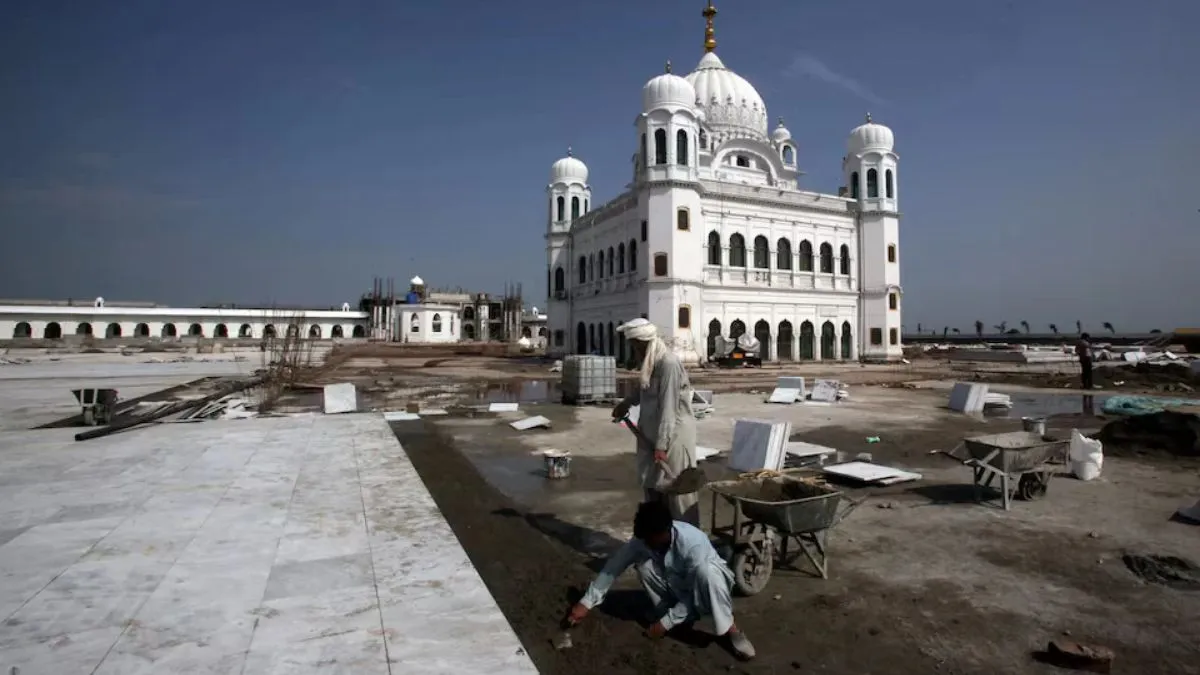
- Pakistan neglects Gurdwaras despite promoting Sikh heritage abroad.
- Farooqabad Gurdwara demolition exposes vulnerability of minority communities.
- Officials admit failure to protect Sikh sites until local protests.
Islamabad: Pakistan's outreach to the Sikh community in the US has exposed sharp contrast between its claims of protecting Sikh heritage and failure in safeguarding minority community and its places of worship in the country. Several Gurdwaras in Pakistan continue to suffer from neglect, deterioration and encroachment while Pakistani officials in other countries continue to claim about conducting restoration work at places of worship in Pakistan and promoting religious tourism, a report has detailed.
Reports on social media have claimed that Punjab’s Minister for Minority Affairs and Pakistan Sikh Gurdwara Parbandhak Committee President, Ramesh Singh Arora, recently visited Gurdwaras in the US and sought participation of the diaspora community in heritage restoration under the 'Adopt a Gurdwara' initiative and invited the Sikh diaspora to the Gurpurab celebrations in November with promises of simplified visa procedures. Several posts shared on social media alleged that cash and cashier's cheques were taken from American Gurdwara committees, according to a report in Khalsa Vox.
Anjum Javaid, reportedly linked to Punjab’s Directorate General of Archaeology, delivered remarks at a programme titled "The Sikh Kingdom" in California's Lathrop and proposed an economic corridor linking Nankana Sahib and Khyber Pass, including the redevelopment of Jamrud Fort and Baba Phoola Singh Chhauni. He reportedly claimed that around USD 700 million had been secured, including USD 94 million from the World Bank, to support heritage development and attract Sikh tourists each year. However, these claims are in contradiction to Pakistan's record of protecting Sikh heritage.
Recommended For You
Several gurudwara fallen into disrepair
Several Gurdwaras in Pakistan have reportedly fallen into severe disrepair, faced encroachment and been repurposed for alternate uses. Attacks against people from the Sikh community, religious discrimination and concerns regarding minority security have exposed the vulnerability of minority communities in Pakistan whose heritage Islamabad wants to celebrate abroad, according to a report in Khalsa Vox.
In July, the demolition of the 125-year-old Gurdwara Sri Guru Singh Sabha Sahib in Pakistan's Farooqabad left portions of the historic shrine in rubble after a local businessman allegedly carried out the work without legal clearance or court order. Authorities acknowledged the demolition only after Sikh residents of Farooqabad took to the streets to protest the incident, a report has stated.
ALSO READ: Pakistan Tragedy: 10 Killed After Oxygen Cylinder Explodes Inside Ambulance While Being Loaded
"For the Sikh community of Farooqabad, the night of June 24 was not an abstraction. It was the sound of machinery tearing into a building their grandparents’ grandparents had prayed in — a gurdwara built over a century ago, when the Singh Sabha movement was still reshaping what it meant to be Sikh in a modernising Punjab. By morning, portions of the Gurdwara Sri Guru Singh Sabha Sahib lay in rubble, demolished by a local businessman who never bothered to seek the legal clearance required to touch it. No court order. No warning to the community that has treated this ground as sacred for generations," a report in Khalsa Vox detailed.
Official rare admission
According to the report, an official later admitted that the department failed to take notice of the demolition until local Sikhs protested. It added that the Pakistani authorities responded only after a minority community, long burdened by institutional neglect, was forced to stand up and defend its heritage.
ALSO READ: Why Has India Invited Pakistan To SCO Forum Despite Tensions? Former Foreign Secretary Explains
"That is the real story here-- not a bureaucratic lapse, but a community once again forced to fight for the right to simply exist and be remembered. The Sikhs of Farooqabad did not have the luxury of trusting their government to protect what mattered to them. They had to protest to be seen at all,” it noted.
(With inputs from IANS)