
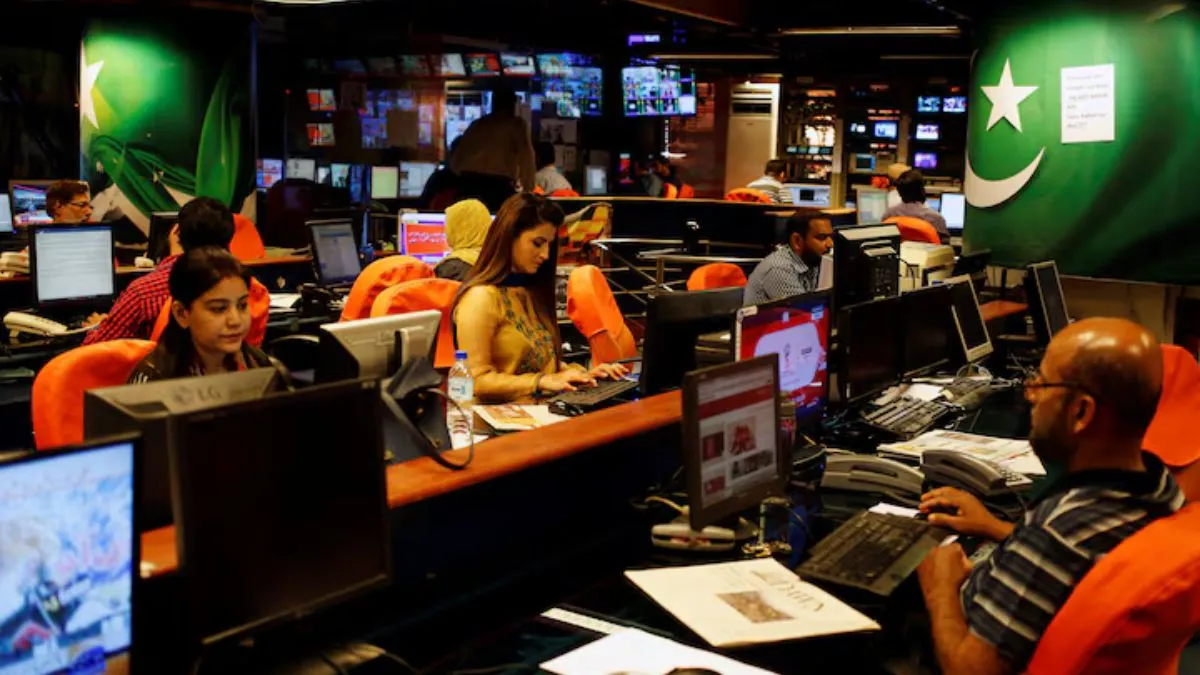
- PEMRA suspended Geo News license for 15 days.
- Controversy over religious content aired during Muharram.
- Channel apologized, citing inadvertent editorial error.
The Pakistan Electronic Media Regulatory Authority (PEMRA) has suspended the broadcasting license of the country’s largest private news network over a controversy regarding religious content aired on June 26, Friday. According to PEMRA, Geo News has been suspended for 15 days over content aired during a programme marking Muharram, one of the most sensitive periods in the Islamic calendar. Notably, Pakistan has a history of violence related to "offensive comments" against Islam.
What led to Geo News controversy?
During its Muharram transmission on Friday, the channel aired a documentary program titled Safar-e-Ishq. The broadcast featured “religious visualisations” depicting specific Shia rituals practised by a limited number of people in Iraq and other Middle Eastern countries. The channel, in its defence, said the intent was to showcase the local culture in Iraq and not to hurt sentiments.
ALSO READ: Pakistan Exposed Again: LeT Terrorists Spotted At Funeral Of Shoaib Akhtar's Brother In Islamabad
However, PEMRA stated that broadcasting these visual representations violated regulatory standards regarding cultural, social, and religious sensitivities. The regulator maintained that the content had the potential to hurt the religious sentiments of viewers, undermine religious harmony and create a potential risk of sectarian unrest or disturbance to public peace during Muharram, a highly sensitive period in Pakistan. It asked the channel to investigate how this “blunder” happened.
Recommended For You
Geo News’ Response
Following the suspension, Geo News issued a formal apology and pulled the program from all its digital and broadcasting platforms. The network clarified that the footage was aired due to an inadvertent editorial error and was intended solely to illustrate local traditions rather than endorse or promote any specific religious interpretation or viewpoint.
The suspension of @geonews_urdu’s transmission should not have happened. As the country's media regulator, PEMRA should have first given the accused party an opportunity to be heard before taking such a harsh decision.
— Zahid Gishkori (@ZahidGishkori) June 28, 2026
It is deeply concerning to see a regulator acting like an… pic.twitter.com/zbJmq4lUi5
Depictions of the Prophet Mohammed and other revered Islamic figures are a highly charged issue in Pakistan, where mass protests have broken out over cartoons published in Western countries.
Religious disputes can quickly trigger public anger in the Muslim-majority country, where authorities impose heightened security during Muharram commemorations. Pakistan has faced persistent criticism over press freedom, with television channels periodically facing regulatory action, suspensions and transmission restrictions. Reporters Without Borders ranked Pakistan 153rd out of 180 countries in its 2026 World Press Freedom Index.
Pakistan's history of violence
Pakistan has a long history of volatile and violent domestic unrest sparked by the external publication of caricatures of the Prophet Muhammad. While the actual killings of the cartoonists occurred abroad, most notably during the 2015 Charlie Hebdo attack in Paris, the repercussions have frequently manifested within Pakistan as deadly clashes with security forces, mass demonstrations, and targeted vigilante violence.
A major wave of this unrest hit the country in September 2012. The underlying friction was rapidly reignited when the French satirical magazine Charlie Hebdo published controversial cartoons alongside the simultaneous release of an anti-Islam film produced in the United States, triggering widespread anger and renewed protests across major Pakistani cities.
The tension escalated drastically in late 2020 and into 2021 when Charlie Hebdo republished the caricatures during the trial of the original attackers. After the French President publicly defended the freedom of expression, the hardline Pakistani Islamist party, Tehreek-e-Labbaik Pakistan (TLP), launched a massive, violent campaign demanding the expulsion of the French ambassador, culminating in widespread blockades and kidnappings.
(With inputs from Reuters)