
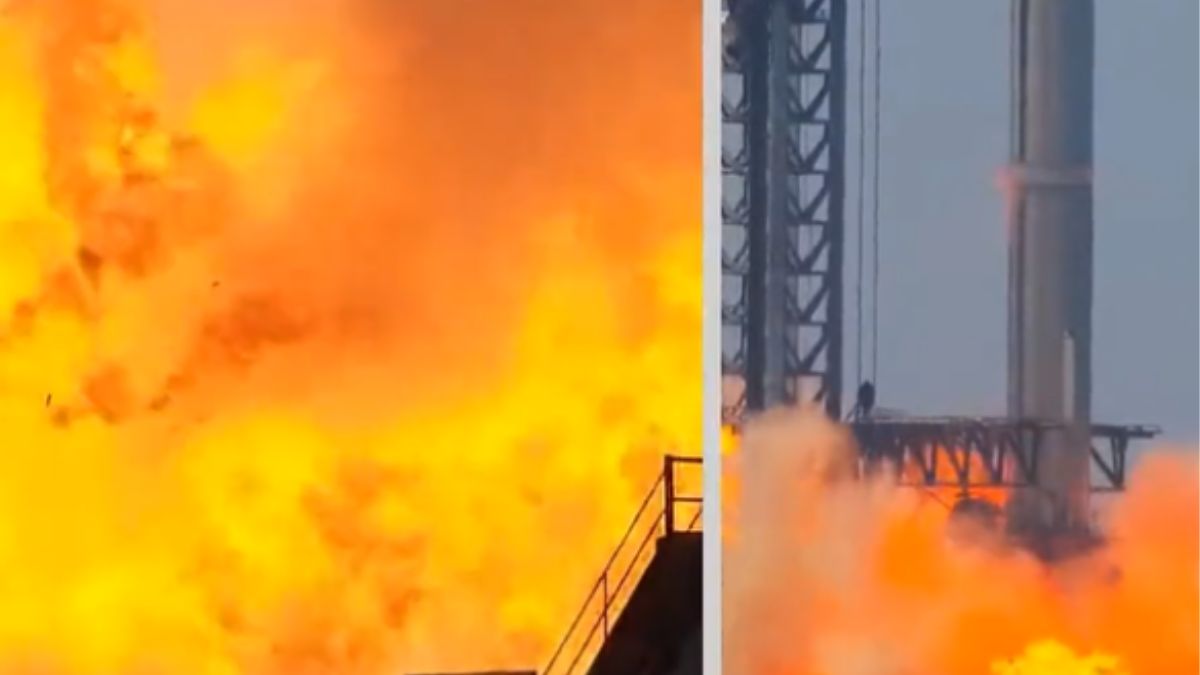
A booster rocket developed by Elon Musk's SpaceX for its next-generation Starship spacecraft engulfed in flames while a ground-testing on Monday in the United States in Boca Chica, Texas. The incident is viewed as a major setback to Musk's aim of launching the Starship to orbit this year.
Meanwhile, Musk took to Twitter to write about the incident, "Yeah, actually not good. Team is assessing damage," he replied to video clip from the live stream recorded by the website NASA Spaceflight.
Holy moly. Well, that was unexpected!https://t.co/dUUqw7ojRv pic.twitter.com/7IGztPuE12
— Chris Bergin - NSF (@NASASpaceflight) July 11, 2022
However, there was no report of injuries. The explosion which engulfed the base of the rocket in a ball of flames and heavy smoke and appeared to shake the video camera was specific to the engine spin start test, Musk said on Tuesday.
“Base of the vehicle seems ok by flashlight. I was just out there about an hour ago. We shut down the pad for the night for safety. Will know more in the morning,” musk replied to the questions asked about the engine on Twitter. "Going forward, we won't do a spin start test with all 33 engines at once," he informed.
The failure came in the midst of a dayslong static fire test campaign in Boca Chica, Texas, of the booster, equipped with an array of 33 Raptor engines for use in an upcoming uncrewed orbital test flight SpaceX hoped to launch later this year. SpaceX's complete Starship, which will stand 394 feet (120 meters) tall when mated with its super-heavy first-stage booster, is the company's next-generation launch vehicle at the center of Musk's ambitions to make human space travel more affordable and routine.
Recommended For You
Between late 2020 and early 2021, SpaceX has lost four prototypes of the Starship in a series of high-altitude tests, all of them ending up in explosions during the return landings. The Starship prototype ultimately made a safe touchdown in May 2021.
(With Reuters Inputs)