
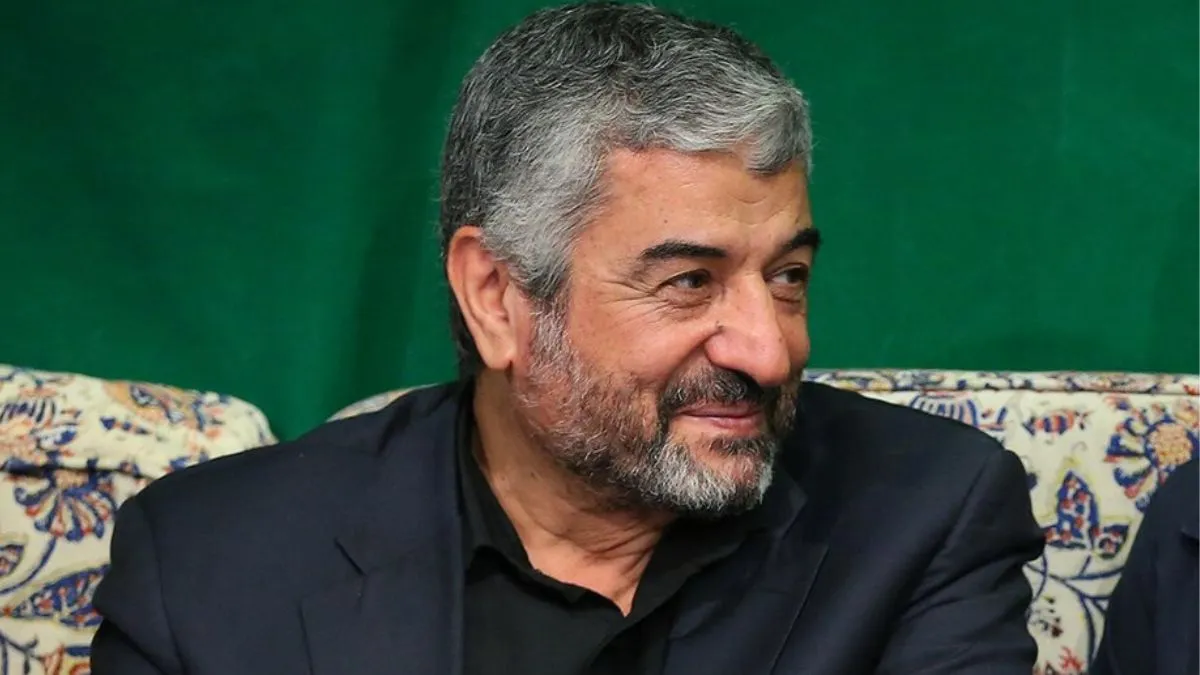
Iran has continued to retaliate despite the United States eliminating several senior Iranian leaders during the first wave of strikes. One of the reasons behind this resistance is the Mosaic Defence Doctrine, developed by former Islamic Revolutionary Guard Corps (IRGC) commander Major General Mohammad Ali Jafari.
Mosaic Defence Doctrine is a military strategy, designed to ensure that Iran’s defence system could continue functioning even if its top leadership or central command structures were targeted. Jafari developed this doctrine after studying the 2003 US invasion of Iraq. In the 2003 war, the US military successfully dismantled Iraqi forces in just 26 days of operations. Taking notes from Iraq’s collapse, Iran reorganised its military into smaller, decentralised units that would operate independently. According to this structure,Local commanders continue to fight even if central leadership is disrupted or eliminated.
Who Is Mohammad Ali Jafari?
Mohammad Ali Jafari is credited with bringing the doctrine of "mosaic defence" or "asymmetric warfare" to Iran's military strategy. Born on 1 September 1957, Jafari is an Iranian former military officer, who served as the commander-in-chief of the IRGC from 2007 to 2019. Former Supreme Leader Ali Khamenei had appointed Jafari for the top position. He was replaced by Hossein Salami in 2019..
Recommended For You
He began his military career with the Basij paramilitary force at the start of the Iran-Iraq War. Jafari joined the Revolutionary Guards in 1981. He played key roles in operations like Susangerd, commanded the Ashura Battalion, and led garrisons in Qods and Najaf.
About Mosaic Defence Doctrine
The doctrine, formalised in 2005, under Jafari led to IRCS's reorganisation into 31 provincial commands, with each unit functioning as a self-contained military group with its own weapons, intelligence, and command systems. The doctrine is also dependent on Iran-backed groups, collectively known as the "Axis of Resistance" in the battlefield.
It is this doctrine, developed by Jafari that Iran has continued to fight despite major setbacks. The US and Israeli forces launched “Operation Epic Fury”, a military campaign against Iran on February 28. Supreme Leader Ayatollah Ali Khamenei, IRGC Commander-in-Chief Major General Mohammad Pakpour, Defence Minister Brigadier General Aziz Nasirzadeh, Armed Forces Chief of Staff Lieutenant General Seyyed Abdolrahim Mousavi, and several other senior leaders were killed.
Iranian Foreign Minister Seyed Abbas Araghchi also praised this strategy in the wake of the war, stating that bombing Tehran would not undermine its capability of conducting war. He wrote on X, "We've had two decades to study defeats of the U.S. military to our immediate east and west. We've incorporated lessons accordingly. Bombings in our capital have no impact on our ability to conduct war. Decentralized Mosaic Defense enables us to decide when—and how—war will end."
We've had two decades to study defeats of the U.S. military to our immediate east and west. We've incorporated lessons accordingly.
— Seyed Abbas Araghchi (@araghchi) March 1, 2026
Bombings in our capital have no impact on our ability to conduct war. Decentralized Mosaic Defense enables us to decide when—and how—war will end. pic.twitter.com/E4jrdnDapb
ALSO READ: US 'Allows' Purchase Of Stranded Russian Oil; Could Trump's Move Ease Soaring Global Crude Prices?