
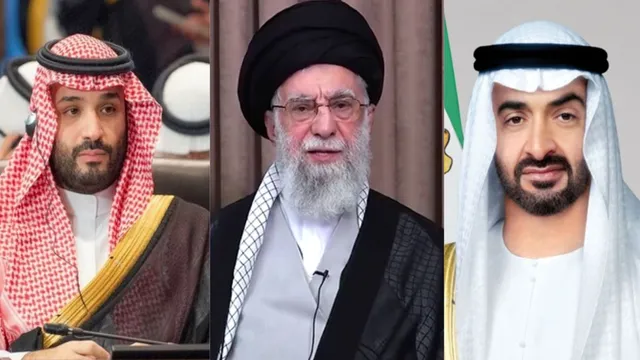
The recent escalation involving the United States, Israel, and Iran has once again exposed the complex power dynamics of the Middle East. While Israel receives strong political, military, and diplomatic backing from Washington, Iran appears comparatively isolated at many levels. Even major Arab and Muslim-majority countries do not openly unite in support of Tehran. This reflects deeper geopolitical realities and conflicts of interest.
The pattern exposes an open secret that many governments in the Middle East “prioritise national security”, regime stability, and economic interests over “religious solidarity”. Several Arab states view Iran not as a partner in Muslim unity, but as a regional competitor seeking to expand its influence over the region.
In this article, we explore five reasons why Arab and Muslim-majority countries do not unite to support Iran against Israel.
Sectarian and Ethnic Divisions:
One of the central reasons for this gap is sectarian and strategic rivalry. Iran is predominantly Shia, led by a clerical establishment rooted in Shia political theology, while most Arab countries are Sunni-majority. Sectarian identity is not the only factor for the divide, but it has created distrust for decades. Additionally, Iran is Persian rather than Arab. This adds an ethnic and historical layer to competition in the region.
Recommended For You
Iran's Ambition As A Regional Threat:
While Iran may find allies in Syria, Lebanon, Kuwait and Iraq, other Arab nations like Saudi Arabia, Jordan and the United Arab Emirates don't usually support it. Saudi Arabia and other Arab states perceive Iran as a greater destabilising force in the Middle East, accusing it of interference in countries like Syria, Yemen, and Iraq. They have termed Iran's regional ambitions, as "destabilising." Besides, Iran’s relationships with outfits like Hezbollah and Hamas also raise concerns among neighbouring countries due to fear of proxy warfare and internal unrest.
ALSO READ: 'They Tried Twice, I Got Him First': Trump Boasts Foiling Khamenei’s Attempts To Get Him Killed
Alliance With The US And Israel:
Strategic alliances further complicate the scenario. Several Arab countries, including Egypt, Jordan, UAE, Bahrain have pragmatic, diplomatic, or security relationships with Israel. Many of these are often aligned with US interests. Therefore, these countries often prioritise national security over pan-Islamic solidarity.
Economic And Geopolitical Factors:
Another major reason is the signing of the Abraham Accords (2020) on September 15, 2020. This marked a turning point, as countries such as the UAE and Bahrain prioritised economic cooperation, technology partnerships, and defence coordination over direct confrontation with Israel over the Palestinian conflict. This was contrary to Iran's position, which refuses to recognise the legitimacy of Israel.
The "Axis" Issue:
Many neighbouring Arab governments fear or oppose Iran’s use of proxy groups like Hezbollah and Hamas to challenge Israel. While many Arab leaders publicly support Palestinian rights, this does not translate into backing Iran’s broader regional agenda. Therefore, national interests, security concerns, and regional rivalries explain why Arab and Muslim countries do not unite behind Iran against Israel despite shared religious identity.
ALSO READ: Khamenei Killed: 'Regime Change' Unlikely; What's Next For Iran And The World As Israel Wages War