
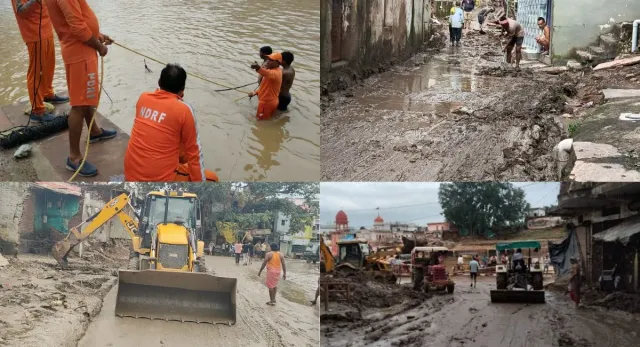
- Mandakini water receding, but high alert continues in Chitrakoot.
- Sanitation, health camps, and hand pump medication ongoing.
- Power restored in some areas; crop damage assessment initiated.
Following the devastating floods in the Mandakini River, the situation in Chitrakoot is gradually returning to normal. The Mandakini’s water level stood at 138.52 metres on Thursday, remaining close to the danger mark. Despite the improvement, disaster management and rescue teams continue to remain on high alert.
With the floodwaters receding, restoration and sanitation work has begun across Chitrakoot. The Municipal Council is carrying out extensive spraying of bleaching powder in all wards, including Arogyadham, Vandevi, Hanumandhara and Nayagaon, to prevent the spread of infections.
Health Camps Set Up In Flood-Hit Areas
Authorities are further focusing on the provision of health and safe drinking water resources in affected areas. 93 hand pumps used by the people have been medicated with Germex to make the drinking water relatively safer.
To date, health check-ups for 2,753 people (from 487 families) have been organised, and medicines administered to those in need. Additionally, a health camp has been organised at Losariha, whereas teams are already conducting door-to-door surveys of the area to analyse the situation and know how many are in need.
Recommended For You
Power Supply Restored In Some Flood-Affected Areas
The Electricity Department has restored seven of the 19 damaged distribution transformers (DTRs) in Chitrakoot. Restoration work on the remaining 12 DTRs has been affected by waterlogging and is still underway.
The Agriculture Department has started the crop loss damage assessment in the development blocks of Chitrakoot, Majhgawan and also Satna. At present, it has found that pulses and oilseed crops have recorded the maximum losses in the flood, and paddy crops have shown minimum damage. The overall loss is yet to be confirmed till the survey report is published.