
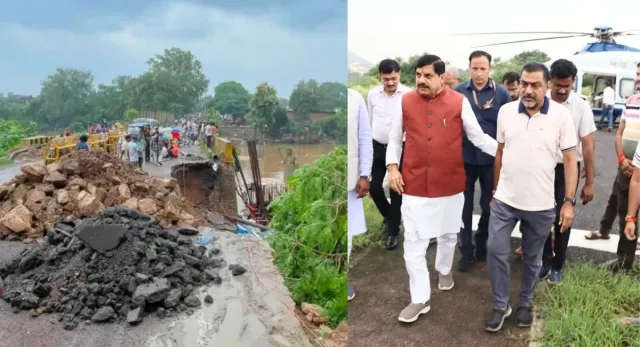
- Mandakini River recedes, revealing severe damage to roads and bridges.
- Jhansi-Mirzapur Highway, Chitrakoot-Satna roads significantly affected.
- Administration faces challenges: disease, sanitation, relief operations.
After a record flood in 23 years, the Mandakini River began receding on Sunday. However, as the floodwaters go down, the extent of the damage to roads, bridges and other infrastructure is becoming increasingly visible.
On the Jhansi-Mirzapur Highway, nearly a 10-foot stretch of road on the Banda side of the Mandakini Bridge in Karwi has sunk. The powerful current eroded the soil along the bridge, damaging a large section of the approach road. Considering the safety risk, the administration has stopped heavy vehicles from using the bridge.
Traffic police have barricaded the area and are allowing only two-wheelers and four-wheelers to cross cautiously. With traffic affected on the highway, motorists are being diverted through alternative routes.
The Chitrakoot-Satna and Manikpur-Satna roads have also been affected at several points due to erosion and the washing away of rapta crossings and culverts. The situation has worsened after the bridge on the Hanumandhara Road was washed away, while the Mohkamgarh and Tarauha bridges were damaged, further disrupting movement.
On Saturday, traffic on the Mandakini Bridge was completely suspended at around 1:30 pm after floodwater reached the bridge. Once the water receded around 10 pm, the bridge was reopened for buses and heavy vehicles.
District Magistrate Pulkit Garg has appealed to motorists and pedestrians to avoid unnecessary travel on flood-affected routes and strictly follow the safety instructions issued by the administration.
What Challenges Remain After The Flood?
Although the water is receding, the administration now faces a new set of challenges:
- Disease and infection risk: The biggest concern after the flood is the spread of infections and water-borne diseases.
- Cleaning and sanitation: Mud, dirty water and debris accumulated inside houses, streets and shops need to be removed. Drinking water sources also need to be cleaned.
- Safe return of families: Before affected families are allowed to return home, authorities must inspect damaged houses and roads to ensure they are safe.
- Relief operations: The administration is monitoring relief and rescue operations being carried out by 15 disaster management teams, including personnel from the NDRF, SDRF and PAC.
- Damage assessment and rehabilitation: After rescue operations, authorities must ensure essential facilities reach affected families, assess the damage caused by the flood and help people return to normal life.
Mandakini Crossed Its Previous High Flood Level
The intensity of the Saturday flood can be determined by the river's level; Mandakini rose to 135.200 meters (70 cm more than the 2003 high flood level of 134.500 meters and 8.7 meters above the danger level).
Recommended For You
The water spread from Ramghat up to colonies as well as other religious places; roads drowned, and a few bridges and culverts were damaged.
Relief Operations Intensify In Madhya Pradesh's Chitrakoot
As water level recedes at several places in Madhya Pradesh’s Chitrakoot region, the relief operation continues to be a massive challenge for the administration. As much of the bridge on Hanumandhara Road got washed away, the connection between Uttar Pradesh and Madhya Pradesh was severed.
Uttar Pradesh Chief Minister Yogi Adityanath and Madhya Pradesh CM Dr Mohan Yadav on Saturday evening reviewed the flood situation. The Air Force has also pitched in with helicopters for relief operations.
CM Mohan Yadav on Sunday took an aerial survey of Chitrakoot, met flood-hit victims and distributed relief items.