
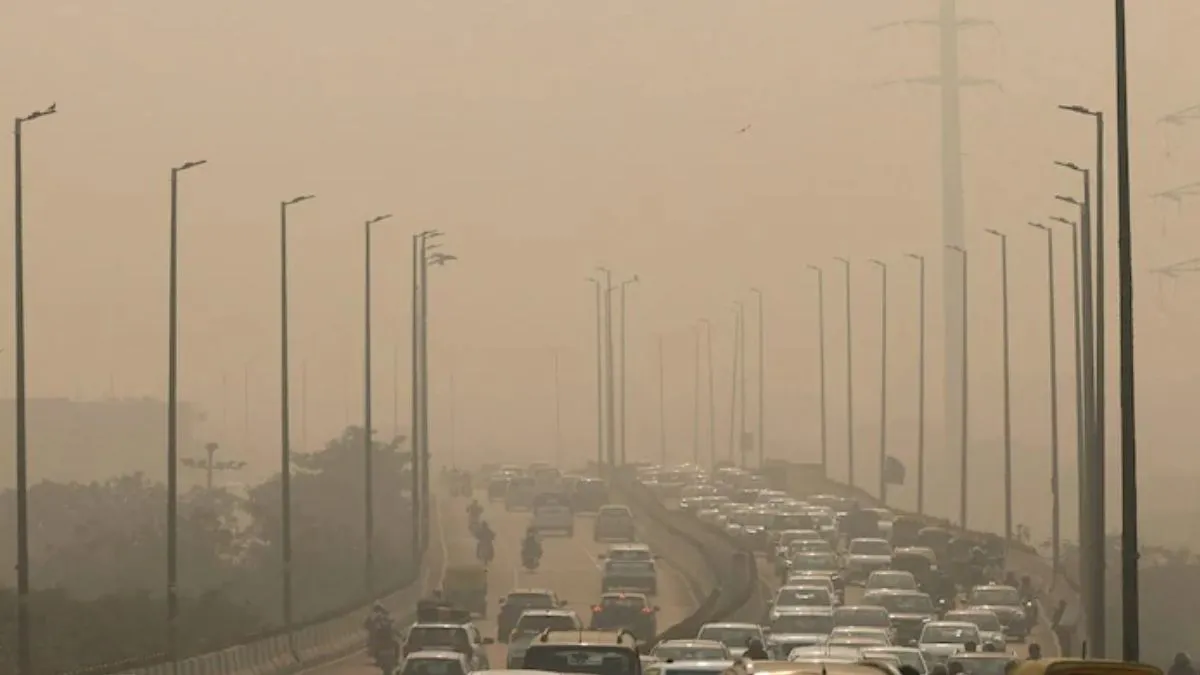
Delhi Cloud Seeding: The first cloud-seeding trial took place on Tuesday in various parts of Delhi, including Burari and Karol Bagh. A specially equipped Cessna aircraft flew in from Kanpur to carry out the operation.
Officials stated that Delhi could experience artificial rainfall shortly. The trial is part of the Delhi government's larger plan to combat rising air pollution levels during the winter season.
A plane carrying scientists took off from Kanpur to attempt cloud seeding and inducing artificial rain in Delhi's Burari area on Tuesday, said an official of IIT-Kanpur.
#WATCH | Aircraft for cloud seeding in Delhi has taken off from Kanpur, Uttar Pradesh.
— ANI (@ANI) October 28, 2025
(Video Source: IIT Kanpur media cell) pic.twitter.com/hxhMQLvMPk
"The plane with two passengers took off at 12.20 pm and it will take about two-and-a-half hours to reach Delhi," said an official of IIT Kanpur Media Cell.
#WATCH | Delhi CM Rekha Gupta says, "We're constantly discussing the issue of artificial rain, as we're taking countless steps to address Delhi's pollution. We've also given cloud seeding a trial, hoping to see if it can solve Delhi's pollution problem. This is an experiment.… https://t.co/QMreMgNo6S pic.twitter.com/CajX7R61Rn
— ANI (@ANI) October 28, 2025
ALSO READ: Mumbai’s Clear Skies Reveal Taj Mahal Palace From 22 Km Away, Rare Photos Stun The Internet
What Is Cloud Seeding?
Cloud seeding involves artificially generating rainfall by introducing specific particles, such as silver iodide crystals or salt-based compounds, into moisture-laden clouds. Aircraft are used to disperse these particles, which condense smaller cloud droplets into larger raindrops, potentially leading to precipitation.
The formulation which will be tried today in Delhi is developed by IIT Kanpur and includes silver iodide nanoparticles, iodised salt, and rock salt.
Why Is Delhi Govt Pushing For Artificial Rain?
Post-Diwali, the Air Quality Index (AQI) in Delhi and the National Capital Region (NCR) has been reeling under the 'poor' and 'very poor' categories in several areas, even as Stage 2 of the Graded Response Action Plan (GRAP) remains in effect.
The capital mostly experiences high levels of pollution throughout the year. In a bid to provide 'clean air' to its citizens, the Delhi government has been considering cloud seeding, or artificial rain, for months.
According to the Central Pollution Control Board (CPCB), the AQI in Delhi stood at 306 as of 8 am on Tuesday, classified as the 'very poor' category.
As of 8 am, the AQI in Anand Vihar was 321, RK Puram was 320, Siri Fort was 350, Bawana was 336, Burari Crossing was 326, Dwarka Sector 8 was 316, Mundka was 324, Narela was 303 and Punjabi Bagh was 323.
Recommended For You
Expert Insights On Delhi's First Cloud Seeding
Speaking on the pros and cons of cloud seeding, Environmentalist Bhavreen Kandhari said global studies, including those by the US GAO, show that additional rainfall from such efforts ranges between 0 and 20 per cent, offering no lasting relief.
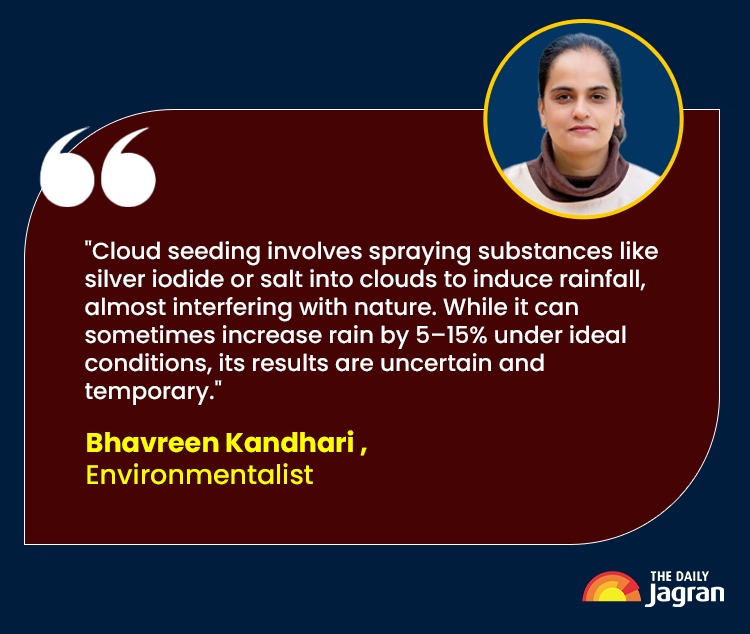
“Most importantly, cloud seeding doesn’t address the real causes of pollution, vehicle emissions, industrial smoke, stubble burning, or dust. It’s an expensive, short-term fix, not a real solution,” she remarked.
On the method’s effectiveness and cost-efficiency, Bhavreen added, “In Delhi’s case, spending Rs 3.2 crore on cloud seeding during the western disturbance showers when wind and natural rain already help clear the air seems wasteful and unscientific.”
Conclusion: Is It Truly A Viable Solution?
The real solution lies in strict pollution control, proper implementation of emission norms, cleaner transportation, and aligning India’s air quality standards with WHO guidelines. Without tackling pollution at its source, artificial rain will remain just that artificial relief.
( With inputs from Agencies )