
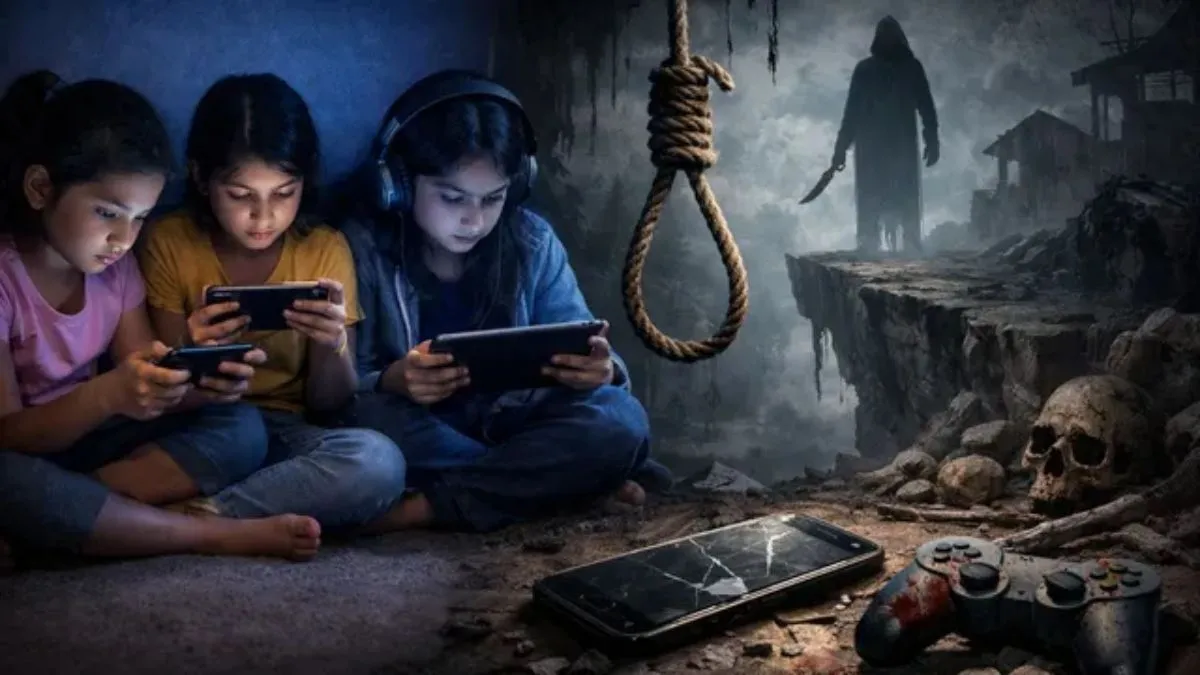
In Ghaziabad, Uttar Pradesh, three sisters jumped to their deaths from the ninth floor of a building during the intervening night of Tuesday. The suspected reason behind the suicides is reported to be an online "Korean Love Game."
This is not an isolated incident, nor is it merely a tragedy for one family; it serves as a massive warning regarding the safety of children in the digital age. In recent years, several young people across the country have lost their lives due to online gaming, dangerous challenges, and digital pressure. The question remains: how have platforms designed for entertainment turned into death traps, and how can this be stopped?
What Happened In Ghaziabad?

Three minor sisters living in Bharat City Society, Sahibabad, jumped from their ninth-floor balcony. Initial police investigations revealed that the sisters had been playing Korean games on their mobile phones for a long time. They had stopped attending school and rarely left the house to meet anyone. They had even adopted Korean names for themselves.
The girls had begun behaving according to Korean culture. Distressed by this, their father confiscated and sold their mobile phones 15 days ago, which led the three into severe mental stress. On Tuesday night, around 1:45 am, they jumped from their flat's balcony. They left an eight-page suicide note citing their family’s attempt to distance them from Korean culture as the reason for their decision. However, the story is so complex that the police are refraining from making definitive statements.
Recommended For You
The Grip Of Online Gaming Addiction
Online gaming addiction is prevalent among children, adolescents and youth aged 12 to 25 nationwide. Incidents similar to the one in Ghaziabad have been reported in states including Uttar Pradesh, Madhya Pradesh, Maharashtra, Telangana, Kerala and Tamil Nadu. This is not just an urban issue; children in rural areas also spend hours gaming and scrolling through social media, facilitated by affordable smartphones and cheap data.

Infamous Games And Death Cases
Blue Whale Challenge (2017-18): This was the most terrifying face of digital deaths in India. Originating in Russia, the game assigned 50 tasks over 50 days, starting with small acts like watching horror movies and ending with a task to jump from a high-rise. A 14-year-old in Mumbai in 2017 was considered the country's first major case.
PUBG (2019): While not a suicide game, its extreme addiction led to hundreds of cases of violence, theft, and depression. In Lucknow, a boy killed his mother after being stopped from playing, while students in Hyderabad and Madhya Pradesh died by suicide over the same issue.
Momo Challenge (2020-21): Viral on WhatsApp, this featured a creepy face and anonymous numbers sending tasks. If tasks weren't completed, children were blackmailed. Suspected cases emerged in Rajasthan, Odisha and West Bengal.
Real-Money Games Or Online Betting: In states like Telangana and Tamil Nadu, dozens of youths died by suicide due to debt from online Rummy or betting apps. This prompted strict laws in these regions.
Choking Game Or Blackout Challenge (2020-21): This challenge urged children to hold their breath until they lost consciousness. It resulted in several deaths globally, including the US and UK.
Korean Love Game (2025-26): Following the Ghaziabad tragedy, this game has come under scrutiny. Investigators are looking into emotional blackmail, online chats and mental pressure as contributing factors.
India: A Massive Gaming Market
India is among the world's largest gaming markets. According to a report based on UPI payments by the National Payments Corporation of India (NPCI), Indians spent Rs 41,000 crore on online games between April and July 2025—an amount nearly equal to the total spent at pharmacies.
The addiction surged during the COVID-19 lockdowns, where children spent over 21 per cent of their time gaming. Now, many young people are becoming so addicted that they are cutting themselves off from studies, sleep and daily responsibilities.
Prevention: How To Save Lives
Internet is a powerful medium, but without control, it is dangerous. If you see these warning signs in your home, immediate alertness is required:
Warning Signs: Excessive screen time, social isolation, sleep disturbances, irritability, anxiety, depression or sudden behavioral changes.
Actionable Steps:
- Avoid giving smartphones to children unnecessarily.
- Set strict and clear limits on screen time.
- Monitor online content and interactions.
- Never ignore warning signs.
- Communicate openly without scolding or shouting.
- Seek professional psychological help immediately if needed.