
- India rejected Pakistan's threat on Indus Water Treaty.
- Protests in PoK were described as a result of Pakistan's repressive policies.
- Khawaja Asif recently said that Islamabad would “go to war” against New Delhi if it faces extreme water scarcity.
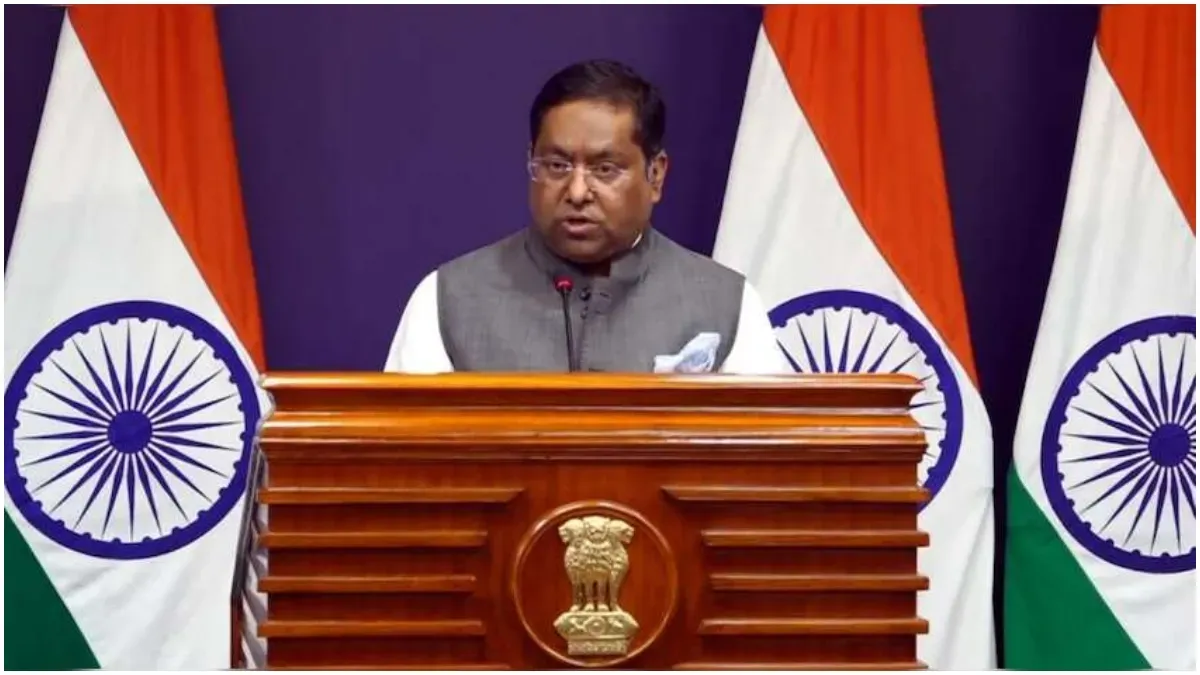
India on Tuesday came down heavily on Pakistan after the recent statements made by its defence minister Khawaja Asif over the suspended Indus Waters Treaty (IWT). Dismissing the remarks as "fabricated", ministry of external affairs (MEA) spokesperson, Randhir Jaiswal, said that it was Islamabad's attempt "cover its own failings and divert attention away from its human rights abuses".
"Regarding the comments made by the Pakistani Defence Minister, we have seen reports on the matter. Such remarks are desperate attempts by Pakistan to cover up its own failings and divert attention away from its human rights abuses. We categorically reject these fabricated claims with the contempt they deserve," Randhir Jaiswal said at the weekly press briefing.
While talking to ARY News on Saturday, Khawaja Asif said that Islamabad would "go to war" against New Delhi if it faces extreme water scarcity. Pakistan is facing a growing water crisis that is putting agriculture, livelihoods, and regional economies under pressure, particularly in Sindh and parts of Balochistan. The situation has become more serious in the months following India's suspension of IWT after the Pahalgam terror attack.
Recommended For You
He added that Pakistan would not compromise on its interests and resort to military action if its national security is in danger. “The moment we feel that our national security and water are being threatened, we will go to war against India. Definitely," Asif said.
MEA Reacts To Protests In PoK
Meanwhile, the MEA also slammed Pakistan over the situation prevailing in Pakistan Occupied Kashmir (PoK). Jaiswal said, “The ongoing developments in Pakistan-occupied Kashmir are a direct consequence of Pakistan's decades-long policy of systematic economic exploitation, denial of fundamental rights, and administrative oppression in areas under its illegal and forcible occupation.”
“The Pakistani state has responded with extreme police brutality, including the blocking of essential supplies and medicines, internet blackouts, and the use of lethal force against unarmed civilians. As you know, several people have lost their lives as a result. We hope that the international community will hold Pakistan accountable for its actions, misdeeds, and human rights abuses.” Jaiswal added.
Massive protests are currently underway in PoK, which turned violent earlier this month after Pakistan Army-led security forces launched a crackdown, causing at least 30 deaths and leaving over 200 injured. At the helm of the protests is the Joint Awami Action Committee (JAAC), which launched a major movement against the Pakistan Army and government.
The PoK Assembly has a total of 53 seats. Of these, 45 candidates are directly elected, while eight are reserved for women, technical experts, and religious scholars. The dispute concerns the 12 seats within these 45 seats that are reserved for refugees.
These 12 seats are reserved for people who migrated from Jammu and Kashmir to other parts of Pakistan during the wars or other conflicts of 1947, 1965, and 1971. Six seats are for refugees from Jammu and six for refugees from the Kashmir Valley.
The JAAC and other local organisations allege that these reserved seats are undermining the political representation of the local population living in PoK. They argue that decisions regarding the region's future should rest solely with residents, not outsiders, who they often suspect of colluding with Pakistan to rob them of their rights. JAAC has long demanded the abolition of these 12 seats. The organisation alleges that the election process for these seats is not transparent and benefits certain political families.