

- By Akansha Pandey
- Sat, 06 Dec 2025 04:36 PM (IST)
- Source:JND
The Directorate General of Civil Aviation (DGCA) implemented changes to the Flight Duty Time Limit (FDTL) norms on October 2, 2025, following which IndiGo cancelled numerous flights simultaneously. This trend has persisted for several days. IndiGo has cancelled thousands of flights so far, leading to chaos at airports. The primary reason behind the scale of this disruption is IndiGo's massive market share.
IndiGo commands over 60 per cent of the Indian aviation market. Essentially, if 10 people travel by air on any given day, 6 of them fly with IndiGo. The airline operates over 2,000 flights daily across the globe. This dominance is why the cancellation of even a fraction of its flights has shaken the entire country's aviation market.
Foundation Laid By Two Friends
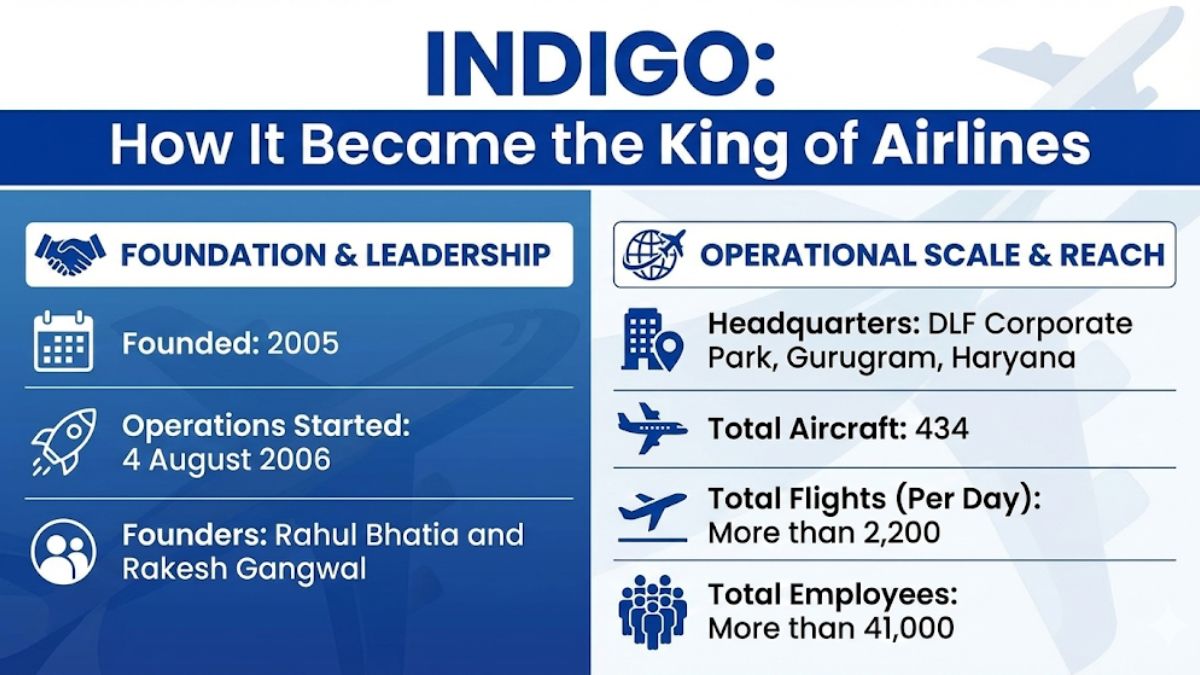
IndiGo was co-founded by two friends, Rahul Bhatia and Rakesh Gangwal. The foundation was laid in 2005, and within a short period, the airline dominated the Indian skies.
When Rakesh and Rahul started IndiGo, they had only one plane. It was an era when Jet Airways ruled the Indian aviation market. State-run companies like Air India were also in the race, and Vijay Mallya had launched Kingfisher Airlines, positioning it as a "flying 5-star hotel." Despite such intense competition, IndiGo journeyed from zero to the peak, earning the title "King of Airlines" within a few years.
Why The Name 'IndiGo'?
Before delving into its history, it is essential to know the story behind its name. Rakesh Gangwal and Rahul Bhatia named the airline IndiGo based on the phrase 'India on the Go'.
IndiGo Started With Leased Planes
At the time, global aircraft manufacturing was dominated by two companies: Boeing and Airbus. While most Indian airlines operated Boeing aircraft, IndiGo announced the purchase of 100 planes from Airbus. This was a golden opportunity for Airbus to enter the Indian market. Consequently, Airbus manufactured planes for IndiGo at a 40-50 per cent discount.
Rahul and Rakesh bought 100 Airbus A320 aircraft at half price and then sold them all at a profit. This generated a profit of Rs 200 crore for IndiGo. Using these funds, IndiGo leased back the same aircraft and began operations in several major cities.
How Did IndiGo Reach The Peak Of Success?
By realising the vision of affordable air travel, IndiGo made inroads with India's middle class. Instead of expensive luxury amenities, the airline focused on economical and reliable service. Its 'low-cost' model made it the favorite airline for many Indians.
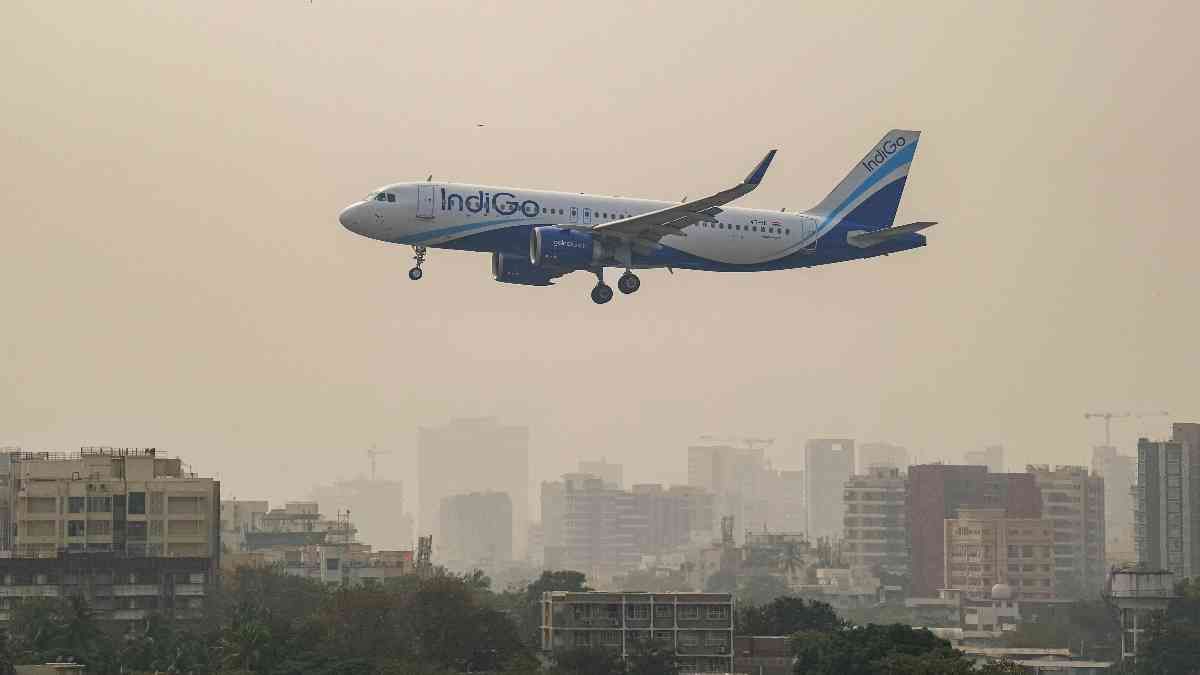 (Image Source: PTI)
Expansion Of IndiGo
2011: IndiGo ordered 180 Airbus A320 planes.
2012: IndiGo flew 50 million passengers, becoming the country's largest airline.
2015: Placed another order for 100 aircraft.
2019: Ordered 250 new aircraft.
2020: While all airlines came to a halt during the Covid pandemic, IndiGo launched cargo services.
2023: Shocked everyone by ordering 500 new aircraft, the largest order in aviation industry history to date.
2023: Set a new record by serving 100 million people.
'King Of Airlines'
As of August 2025, IndiGo's share in the Indian aviation market stood at 64.2 per cent. Besides being India's largest airline, IndiGo has become the second-largest airline company in Asia. Thousands of people travel on IndiGo planes every day. By 2025, IndiGo is operating 2,700 flights daily, covering numerous domestic and international destinations.
Also Read: Muzaffarpur Infra Push: DM Proposes New ROB, Road Widening And Bridge Fencing To End Traffic Woes