
It's My Right: Internships have long been viewed as stepping stones into the professional world, particularly in sectors such as media, law, consulting and startups. For students and fresh graduates, they offer exposure, unlock networking opportunities, and provide a chance to build practical skills. For employers, internships provide access to young talent and fresh perspectives. However, the growing prevalence of 'unpaid internships' in India raises several questions.
An unpaid internship is a work arrangement where individuals, particularly students and fresh graduates, work for a company without monetary compensation to gain practical experience and exposure. While some argue that short-term, training-focused internships can be valuable without pay, others point out that such arrangements blur the line between learning and 'unpaid labour'. As India's legal framework continues to evolve under the new labour codes, it becomes important to examine where internships stand legally, and when an unpaid role may shift from a learning experience to a problematic work arrangement.
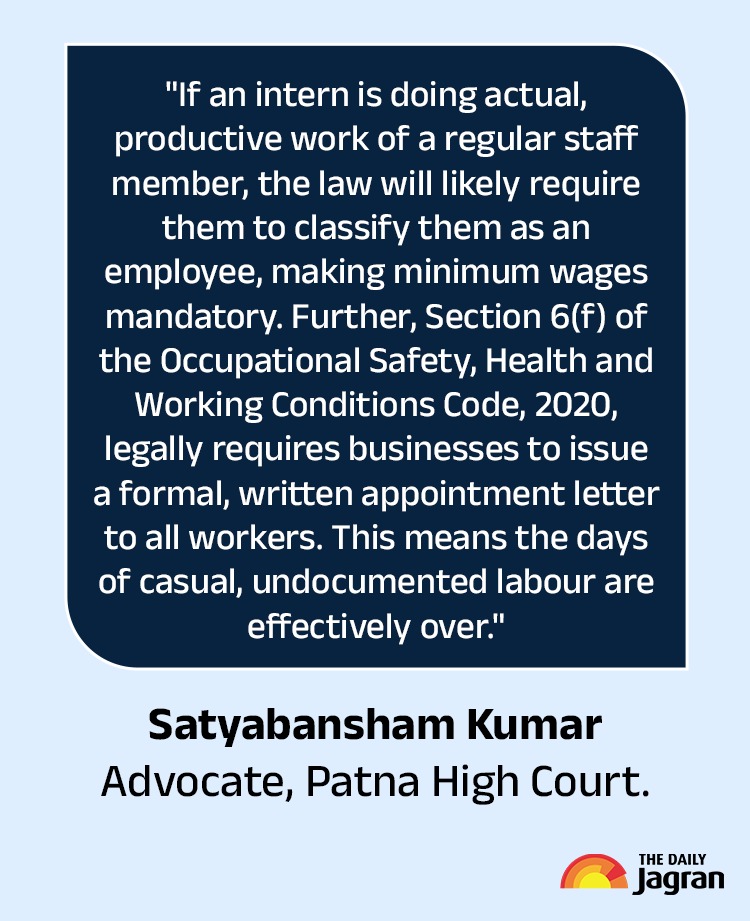
To get a better understanding, The Daily Jagran spoke to Satyabansham Kumar, an Advocate at the Patna High Court, specialising in writ jurisdiction, criminal law, cybercrime, banking and insurance, land acquisition, and arbitration. "The determinative test has now shifted to functional analysis: if an intern performs productive work under employer control, the substance of the engagement, rather than the nomenclature, determines their legal entitlements as an employee," he said.
Recommended For You
Is Unpaid Internship Legal In India?
According to the World Law Digest, unpaid internships are not explicitly banned in India, as there is no specific law that defines or regulates internships under labour laws such as the Minimum Wages Act, 1948, or the Industrial Disputes Act, 1947. However, their legality depends on how the internship operates in practice.
1. Nature of Work: Unpaid internships are allowed in India when they are primarily educational in nature and do not involve performing regular employee duties or replacing paid staff.
2. Defined Learning Objectives And Duration: Unpaid internship should have defined learning objectives, a fixed duration and proper mentorship to avoid being classified as an 'employment'.
3. Written Agreement: A genuine internship should clearly outline internship terms, including roles, duration, and compensation details (if any).
What Are Your Legal Rights And Protections Under Labour Codes?
According to World Law Digest, interns in India, including unpaid ones, have certain legal rights. While there is no single statute exclusively regulating internships, existing labour laws and the broader framework of India's labour codes continue to apply regardless of payment status.
These rights aim to ensure that interns are treated fairly and are not subjected to unsafe or exploitative conditions. Here are the key rights and protections available to interns:
Legal Rights And Protections For Interns

1. Safe Workplace: Interns have the right to a safe workplace under statutes such as the Factories Act, 1948, and other safety regulations.
2. Appointment Letter: According to the Press Information Bureau (PIB), the new labour codes make it mandatory for every engagement to have a written document. The written document should clearly outline the tasks, duration and any benefits before the internship begins.
3. Protection Against Harassment: Unpaid interns are protected against workplace harassment and discrimination under workplace laws, including the Sexual Harassment of Women at Workplace (Prevention, Prohibition and Redressal) Act, 2013.
4. Minimum Wage: When an intern performs work similar to that of regular employees, they may be entitled to minimum wages under the Minimum Wages Act, 1948 and related social security benefits.
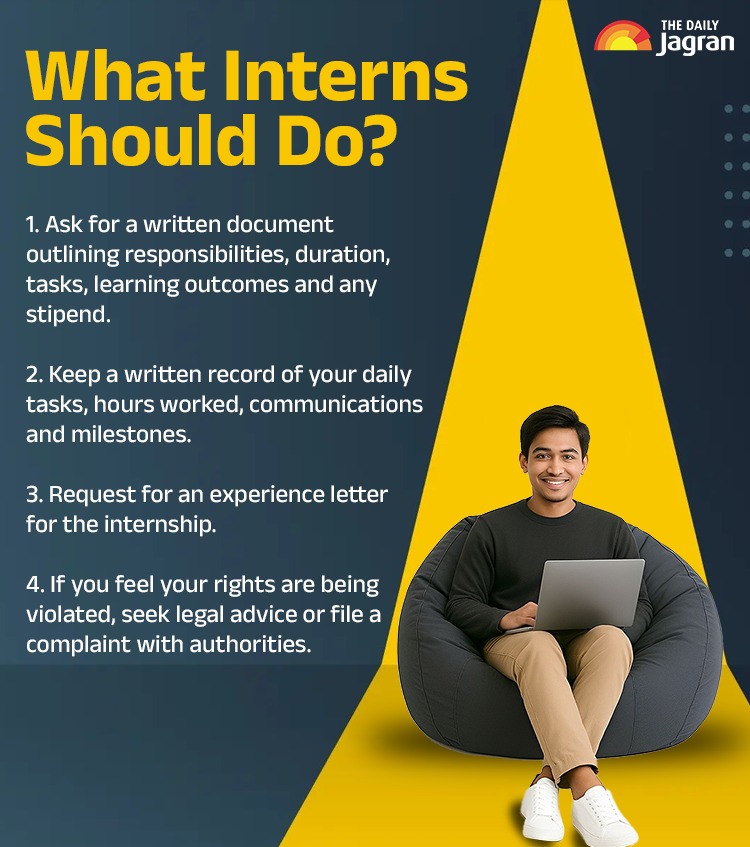
What Interns Should Do?
Amid the growing prevalence of 'unpaid internships', interns can take the following steps to protect themselves:
Is There Any Safe Way To Challenge Workplace Exploitation Without Getting Blacklisted?
On being asked how interns can challenge the workplace without getting blacklisted from the industry, Advocate Kumar said, "The fear of being blacklisted keeps countless interns silent about workplace exploitation. However, Indian law offers structured and, at the same time, confidential avenues to fight back without destroying a growing career."
Advising people to stay discreet and avoid taking the issue to social media, he said, "The thumb rule? Stay off social media; public allegations invite messy defamation suits. Instead, quietly using legally enforceable mechanisms and preserving all your documentary evidence is the way to go." The victim can also approach recognised trade unions or seek legal aid "if the process feels overwhelmed".
Conclusion
Unpaid internships are not illegal in India. However, the lack of legal clarity and protections leaves interns vulnerable to exploitation. Fresh graduates and students must prioritise learning and insist on clarity before committing. As India's labour laws continue to evolve, there is a hope that future policies will better those at the start of their careers. Until then, awareness and preparation remain key.
(Disclaimer: This article is part of the series 'It's My Right'. The views expressed in the article are for informational purposes only and do not constitute legal advice. To read more articles in the series, click here https://www.thedailyjagran.com/search/It's-My-Right)