
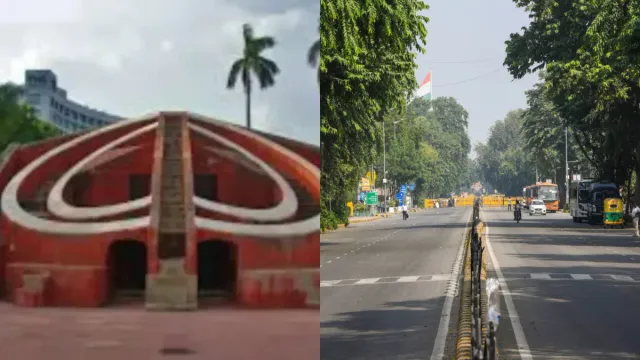
- Delhi Police have denotified Jantar Mantar as a protest site.
- The three new assigned protest sites are Ramlila Ground, Burari Ground and CBD Ground.
- Authorities imposed certain permission rules to protest on these sites.
Jantar Mantar News: As the Delhi Police on Monday officially denotified Jantar Mantar as a designated protest site following recommendations from a committee set up by the Ministry of Home Affairs (MHA), three new sites have been assigned where people can now protest in Delhi. These venues are -- Ramlila Ground (Central Delhi), Nirankari Samagam Ground in Burari (Outer Delhi) and CBD Ground (Karkardooma, East Delhi).
The decision came amid massive anti-CEC and anti-SIR protests at the Jantar Mantar. The protest site has stood as a testament to democracy, where people gathered hoping that their voices would reach those in power. From Anna Hazare's hunger strike to the Nirbhaya protests and the NEET paper leak agitation, the site has witnessed powerful expressions of public dissent.
However, the authorities have set out certain rules for citizens to exercise their right to hold protests at these designated protest sites.
Newly Assigned Sites for Protests: Rules and Process
While there are no blanket restrictions on peaceful assembly, protestors must follow certain rules as the Delhi Police have strictly regulated public gatherings on these newly designated sites. Let's take a look at these rules and regulations.
1. Notify in Advance: The Deputy Commissioner of Police (DCP) have to be notified at least 10 days in advance by the organisers about their demonstrations. Requests could be rejected by the authorities in case of late submissions.
2. Review Rules: Applications will undergo a process of 'first-come, first-served' framework. Special Branch, Traffic Police, and local district police will examine the input to see potential risks regarding public safety, traffic disruptions, and VIP security movement.
3. Previously Granted Permissions Might Be Rejected: The DCP can reject or revoke previously granted permissions at any time if the need arises for the same. However, they will be required to give a valid reason to the organisers.
The Delhi Police has also mentioned certain prohibitions in regard to conducting protests in the newly assigned venues.
What are the Prohibitions and Restrictions?
- Venues have been strictly allocated based on the crowd threshold. For example, mid-sized crowds up to 50,000 will be allowed to protest at Ramlila Maidan, while large-sized gatherings exceeding 50,000 are strictly directed to the Burari Ground.
- During high-alert situations, the police often impose restrictions in parts of New and Central Delhi under Section 163 of the Bharatiya Nagarik Suraksha Sanhita. Under these rules, gathering in a group of five or more people without permission may be prohibited. Anyone breaking these rules can be detained or face legal action.
Apart from these, the Delhi Police might also issue a separate Standard Operating Procedure (SOPs), mentioning the exact logistics for the three alternative locations for protests.
What are the grounds for Permission Denial?
- If the protest looks like blocking important traffic routes, risks public safety or hinders public peace.
- If the authorities receive sudden intelligence inputs or high-security VIP requirements.
- Protests to remain totally banned in restricted areas of Central Vista and India Gate lawns.