
- Bomber Umar-Un-Nabi initially planned attack at Chandni Chowk.
- Heavy traffic and police presence forced change to Red Fort.
- First vehicle-based IED attack in Delhi killed 11 people.
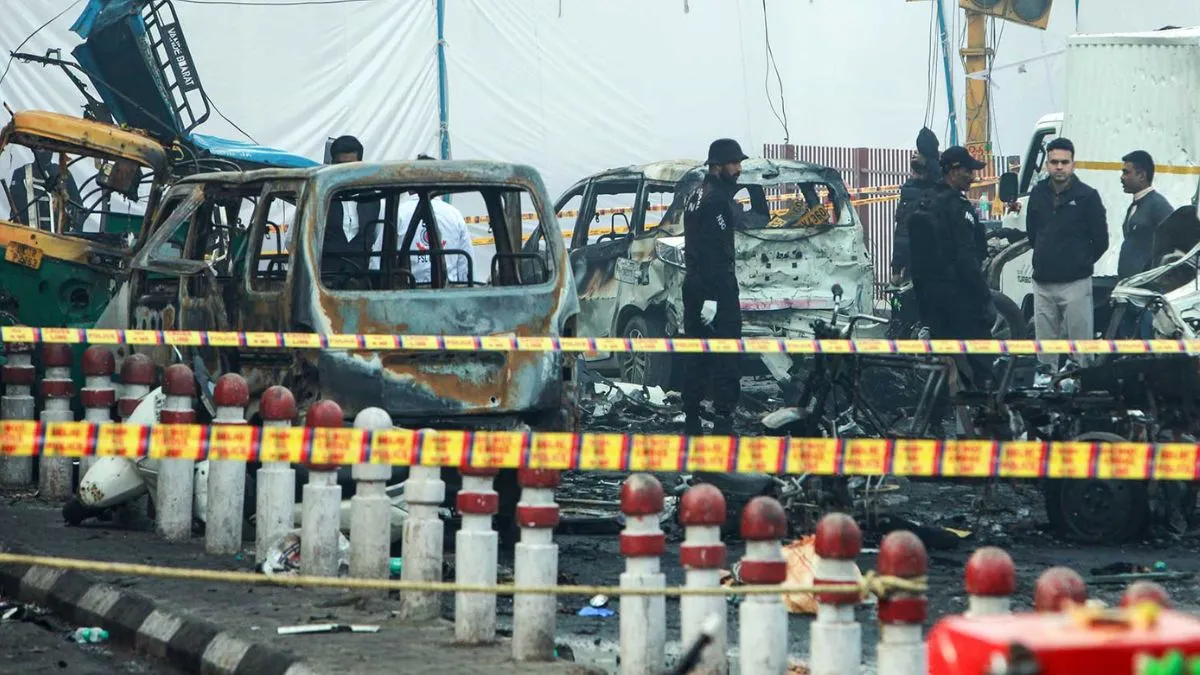
Red Fort Blast Case: A major detail has emerged regarding the car blast near the Red Fort in Delhi last year. The chargesheet filed by the National Investigation Agency (NIA) reveals that the suicide bomber and accused Umar-Un-Nabi, originally intended to park the explosives-laden i20 car near the Lal Mandir in Chandni Chowk before targeting the area near Red Fort.
Accused's Original Chandni Chowk Plan
However, due to heavy traffic and a strong police presence in that area, he was unable to execute his initial plan. He was forced to turn the vehicle around and head toward the Red Fort, where the explosion ultimately took place. According to the CCTV footage, Umar was spotted attempting to park the car near the Lal Mandir at 6:37 pm on the evening of November 10.
After finding the situation unfavourable due to heavy traffic and security, he executed a U-turn and detonated the vehicle just 13 minutes later, at 6:50 pm near Gate No. 4 of the Red Fort. The NIA has classified this as the first-ever vehicle-based IED attack recorded in Delhi.
Recommended For You
According to the chargesheet, Umar detonated the IED using a remote command mechanism that was hidden inside one of his shoes. A metal piece attached to the heel of the shoe was recovered near the car, and forensic testing confirmed the presence of TATP, potassium, and ammonium nitrate. Furthermore, DNA extracted from samples collected inside the vehicle matched his parents, confirming his identity as the bomber.
Stored Urine In Poly Bags
According to findings, Umar took special precautions to store the explosives safely. He kept his room at cooler temperatures, while a strong odour emanated from it. He had also purchased water-filled bags to safely store the prepared TATP. Witnesses stated that water was regularly added to the explosive mixture to keep it stable.
The accused exhibited highly suspicious behaviour while evading law enforcement at a hideout in Nuh, Haryana. A female member of the landlord's family reported that he avoided going outside even to relieve himself. He used to collect his urine in polythene bags, which caused a severe foul odour to spread throughout the room.
However, citing specific documents, the chargesheet also notes that this process was an alternative method to extract urea from urine for use in manufacturing explosives. According to the chargesheet, a method for making explosives with urea nitrate was detailed in PDFs found on USB flash drives belonging to Nabi and another suspect Shaheen Saeed.
11 Dead, 29 Injured
According to the NIA charge sheet, 11 people were killed and 29 were injured in the explosion. The post-mortem report cites the cause of death as the impact of a high-intensity blast wave. Damage to surrounding structures has been estimated at approximately Rs 17.7 lakh.
Several materials related to terrorist activities were recovered from Umar and his associates' possession. This included the Lone Mujahid Pocket Book, reportedly published by Inspire magazine, a publication linked to Al-Qaeda in the Arabian Peninsula (AQAP). According to the NIA, the manual contained operational details regarding explosives, weapons, vehicles, arson, and remote-trigger mechanisms for IEDs.
On November 7, Umar had also purchased a new T-shirt, a maroon-coloured shirt, and green cargo pants from a shop in Nuh while paying in cash. It was earlier revealed that Umar had visited the Red Fort 12 times between 2023 and 2025, with his last visit being six months before the blast on May 1.
ALSO READ: Red Fort Car Blast: Terror Conspiracy Accused Jasir Bilal Faces HC Setback After Bail Plea Rejected