
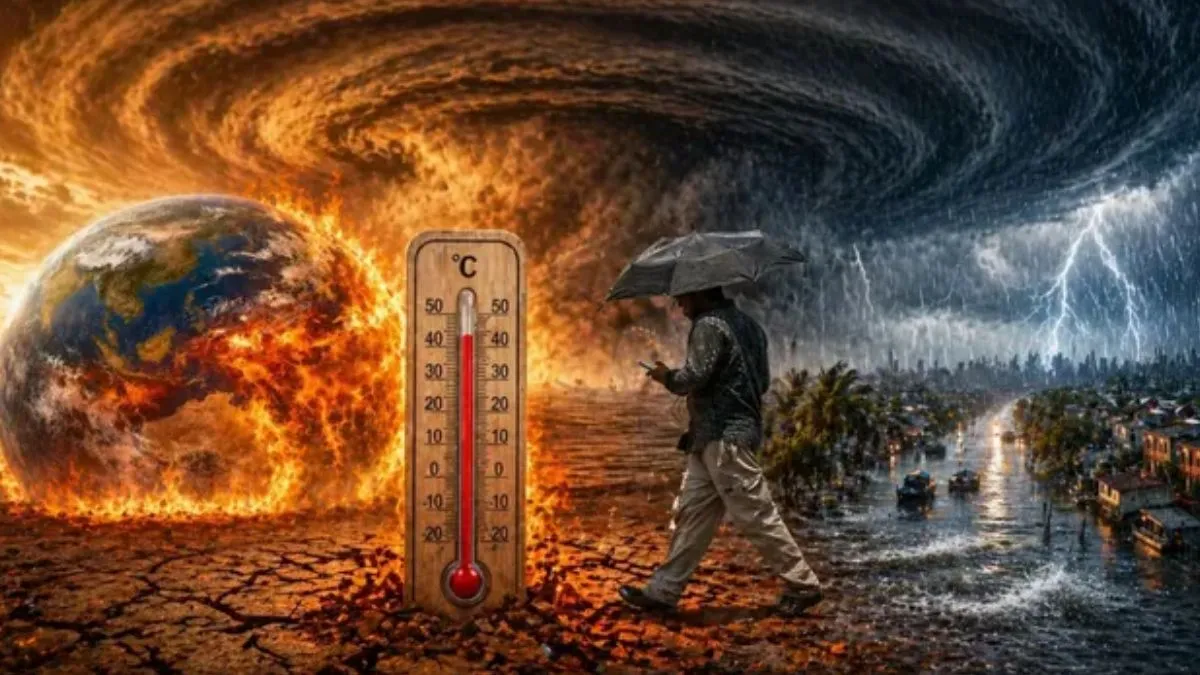
Super El Nino: The northern states in India have been witnessing a severe heatwave for the past few days. The temperature has crossed 45 degrees Celsius in multiple states, including Delhi, Uttar Pradesh, Bihar, Rajasthan, and Madhya Pradesh. The residents of these states are not likely to get any relief soon; a heatwave alert has been issued for at least the next five days. The weather department has advised the residents to follow the guidelines and limit their outings during the daytime hours.
As per the scientists, a 'Super El Niño' is taking shape in the equatorial Pacific Ocean, an event that could be the most destructive meteorological phenomenon since 1877. They stated that the phenomenon will have a direct impact on Indian states, as El Niño is expected to affect the Southwest Monsoon, often referred to as India's lifeline.
Earlier on Wednesday, the temperature in Uttar Pradesh's Banda district was calculated at 48 degrees Celsius, the highest in the country. Apart from this, the temperature in other prominent cities, including Delhi, Lucknow, Mumbai, Ahmedabad, Nagpur was calculated above 40 degrees Celsius, leading to inconveniences.
Recommended For You
As per the weather experts, the temperature has increased significantly due to a 'Super El Niño' currently developing in the Pacific Ocean. The scientists have warned that this phenomenon could be more dangerous than that of 1877, which claimed the lives of approximately four per cent of the global population at the time, reported Jagran.com.
ALSO READ: Gold, Silver Rates Today: Gold Moves Down, Silver Falls Rs 3,000; Check 24k, 22k Gold Rates
What Is Super El Niño?
A Super El Niño is not simply a stronger version of a regular El Niño; it is a categorically more dangerous event. The threshold is defined by sea surface temperatures spiking by at least 2 degrees Celsius above normal.
The last Super El Niño struck in 2015, and the damage was sweeping. It triggered severe drought in Ethiopia, water supply crises in Puerto Rico, and an unprecedented hurricane season across the central North Pacific.