
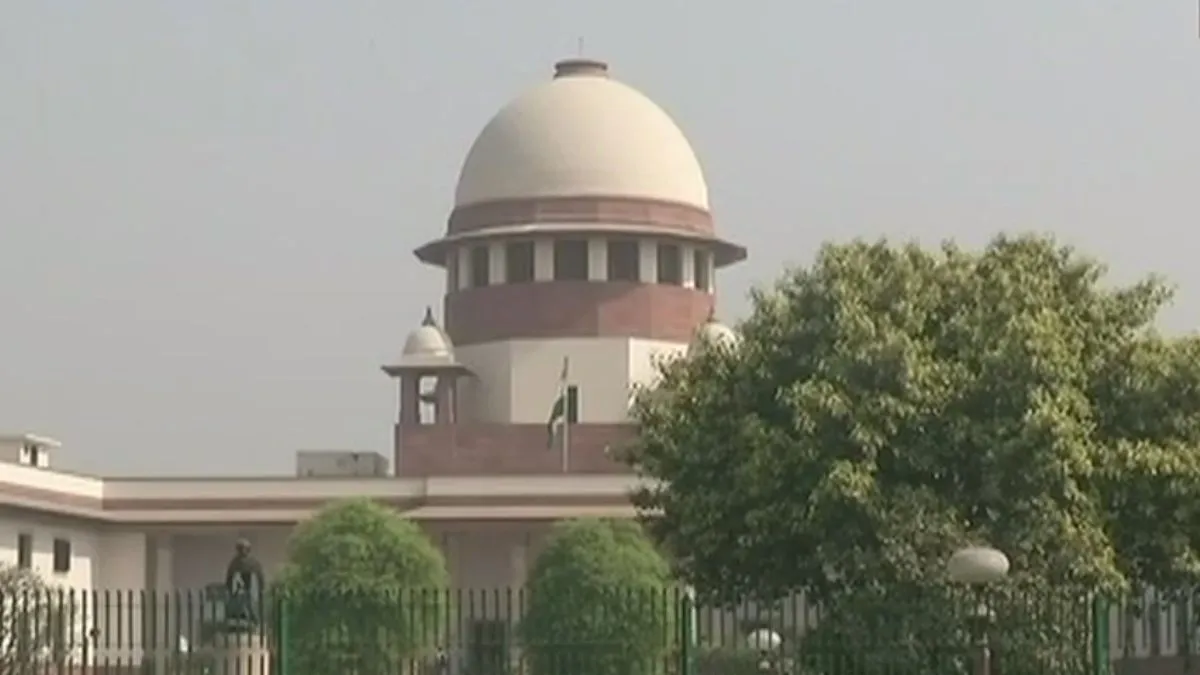
The Supreme Court delivered a landmark judgment after thoroughly analysing the 70-year-old Immoral Traffic (Prevention) Act. The court stated that the law's primary purpose was neither to eliminate prostitution completely nor to criminalise it, but rather to curb the commercialisation of prostitution.
A bench of Justices JB Pardiwala and R Mahadevan said, "We are absolutely convinced that the primary purpose of this Act is not to eliminate prostitution or criminalise it. Rather, its purpose is to prevent or eliminate the commercialisation of prostitution, that is, to prohibit the use of prostitution as an organised means of livelihood."
Why Was ‘Immoral’ Added To The Name Of Law?
While hearing the issue of rehabilitation of women rescued from brothels, the bench conducted an in-depth analysis of the 1956 Act. The court pointed out that in the early 20th century, trafficking of women for prostitution was very common and was considered immoral in society, which is why the term became associated with the name of the law.
Recommended For You
"...women are engaged in prostitution voluntarily, the question of their 'rescue' does not arise," the bench said, as reported by Live Law.
“The constitutional right to rehabilitation obligates the State to provide victims with the means and support to pursue rehabilitation. However, it does not authorise the State to impose a rehabilitative process upon her against a victim's will," the court added.
The Supreme Court said that the ITPA was primarily brought in to punish criminals and traffickers and not the women themselves who indulge in prostitution.
The 298-page judgment, written by Justice Pardiwala, clarified that Sections 7 and 8 of the Act are exceptions to this general rule. These sections penalise individual acts of prostitution under special circumstances, with Section 7 punishing anyone engaging in prostitution near public places. Section 8 criminalises soliciting or soliciting customers in public places.
The bench observed that while individual acts of prostitution are not strictly prohibited, it is necessary to maintain public decency and social morality and prevent such scenes or attempts around public institutions and notified areas so as not to cause inconvenience to the public.
As per Bar and Bench, some key points of Supreme Court’s victim protection plan guidelines are:
-Anti-Human Trafficking Units (AHTUs) must be headed by DSP-rank officers.
-Each AHTU must have at least two women police officers.
-States must notify AHTUs as police stations for the entire district for registering and investigating trafficking cases.
-Information on trafficking must be immediately escalated to the special police officer under the ITPA, DSP/DCP, Police Nodal Officer and Government Nodal Officer.
-Special care must be taken during rescue of children, transgender persons, persons with disabilities and mentally ill persons.
-Victims must not be photographed or videographed during rescue, even if the premises or rescue site is recorded.
-Victims must be kept separate from accused persons immediately after rescue to prevent intimidation or pressure.
-Emergency medical or trauma care must take priority before other procedural steps.
-Police/AHTUs must arrange translators where victims do not understand the local language.
-Women victims’ statements should be recorded by women police officers or, if unavailable, in the presence of a female social worker.
-The Ministry of Home Affairs Anti-Human Trafficking Cell must develop standardised training material, manuals and SOPs for all stakeholders.
-Identify voluntary adult sex workers and avoid unnecessarily subjecting them to the full rescue machinery. The victim’s consent must guide decisions on detention and reintegration, except where there is threat, coercion, undue influence or risk to safety.