
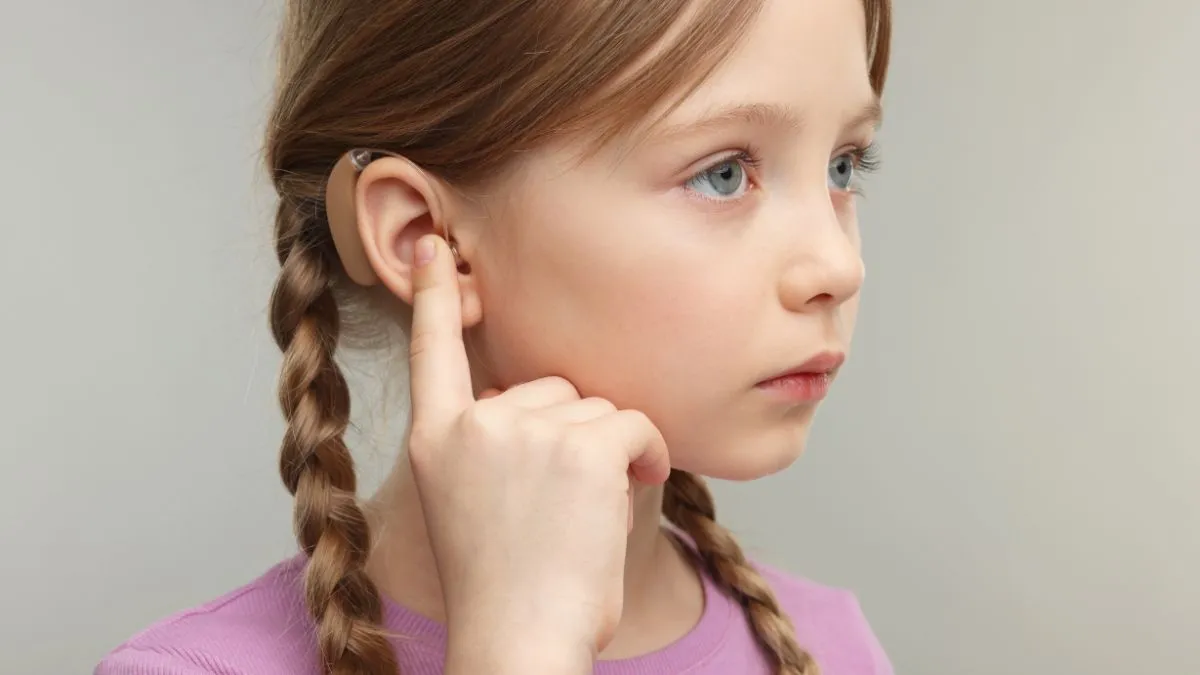
Hearing loss in children can considerably impact their development, affecting speech, language, communication and cognitive abilities. Thus, it is vital to understand the types of hearing disorders, their causes and the early interventions that can improve outcomes for these children. Its causes may include genetic factors, ear infections, exposure to loud noises and certain medications or illnesses such as meningitis or measles during critical developmental periods.
In a conversation with Jagran English, Dr. Ravi Bhatia, Director - ENT & Cochlear Implant, Sarvodaya Hospital, Sector-8, Faridabad explained the types of hearing disorders in children.
Types Of Hearing Disorders
Conductive Hearing Loss
Conductive hearing loss occurs when sounds cannot effectively get through the outer ear (Pinna, Ear Canal, Eardrum) and Middle ear. This type of hearing loss is often temporary and treatable.
Causes
Otitis Media (Middle Ear Infection)- One of the most common causes of conductive hearing loss in children. It occurs when fluid accumulates in the middle ear due to bacterial or viral infections.
Earwax Buildup- Excessive earwax can block the ear canal, preventing sound from reaching the eardrum.
Eustachian Tube Dysfunction- The Eustachian tube helps equalize pressure in the middle ear. Dysfunction can lead to fluid buildup and infection.
Perforated Eardrum- A hole or tear in the eardrum caused by infection, injury, or sudden pressure changes.
Congenital Malformations- Some children are born with structural issues in the ear, such as a malformed outer ear or a missing or deformed middle ear bone.
Sensorineural Hearing Loss
Sensorineural hearing loss (SNHL) results from damage to the inner ear (cochlea) or the auditory nerve pathways that transmit sound to the brain. This type of hearing loss is typically permanent.
Causes
Genetic Factors- Hereditary conditions are the leading cause of sensorineural hearing loss in children. It can be present at birth (congenital) or develop later in childhood (progressive). In some cases, hearing loss may be linked to syndromes like Usher syndrome and Pendred syndrome.
Prenatal Infections- Infections such as rubella, cytomegalovirus (CMV), and toxoplasmosis contracted by the mother during pregnancy can lead to SNHL in the baby.
Acquired Post Natal infections/inflammations- Conditions such as Neonatal Jaundice, Meningitis and Chicken Pox also cause sensorineural hearing loss to a certain degree.
Ototoxic Medications- Certain medications, including some antibiotics and chemotherapy drugs, can damage the inner ear structures.
Prematurity- Premature infants, particularly those who are born before 32 weeks, are at a higher risk of hearing loss due to underdeveloped ear structures or the use of ototoxic drugs in neonatal care.
Congenital Malformations of Inner Ear and Auditory Pathways- Structural abnormalities of the inner ear (Such as partial/complete absence of the inner and Auditory Never) can cause permanent hearing loss.
Mixed Hearing Loss
Mixed hearing loss is a combination of both conductive and sensorineural hearing loss. A child may experience conductive hearing loss due to middle ear issues, along with sensorineural damage to the inner ear or auditory nerve.
Causes
A child might have an underlying sensorineural hearing loss due to genetic factors or injury, while also developing middle ear infections or structural problems. The treatment for mixed hearing loss would address both the conductive and sensorineural components.
Auditory Processing Disorder (APD)
Auditory Processing Disorder is a condition where the brain has difficulty processing sounds despite normal hearing ability. Children with APD often struggle to understand speech, especially in noisy environments, though their hearing test results may be normal.
Causes
The exact cause of APD is not always clear, but it may be related to brain development, genetic factors, or a history of ear infections during critical developmental periods. APD can also coexist with other disorders, such as attention deficit hyperactivity disorder (ADHD).