
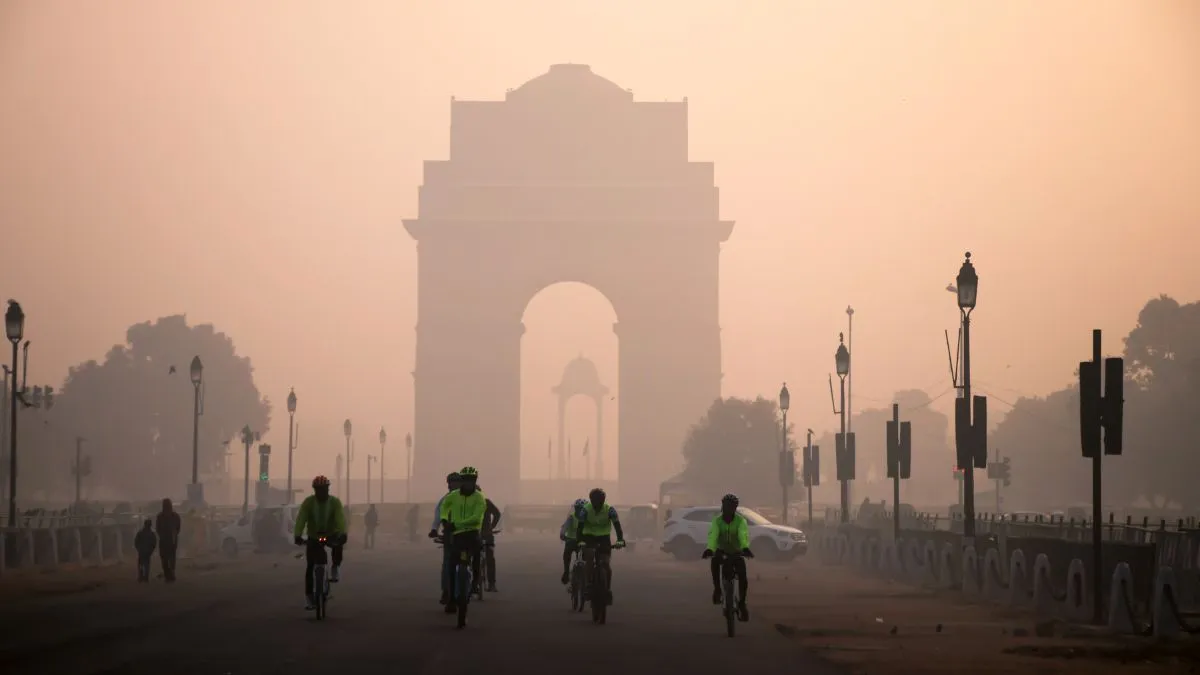
Science Behind Urban Smog: With the winter season comes fog, a thick veil that covers the landscape, especially in North India. These places wake up to grey mornings, near-zero visibility and travel disruptions, in contrast to the rural fields. In rural areas, the fog forms as cooled air traps moisture near the ground, burning off with sunlight or dispersing with wind. Whereas in cities, the urban heat island effect comes into play where concrete and asphalt absorb daytime heat, release it at night, cool rapidly and condense water vapour into denser fog. Also, exhaust from vehicles and factories pollutes the air even more, contributing to urban smog.
While delving a little more into the science behind urban fog, it has been shown that urban smog, the amalgamation of fog and pollution, is quite common. In rural areas, due to cleaner air and vegetation that can absorb the pollutants faster. Thus, the fog get lift earlier. There is a great difference between urban fog and rural fog. Here’s what you need to know.
The Science Behind City Smog
What Does Fog Contains In Cities?
In cities, the fog droplets include PM2.5 and PM10, sulphates and nitrates from diesel emissions and soot and black carbon. These particles act as condensation nuclei, increasing both the number and size of droplets, making urban fog denser and more opaque.
Recommended For You
ALSO READ: Caution, Fog Ahead: Driving Slow To Low Beam; Use These 5 Tips To Drive Safely In Low Visibility
How Air Pollution Turns Into Smog?
Urban fog turns into smog, which is a toxic mix of fog and pollutants. This happens when vehicle emissions release nitrogen oxides, industrial sources add sulphur compounds and moist winter air traps these gases near the surface, which all result in chemically enriching fog that scatters light poorly, sharply cutting visibility and worsening air quality.
Moreover, cities under constant construction release mineral dust that absorbs moisture efficiently, prevents fog droplets from evaporating after sunrise and slows down natural dissipation.

Urban Smog vs Rural Fog (Image Credits: Canva)
During the peak traffic hours, cold engines emit higher levels of hydrocarbons, carbon monoxide, and nitrogen oxides. These emissions chemically interact with fog droplets, making the fog heavier and more persistent, especially near roads, flyovers, and bus corridors.
City Smog vs Rural Fog: Which Traps More Fog
Urban areas have more temperature inversion, where cold air stays near the ground and warmer air sits above it. Also, the vertical movement of air stops. Tall buildings, reduced wind flow and heat retained by concrete worsen this effect, locking fog and pollution close to ground level.
In rural areas, there are fewer emission sources, which means fewer condensation particles. Moreover, open fields allow wind circulation and sunlight reaches the ground faster. Thus, the fog droplets evaporate quickly, restoring visibility soon after sunrise
Fog is natural and urban air pollution rewires how fog reacts, turning a simple weather event into a prolonged visibility and health crisis. Until and unless emissions and dust are controlled, urban cities will continue to see thicker, dirtier, longer-lasting fog than rural India.